


Borregaard
Nematodes | against crane fly larvae
Nematodes | against crane fly larvae
Couldn't load pickup availability
Nematodes against crane fly larvae – 250 million
- FREE SHIPPING!
⚠️ Note: Beneficial insects and pest control products are shipped only once a week (Tuesday). Order by Monday at 08:00 – and remember to pick up the package immediately upon arrival.
Biological control of crane fly larvae in the lawn
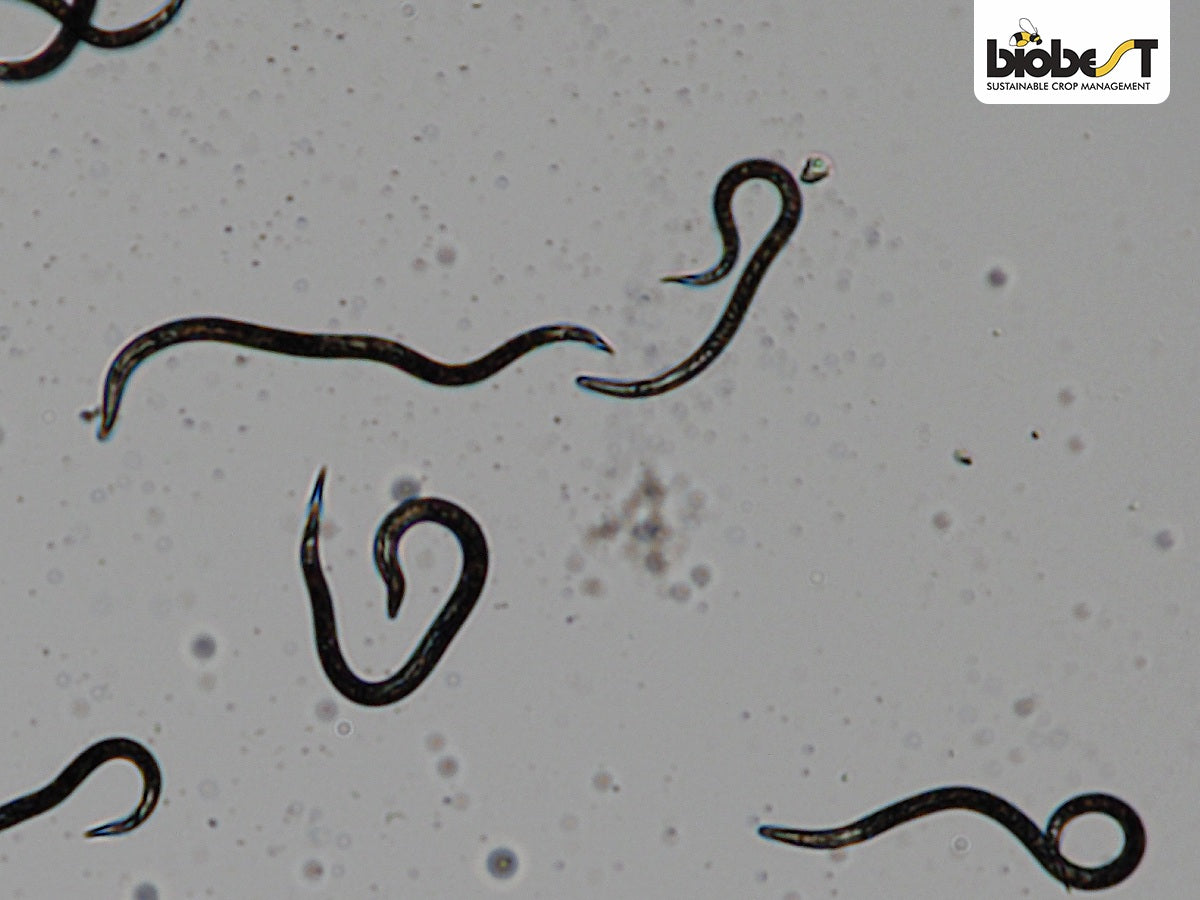
Nematodes against crane fly larvae are a natural and targeted solution for controlling small, newly hatched crane fly larvae in the lawn. The nematodes are watered over the lawn, after which they move down into the moist soil to seek out the larvae.
The package contains 250 million nematodes and covers approx. 300–500 m² of lawn.
Treatment requires the right timing. The nematodes can only control the crane fly larvae while they are small and newly hatched. Therefore, treatment should not be carried out in the spring when damage typically becomes visible, but rather in September of the previous year.
Important – treatment only in September
Nematodes against crane fly larvae can only be ordered and applied during the period 1.–30. September.
Crane flies lay eggs in the lawn in late summer, and the eggs subsequently hatch into small larvae. It is these young larval stages that the nematodes can control.
Larvae that survive grow larger throughout the autumn, overwinter in the soil, and continue their activity the following spring. At this point, they have become too large for the nematodes to provide effective control.
Therefore, if you see clear damage from large crane fly larvae in the spring, any treatment with nematodes must be planned for September, when the next generation of small larvae is present in the soil.
The crane fly's life cycle
There are several species of crane flies in Denmark. One of the common species in grassy areas is the marsh crane fly.
Adult crane flies are typically seen flying over lawns in late summer. The females lay their eggs in the soil, and a single female can lay several hundred eggs.
After hatching, the young larvae move down around the grass roots. Here they feed on plant material and can, among other things, gnaw on the grass roots and the lower parts of the plant.
The larvae overwinter in the soil. It is often not until the following spring, when the larvae have grown larger and their need for food increases, that damage to the lawn becomes visible.
Signs of crane fly larvae in the lawn
An infestation is often discovered as areas of weakened, yellowish, or dead grass. The damage can be unevenly distributed and develop into larger bare or brown patches in the lawn.
The grass may be unusually loose because the larvae have damaged the roots. If you suspect an infestation, you can lift a piece of the turf and examine the soil immediately beneath the grass.
Crane fly larvae are grayish to brownish-gray, legless, and have a tough, leathery skin. They are therefore also often called leatherjackets.
Another sign can be unusually high activity from birds, which peck and search for larvae in the lawn. The birds' foraging can in itself contribute to tearing up the grass, making the damage appear even more severe.
Typical signs can be:
- Yellowish, brown, or dead areas in the lawn
- Grass that grows poorly or withers despite appropriate watering
- Turf that sits loosely due to damaged roots
- Grayish-brown, legless larvae immediately beneath the grass
- Birds intensively foraging and pecking in specific areas of the lawn
- Many adult crane flies over the lawn in late summer can signal a risk of larvae later in the season
It is important to be aware that the symptoms can resemble other lawn problems. Therefore, please check the soil for larvae before deciding on treatment.
How the nematodes work
Nematodes are microscopic roundworms that, after watering, move through the water film between soil particles and seek out suitable insect larvae.
Therefore, moist soil is crucial for a good result. If the lawn is dry before treatment, it must be watered first, and after treatment, the soil must continue to be kept moist so the nematodes can move around and find the crane fly larvae.
Instructions
If the soil is dry, water the lawn thoroughly before treatment.
For standard application with a watering can, divide the package into five portions:
- Mix 1/5 of the package (50 million nematodes) with 10 liters of water.
- This mixture is diluted and watered out in five rounds with a 10-liter watering can.
- Repeat the procedure with the remaining four portions.
- A total of approx. 25 watering cans are used to treat 300–500 m².
- After application, water the lawn with a shower head or sprinkler so the nematodes are rinsed down from the grass and into the soil.
- Keep the soil moist for about 14 days after treatment. Natural rainfall can, of course, contribute to this.
Always follow the provided instructions.
Make treatment easier with a nematode sprayer
On a lawn of up to 300–500 m², watering with a standard watering can can be a major task. A nematode sprayer that connects directly to the garden hose can therefore make distribution significantly easier.
When using Aquanemix, for example, 50 million nematodes are mixed with 1 liter of water, after which the mixture is poured into the container and watered over approx. 60–100 m². The procedure is repeated with the rest of the package.
The nematode sprayer can also be used with clean water to moisten the lawn before treatment and for subsequent watering.
The most important factors for a successful treatment
Treatment against crane fly larvae is largely about timing and moisture. Treat in September while the larvae are still small, ensure moist soil before application, and avoid letting the soil dry out for the following approx. 14 days.
When the damage becomes visible the following spring, it is usually too late to control that particular generation with nematodes. Therefore, it pays to keep an eye on adult crane flies in late summer and plan the treatment before the larvae grow large.
Content and coverage
Content: 250 million nematodes
Coverage: approx. 300–500 m² of lawn
Treatment period: 1.–30. September
See also our other products for beneficial insects.
Important information regarding the delivery of beneficial insects
- Order deadline: The producer packs and ships only once a week – every Tuesday. Your order must be received by us no later than Monday at 08:00.
- Late orders: Orders received after Monday at 08:00 will not be shipped until the Tuesday of the following week.
- Direct delivery: The beneficial insects are shipped directly from the producer to ensure freshness and optimal quality.
- Delivery method: All orders are always delivered to a Bring parcel shop/parcel locker. The system automatically selects the one closest to your address, even if you select home delivery at checkout.
- Prompt pickup: The beneficial insects should be picked up as soon as possible and used immediately after receipt to ensure the best possible effect.


Are you in doubt about which beneficial insect to choose?
Many pests can look alike, but are best controlled with different beneficial insects. If you are unsure whether you have thrips, aphids, spider mites, or another pest, you are always welcome to contact us.
You can also read our comprehensive guide to biological pest control, where we review the most common pests, how to recognize them, and which beneficial insects provide the best results.
We are happy to help you find the right solution so that you get the most effective and natural control.