


Borregaard
Predatory mites (Phytoseiulus persimilis) | against spider mites
Predatory mites (Phytoseiulus persimilis) | against spider mites
Couldn't load pickup availability
Spider Mite Predators (Phytoseiulus persimilis) – Natural control of spider mites
- FREE SHIPPING!
⚠️ Note: The beneficial insects are shipped only once a week (Tuesday). Order by Monday at 08:00 AM – and remember to collect the package immediately upon arrival.
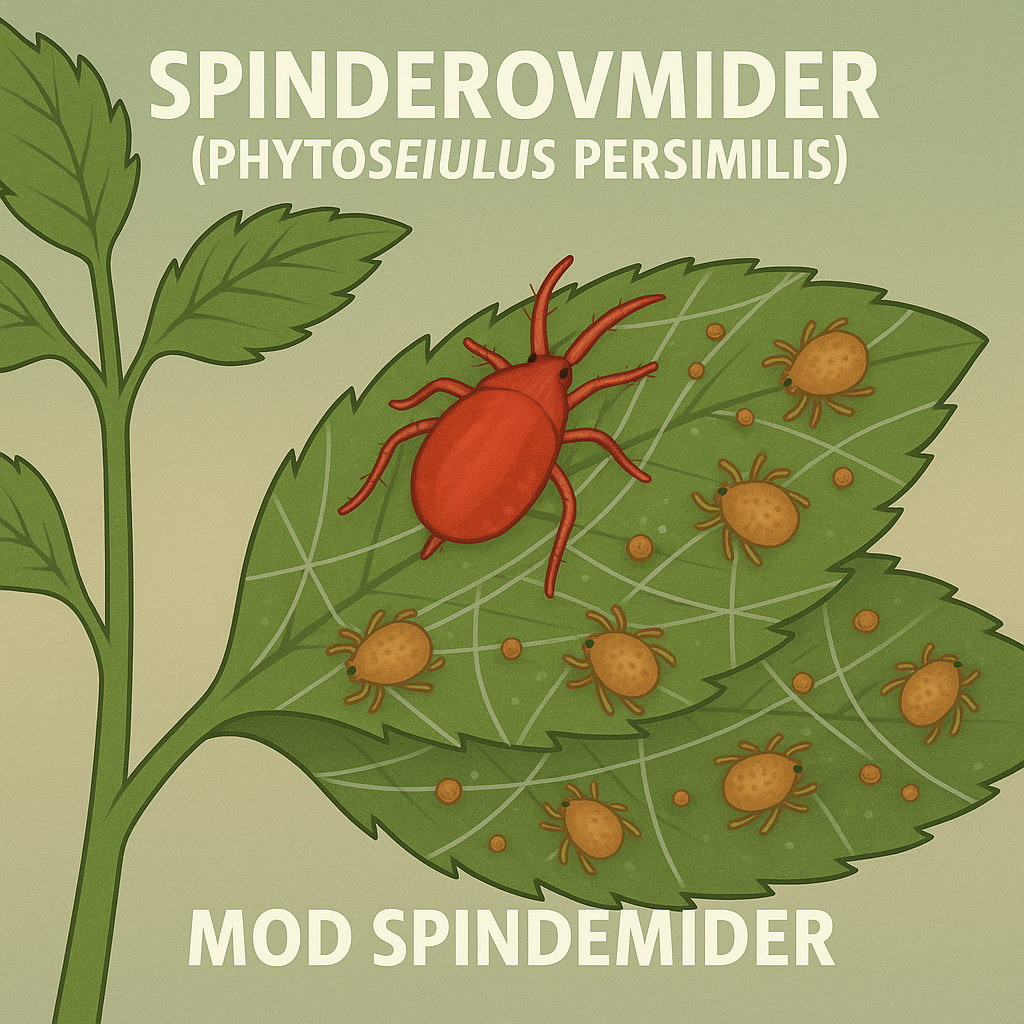
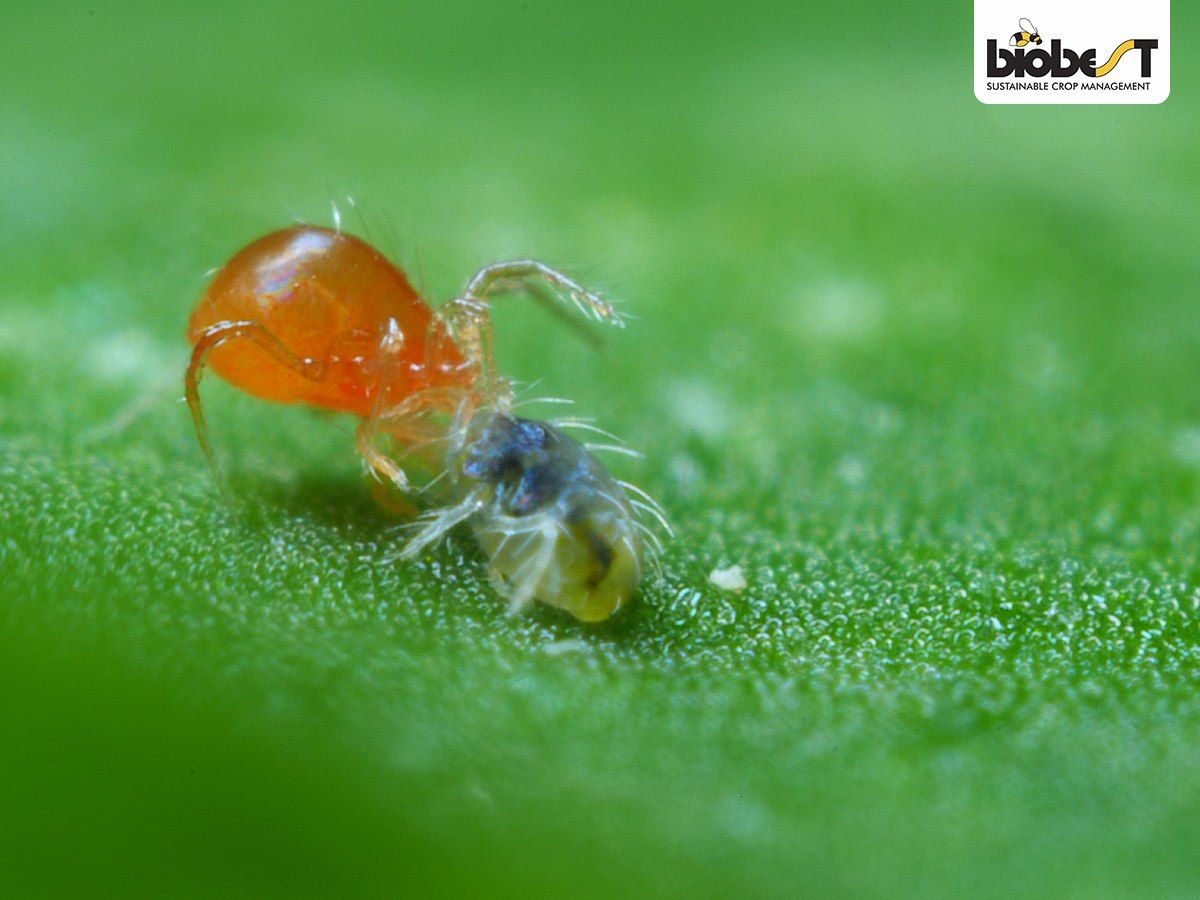
Spider mite predators are one of the most effective beneficial insects for the biological control of the common greenhouse spider mite. These small, red-orange predatory mites (approx. 0.5 mm long) actively seek out spider mites on the underside of leaves and eat eggs, larvae, and adults alike. The result is a fast and natural reduction of spider mite infestations – completely without the use of chemicals.
The product is supplied in bottles containing either 500 or 2000 spider mite predators, mixed in granules (vermiculite), which makes it easy to distribute the beneficial insects evenly throughout the crop. The spider mite predators can be used both preventively and at the first sign of an infestation, and they are particularly useful in greenhouses, but can also be used outdoors on plants such as strawberries and raspberries.
Signs of spider mites on plants
Spider mites are very small sap-sucking mites that thrive especially in warm and dry conditions. They can attack houseplants, greenhouse plants, vegetables, and outdoor plants. The common greenhouse spider mite (Tetranychus urticae) is one of the most common species.
An incipient infestation is often discovered as very small, light or yellowish dots on the leaves. These dots appear when the spider mites suck the contents out of the plant cells. Over time, the damage merges, giving the leaves a dull, grayish, yellowish, or bronze appearance.
Spider mites reside mainly on the underside of the leaves, where, upon closer inspection, you can find both mites and small, round eggs. The adult greenhouse spider mites are only about half a millimeter long and are therefore difficult to see without magnification. A 10× magnifying glass is a very good tool for detecting an infestation early.
In a more advanced infestation, one of the most characteristic signs appears: very fine webbing between leaves, along leaf stalks, and around new shoots. In severe infestations, entire parts of the plant can be covered in webbing, and the leaves may wither and fall off.
Typical signs of spider mites are:
- Numerous small light or yellowish dots on the leaves
- Dull, grayish, yellowish, or bronze-colored leaves
- Very small moving mites on the underside of the leaves
- Small round eggs on the underside of the leaves
- Fine webbing between leaves, leaf stalks, and shoots
- Withered or fallen leaves in case of severe infestations
- Infestations that develop quickly in hot and dry weather
It is a good idea to react at the first sign of dotted leaves. The spider mite predator (Phytoseiulus persimilis) is a specialized beneficial insect against the common greenhouse spider mite and attacks eggs, young stages, and adult spider mites.
Are they common spider mites or fruit tree spider mites?
It is important to know the difference before you choose your beneficial insects. The common greenhouse spider mite (Tetranychus urticae) is often yellowish, greenish, or brownish with two darker spots on its body and forms characteristic webbing during larger infestations.
The dark red citrus and fruit tree spider mites (Panonychus sp.) look different and should instead be controlled with Californicus predatory mites.
If you are in doubt, we recommend examining both the mites and the undersides of the leaves with a magnifying glass before ordering beneficial insects. This ensures that you choose the predatory mite that suits your specific infestation.
Benefits of spider mite predators:
- Effective and rapid control of spider mites
- Eats all stages: eggs, larvae, and adults
- Non-toxic and gentle on plants, people, and animals
- Can be used indoors, in greenhouses, and outdoors (e.g., berry bushes)
Application:
- Release the predatory mites as soon as possible after receipt.
- Distribute the content in small portions on the leaves of the infested plants. Keep the leaves horizontal for a moment so that the predatory mites can crawl out.
- Hang the bottle and lid on the plants so that the remaining predatory mites also find their way out.
- Spider mite predators thrive best in high humidity. Help them if necessary by misting the plants during hot and dry periods.
Quality control:
- 500 pcs. bottles: Let the bottle stand upside down at room temperature for 10–15 minutes before use – check that you can see predatory mites on the inside.
- 2000 pcs. bottles: Let the bottle stand upright in the greenhouse for 10–15 minutes – check that there are predatory mites crawling around in the lid when you unscrew it.
Follow the control:
- Check the leaves every 3 days with a magnifying glass on the underside. If you find red predatory mites where the spider mites are, you can expect the population to be under control within 2–3 weeks.
- When the food source runs out, the spider mite predators disappear on their own.
Conditions:
- Works best in the summer half-year, but can also be used in frost-free periods if the daytime temperature reaches at least 16–17 °C.
- Does not work against the spider mite's red-orange winter form (diapause females).
Important information regarding delivery of beneficial insects
- Order deadline: The producer packs and ships only once a week – every Tuesday. Your order must be received by us no later than Monday at 08:00 AM.
- Late orders: Orders received after Monday at 08:00 AM will not be shipped until the following Tuesday.
- Direct delivery: The beneficial insects are shipped directly from the producer to ensure freshness and optimal quality.
- Delivery method: All orders are always delivered to a Bring parcel shop/parcel locker. The system automatically selects the one closest to your address, even if you choose home delivery at checkout.
- Prompt collection: The beneficial insects should be collected as soon as possible and used immediately after receipt to ensure the best possible effect.
Are you in doubt about which beneficial insect to choose?
Many pests can look alike, but are best controlled with different beneficial insects. If you are unsure whether you have thrips, aphids, spider mites, or another pest, you are always welcome to contact us.
You can also read our comprehensive guide to biological pest control, where we review the most common pests, how to recognize them, and which beneficial insects provide the best results.
We are happy to help you find the right solution so that you get the most effective and natural control.