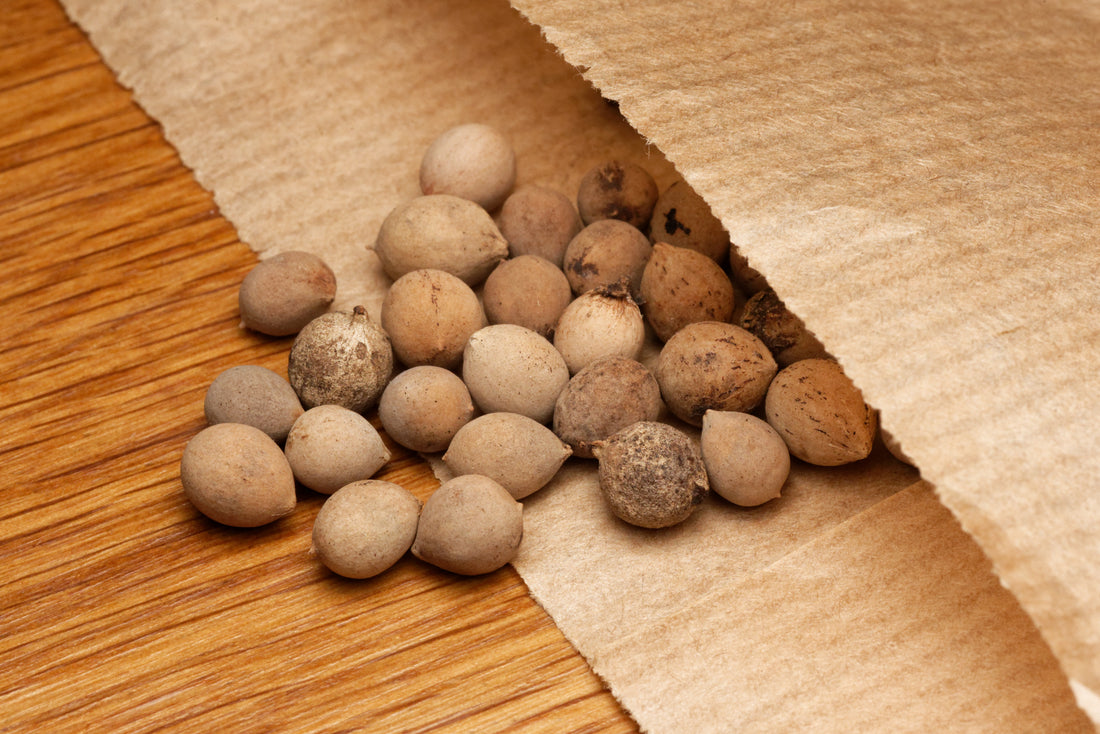
Germination of palm seeds
Palms are unique among woody plants in that (with very few exceptions) they can only be propagated from seed. Furthermore, getting most palms to germinate from seed requires great patience, and the germination rate can vary significantly. If you haven't been scared off yet, growing palms from seed is a fantastic (and inexpensive) way to get new palm plants. The process can be both exciting and rewarding, but it also requires patience and diligence. We have created this general guide for germinating palm seeds to help you on your way.
-
Seed selection: Start by choosing fresh and healthy palm seeds. We always strive to have fresh seeds and store them in a way that ensures they have the best shelf life.
-
Preparation: Some palm seeds have hard shells that can be difficult for the sprout to penetrate. To aid germination, you can soak the seeds in lukewarm water for 24-48 hours. Change the water regularly to prevent it from getting dirty. You can also scrape or nick the shell with sandpaper or a file to help the water penetrate.
-
Sowing: Fill a pot or seed tray with a suitable germination medium. See specific details under the individual species. Make sure the germination medium is moist but not wet. The bag-germination method is advantageous to use here. A good germination medium is 1:1 sphagnum peat and perlite.
-
Watering and placement: After sowing, ensure you keep the germination medium slightly moist. However, avoid overwatering, as this can lead to rotting seeds. Place the pots or seed trays in a warm and bright location, but avoid direct sunlight, as it can be too intense for germination. Extra heat (preferably above 27 degrees) can especially help increase germination. You can use a plastic bag or a cover to create a humid microclimate around the seeds and increase the chances of germination.
-
Patience and care: Palm seeds can take a long time to germinate, and this can vary from species to species. Some palms can take several weeks or even months and years before they sprout. It is important to have patience, not to give up, and to continue maintaining the correct watering and temperature. When the seeds germinate, provide them with enough light, but avoid direct sunlight at first. You can gradually increase light exposure and begin to acclimate the plants to normal light levels.
-
Transplanting sprouted seedlings: Once the sprouted seedlings have developed sufficiently with a good root system, you can transplant them into individual pots or outdoors in the garden. Use a suitable potting soil or garden soil that is rich in nutrients and has good drainage. See individual species for detailed information on soil. It is important that the seedlings are not planted too deep. Generally, the soil should only just cover the top roots when they are transplanted. Conversely, it is also important to use a tall pot, as most palms have deep roots.
- Care of palm plants: Now make sure to care for your palm plants correctly by providing them with sufficient water, light, and protection against extreme weather conditions. Follow the instructions for the specific palm species you are growing, as there may be variations in care requirements.
Be patient and be aware that there is no guarantee that all seeds will germinate. But with care, patience, and the right maintenance, you can quickly get an exciting and different collection of exotic palms.
Below you will find our entire selection of palm seeds for sale