
Collection: Banana seeds
There is something quite special about growing your own banana plant from seed. Even as a young plant, it develops large, green leaves, and over time it can take on the lush and almost tropical look that makes banana plants popular exotic plants.
At a Piece of Nature, you will find a changing selection of banana seeds from various species and varieties. The assortment primarily includes species of Musa as well as other exciting members of the banana family. Some are grown for their impressive leaves, others for their flowers or fruits, and several species are interesting due to their origin, growth habit, or ability to withstand cooler temperatures.
Banana plants are also exciting to grow from seed because you get the opportunity to follow the entire development from the hard little seed to a large and impressive plant.
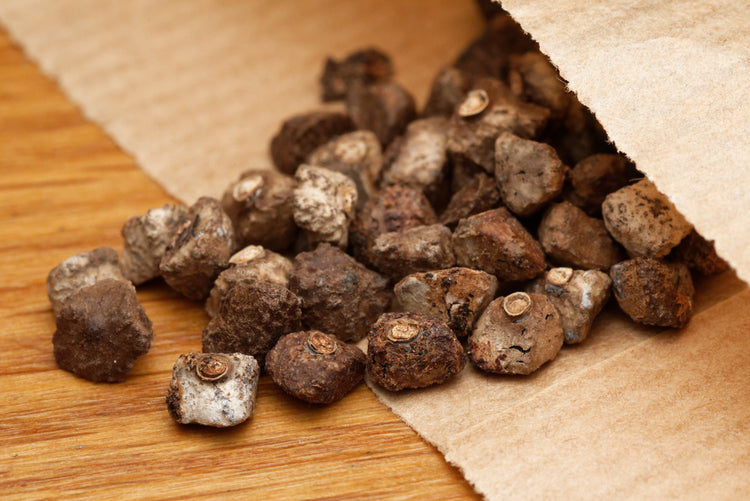
Buy 4 packs of seeds (or more) and get 10% off
-
Snow Banana (Ensete glaucum) | seeds, 10 pcs.
Regular price €7,95 EURRegular price -
Ornamental banana (Musa acuminata acuminata) | seeds, 10 pcs.
Regular price €2,95 EURRegular price€3,95 EURSale price €2,95 EURSale -
Monkey finger banana (Musa acuminata microcarpa) | seeds, 10 pcs.
Regular price €2,95 EURRegular price€3,95 EURSale price €2,95 EURSale -
Himalayan flame banana (Musa aurantiaca) | seeds, 10 pcs.
Regular price €6,95 EURRegular price -
Sweet wild banana (Musa balbisiana balbisiana) | seeds, 10 pcs.
Regular price €5,95 EURRegular price -
Bukan banana (Musa bukensis) | seeds, 10 pcs.
Regular price €6,95 EURRegular price -
Cheesman's banana (Musa cheesmanii) | seeds, 10 pcs.
Regular price €5,95 EURRegular price -
Forest banana (Musa lawitiensis) | seeds, 10 pcs.
Regular price €5,95 EURRegular price -
Indian dwarf banana (Musa mannii) | seeds, 10 pcs.
Regular price €5,95 EURRegular price -
Darjeeling banana (Musa sikkimensis) | seeds, 10 pcs.
Regular price €6,95 EURRegular price -
Himalayan banana (Musa sikkimensis "Manipur Massive") | seeds, 10 pcs.
Regular price €7,95 EURRegular price -
Red Tiger banana (Musa sikkimensis "Red Tiger") | seeds, 10 pcs.
Regular price €8,95 EURRegular price -
Thomson's banana (Musa thomsonii) | seeds, 10 pcs.
Regular price €5,95 EURRegular price -
Pink velvet banana (Musa velutina) | seeds, 10 pcs.
Regular price €5,95 EURRegular price

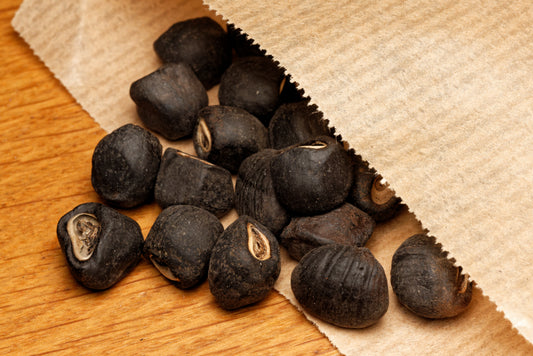
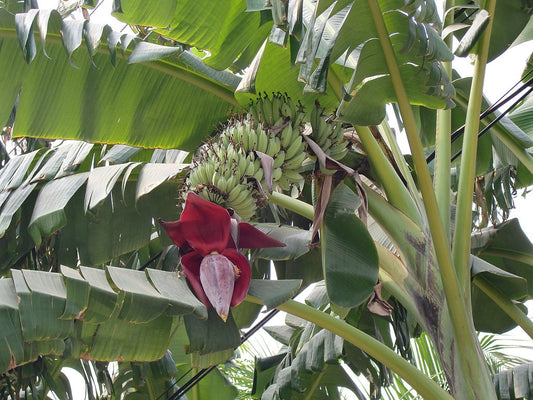
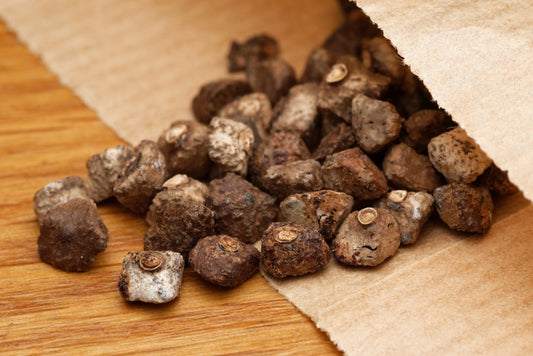
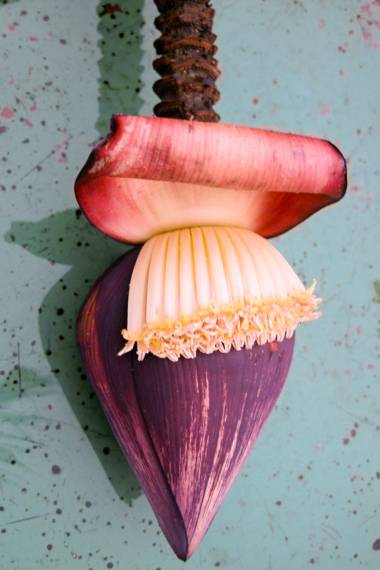
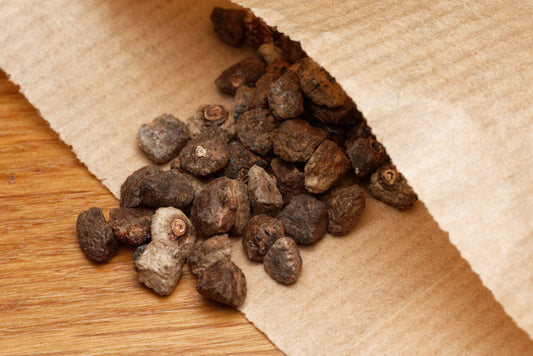

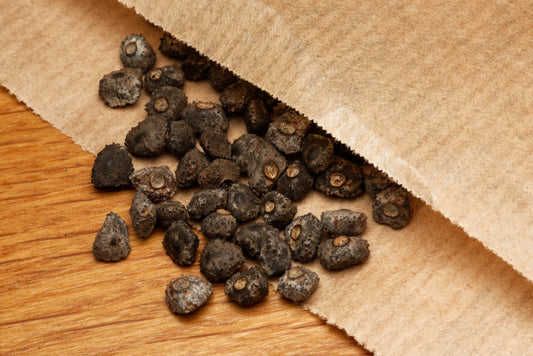
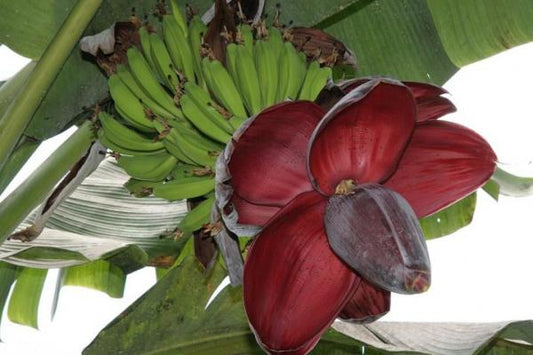
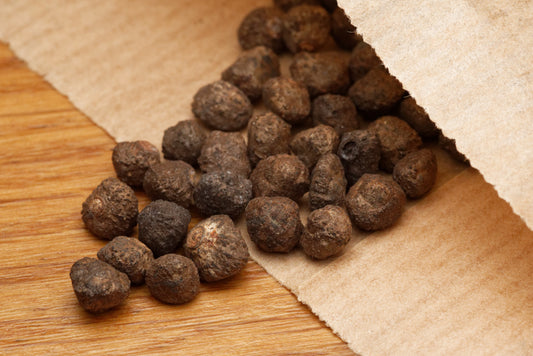

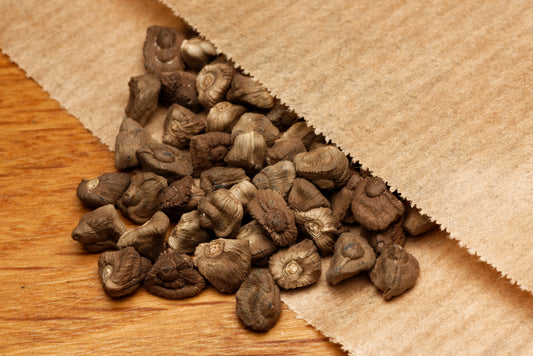

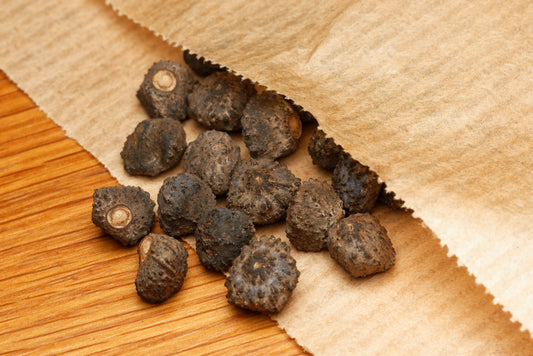
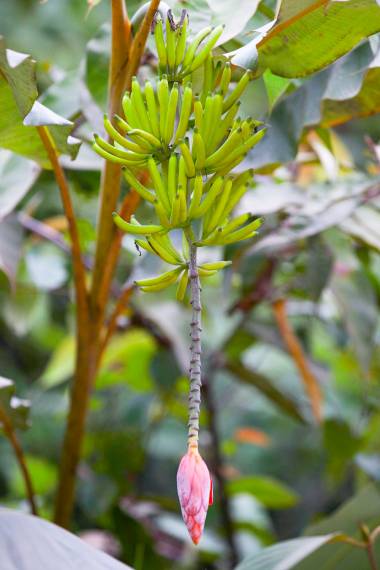
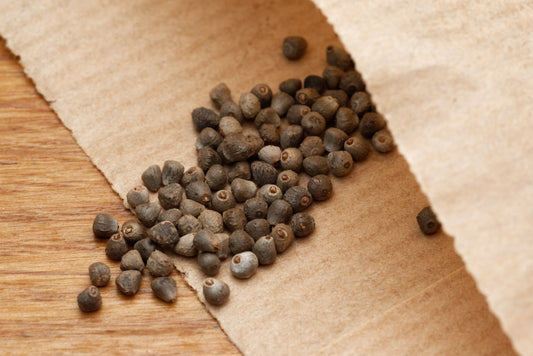
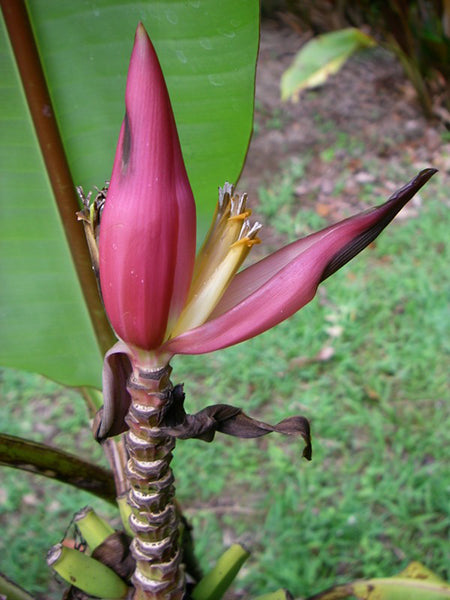
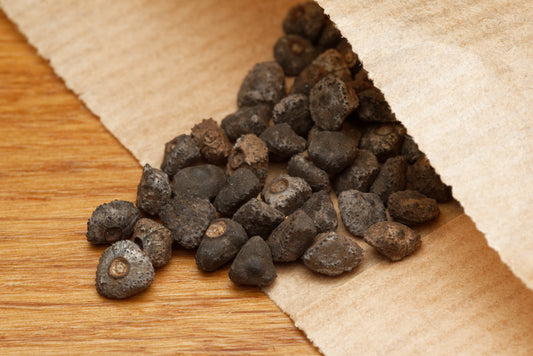
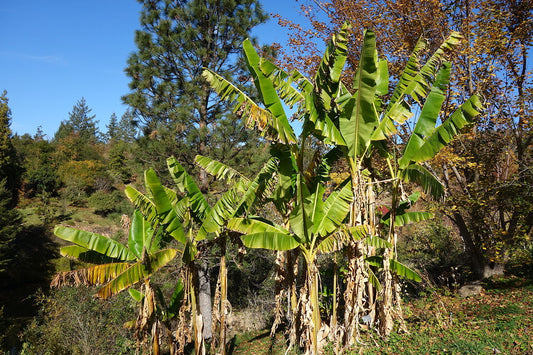
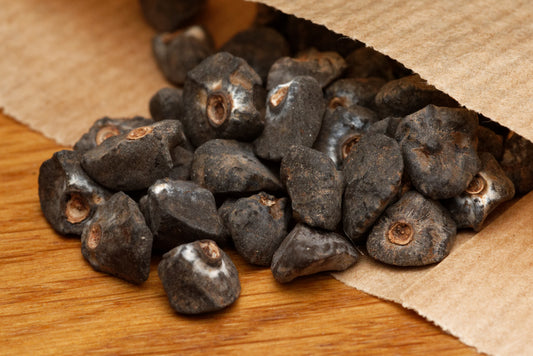
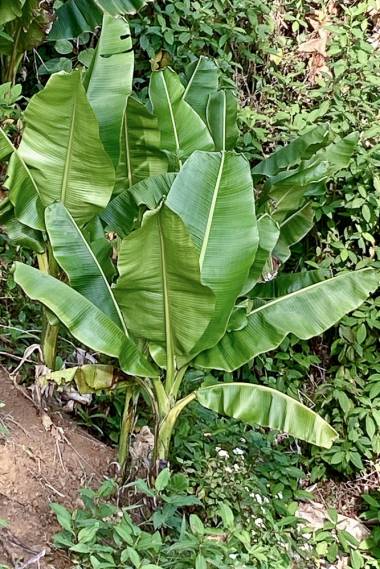
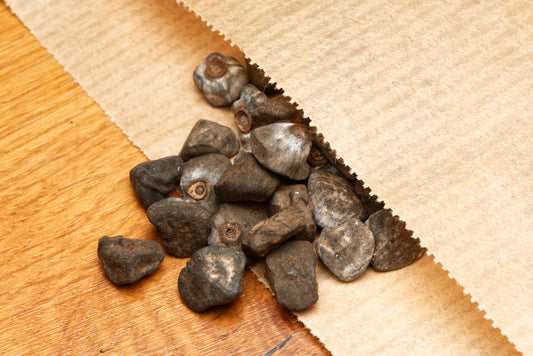
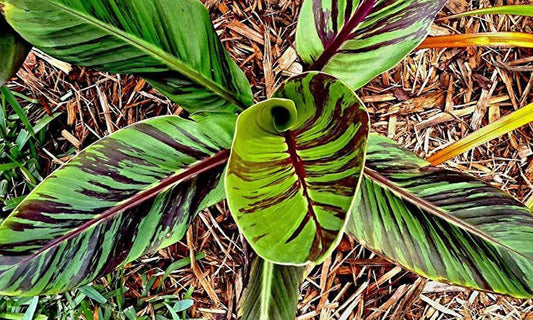
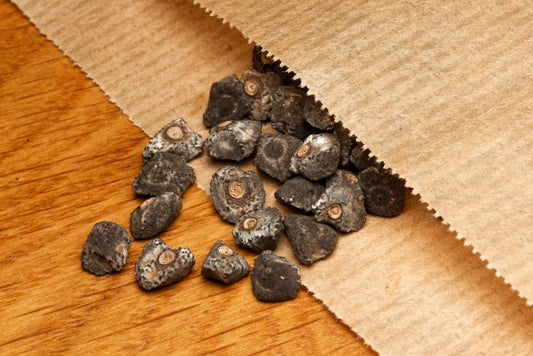
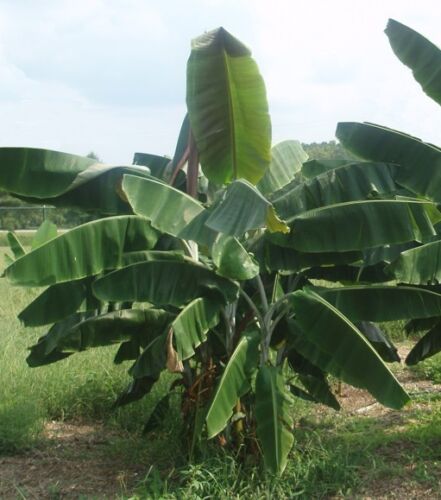
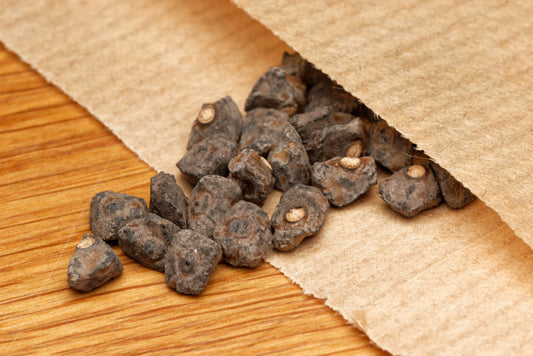
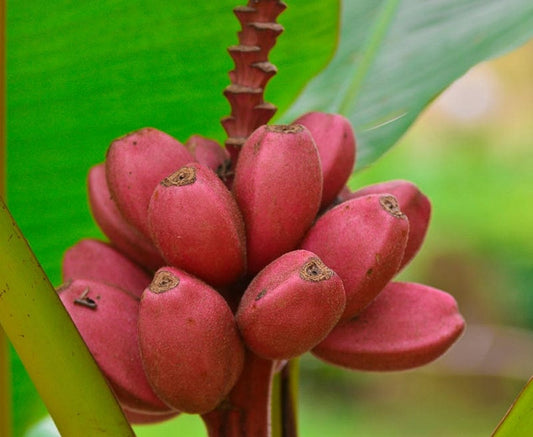
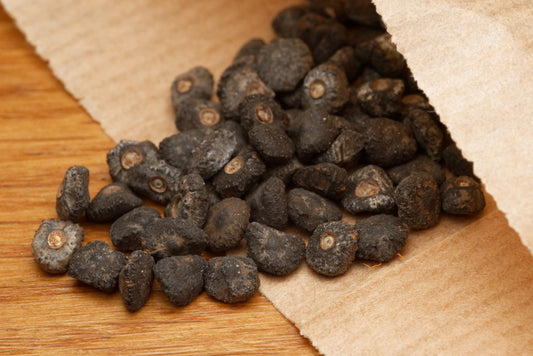

Banana plants from seeds
The banana plants one normally encounters in the supermarket's fruit section rarely produce many seeds. Common edible bananas are cultivated varieties that are propagated vegetatively and typically develop fruits without the large, hard seeds found in wild banana species.
For many wild species, it is quite different. Here, the fruits contain actual seeds that can be sown and grow into new banana plants.
It is mainly these botanical species and seed-bearing forms that one encounters when growing banana plants from seeds. This also means that there is far greater variation among bananas than one might initially think.
Musa – banana plants with great variety
Musa is the most important genus in the banana family, Musaceae, and includes a wide range of species from tropical and subtropical regions, especially in Asia.
There are both small and very large species. The leaves can be classically green, but in some species and varieties, they may have reddish, dark, or variegated markings.
Flowers and fruits also vary. Some banana species produce relatively familiar yellow fruits, while others develop smaller or more decorative fruits in shades such as reddish or pink.
This variation makes Musa an exciting genus to explore from seed. However, we also have seeds from other genera than Musa.

How to sow banana seeds
Banana seeds have a hard seed coat and may require both warmth and patience to germinate. Germination time varies between species and can also vary significantly between seeds from the same batch.
Before sowing, it is beneficial to soak banana seeds in lukewarm water for about 24–48 hours. This helps the seed absorb water before sowing. Lightly sanding with fine sandpaper can also help.
The seeds are then sown in an airy and well-drained sowing medium. The medium should be kept slightly moist, but not constantly wet, as too much moisture can increase the risk of the seeds rotting.
Warmth is important for many species. A warm location or a heat mat can therefore be an advantage during germination.
Some banana species may react positively to differences between day and night temperatures, which mimics the natural temperature fluctuations the seeds might experience in their native habitats.

From small banana seed to large plant
When a banana seed germinates, the development of a plant begins that can eventually become quite impressive.
The first leaves are small and relatively simple, but gradually the leaves become larger and wider. In warm and bright conditions, many banana species can grow quickly once the plant is well established.
The banana plant does not develop a real tree trunk. What looks like a trunk is a so-called pseudostem, which mainly consists of leaf sheaths wrapped tightly around each other.
Botanically, the banana plant is therefore not a tree, but a large herbaceous plant. Several species actually belong among the world's largest herbs.

Banana plant as an exotic houseplant
Banana plants are popular because of their large leaves and lush appearance. Even a relatively young plant can quickly give a windowsill, conservatory, or bright room a more tropical feel.
Most banana plants love plenty of light, warmth, water, and nutrients during the growing season. When the plant grows quickly and produces large leaves, it also uses significant amounts of water.
However, the soil should still be well-drained. Banana plants do not thrive well if their roots are constantly sitting in heavy, waterlogged soil.
In winter, growth will often slow down in Denmark due to the shorter days. Here, watering should be adjusted to the plant's growth and lower light levels.
-
Can banana plants stay outside?
Banana plants can greatly benefit from being outdoors during the summer months.
When temperatures are sufficiently high, they can be placed on the patio, balcony, or in the garden. Here, they receive plenty of light and, under good conditions, can develop rapidly.
Plants that have been kept indoors should be gradually accustomed to direct sunlight to avoid sun damage to the leaves.
Banana leaves are naturally large and relatively thin, and can therefore become frayed by strong winds. A bright, warm, and reasonably sheltered location is therefore often an advantage. -
Are there hardy banana plants?
Bananas are usually associated with the tropics, but there are species that can withstand surprisingly low temperatures.
The most well-known is the Musa basjoo, often referred to as the Japanese fiber banana. It is grown in temperate regions precisely because of its greater cold tolerance.
It is, however, important to distinguish between the plant's above-ground parts and its underground rhizome. Frost can destroy the leaves and pseudostem, even if the underground part survives and shoots again.
The possibility of overwintering outdoors in Denmark therefore depends on factors such as the species, the plant's establishment, winter temperatures, soil drainage, location, and winter protection. Other banana species should generally be overwintered frost-free. -
Can you grow bananas on a banana plant in Denmark?
It is possible for some banana plants to flower under Danish conditions, but it typically requires a large, well-established plant as well as very good growing conditions.
The plant must have sufficient light, heat, water, nutrients, and space over a long period. A large greenhouse or a warm conservatory therefore provides better opportunities than regular cultivation as a houseplant.
It is also important to be aware that many banana species grown from seed do not produce fruit like the common eating bananas from the supermarket. In wild species, the fruits can contain many large and hard seeds.For many, it is therefore the plant itself and the experience of growing it from seed that is the main attraction.
Buy banana seeds online
At a Piece of Nature, you will find a changing selection of banana seeds for those who want to grow their own exotic banana plants right from the beginning.
We have a special interest in exotic plants and therefore try to find both well-known and more unusual species and varieties. The selection may vary throughout the year depending on which seeds we can obtain.
Banana seeds are perfect for you if you want to try an exciting sowing project and follow the development from a small, hard seed to a large plant with impressive tropical leaves.
Frequently asked questions about banana seeds
Can a banana plant grow bananas in Denmark?
It is possible under very good conditions, but the plant requires plenty of light, warmth, space, and nutrients to reach flowering. A warm greenhouse or a large, bright conservatory provides the best opportunities. Furthermore, bananas from wild species can be full of large seeds and are not necessarily comparable to common eating bananas.
How do you sow banana seeds?
Banana seeds can advantageously be lightly sanded and then soaked in lukewarm water for about 24–48 hours before sowing. They should then be sown in an airy and well-drained seed compost, which should be kept slightly moist. Many species require relatively high temperatures to germinate.
How long do banana seeds take to germinate?
Germination time varies greatly. Some banana seeds can germinate after a few weeks, while others can take several months. Seeds from the same batch can also germinate at different times, so it pays to be patient.
Can you grow a banana plant from a supermarket banana?
As a rule, no. The most common eating bananas do not develop the large, mature seeds that wild banana species do. Banana seeds for sowing therefore typically come from botanical species or other seed-bearing bananas.
Can a banana plant stay outside in Denmark?
Yes, banana plants can be kept outdoors during the summer months when temperatures are sufficiently high. Many species must, however, be moved indoors and overwintered in frost-free conditions. A few more cold-hardy species, such as the Musa basjoo, can overwinter outdoors under the right conditions with appropriate protection.
How fast does a banana plant grow?
Banana plants can grow quickly when they receive plenty of light, warmth, water, and nutrients. However, the growth rate depends heavily on the species, the plant's age, and the growing conditions.
Which soil is best suited for banana plants?
Banana plants thrive best in nutrient-rich, airy, and well-drained soil that can retain moisture without becoming heavy and constantly wet. The plants use a lot of water during the growing season, but the roots also need oxygen and good drainage.
We therefore recommend our Calathea & Maranta Mix, which is formulated to provide the roots with a good balance of moisture, air, and drainage, and which is perfect for banana plants.
What kind of fertilizer should a banana plant have?
Banana plants grow quickly and develop large amounts of leaf mass. Therefore, they have a relatively high need for nutrients, especially during the spring and summer months when growth is most vigorous.
Regular fertilization during the growing season helps the plant develop large, healthy leaves and supports its vigorous growth. Always follow the dosage instructions on the chosen fertilizer and adjust the amount according to the season and the plant's growth.
For banana plants, we recommend our organic tropical fertilizer, which is well-suited for fast-growing tropical plants.
Is a banana plant a palm tree?
No. Although it is often called a banana palm, the banana plant is botanically a large herbaceous plant. The apparent trunk is a pseudostem, which is formed by leaf sheaths that lie tightly around each other.