a Piece of Nature
Konjac (Amorphophallus konjac)
Konjac (Amorphophallus konjac)
Couldn't load pickup availability
- Latin name: Amorphophallus konjac (syn. A. rivieri)
- Danish names: Leopardstilk, konjac, djævletunge
- English names: Devil's tongue, konjaku, voodoo lily, snake palm
Amorphophallus konjac is one of the easiest to grow and most common species in the fascinating genus Amorphophallus. The species originates from eastern and southeastern Asia, where it is cultivated both as a food crop and as a striking ornamental plant. It is particularly known for its large underground tuber, its dramatic leaf, and its distinctive inflorescence.
About the plant
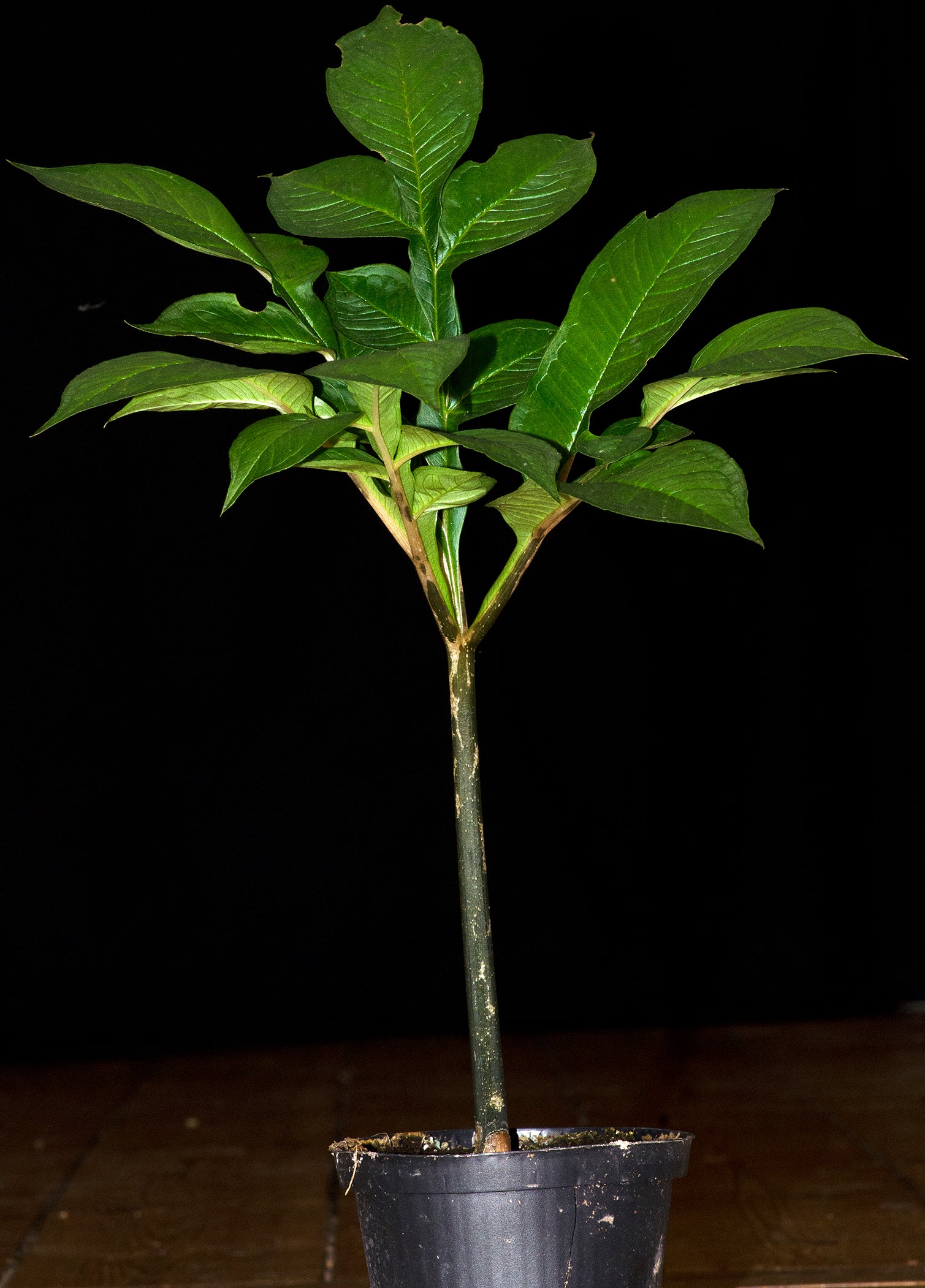
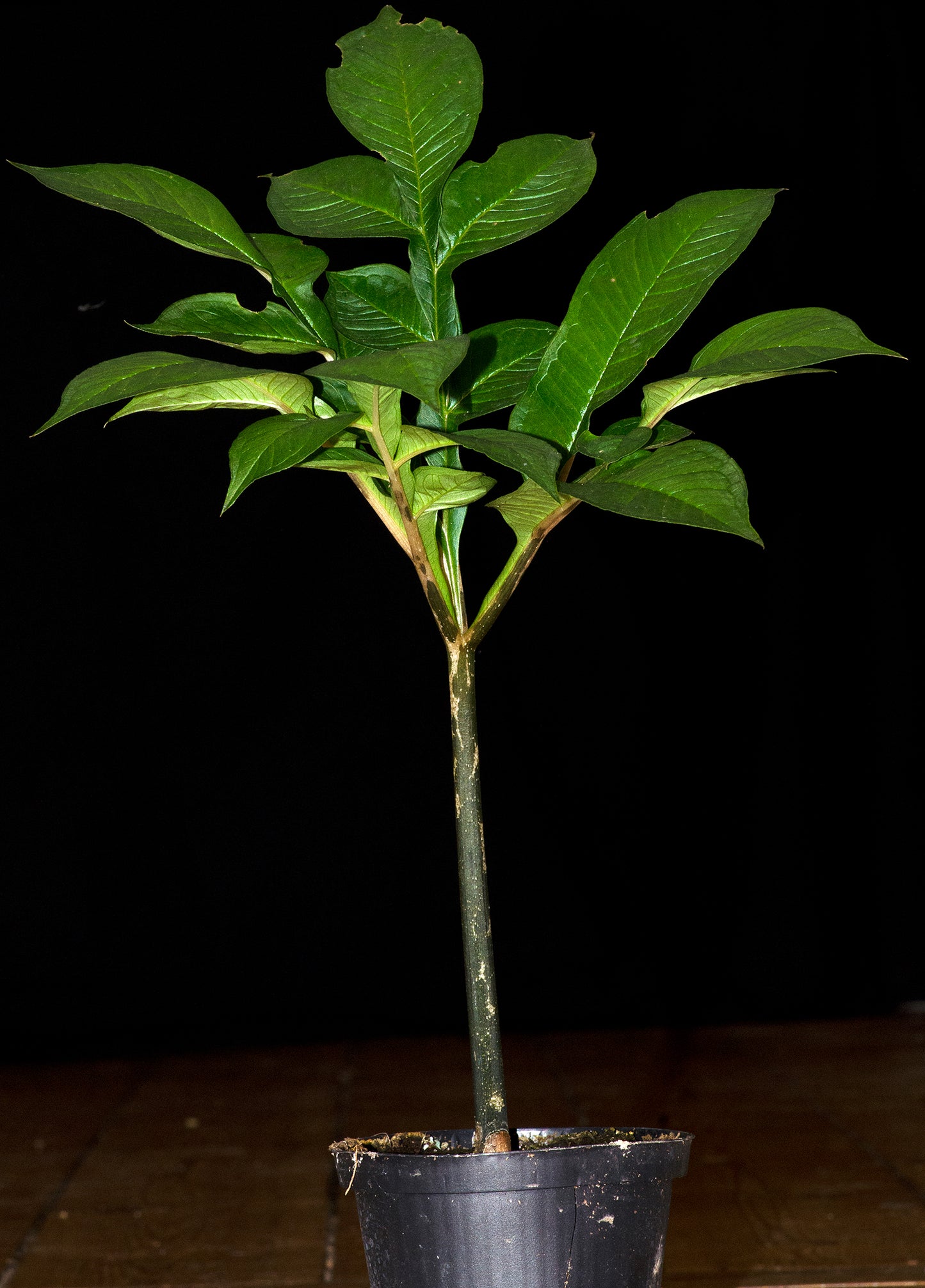
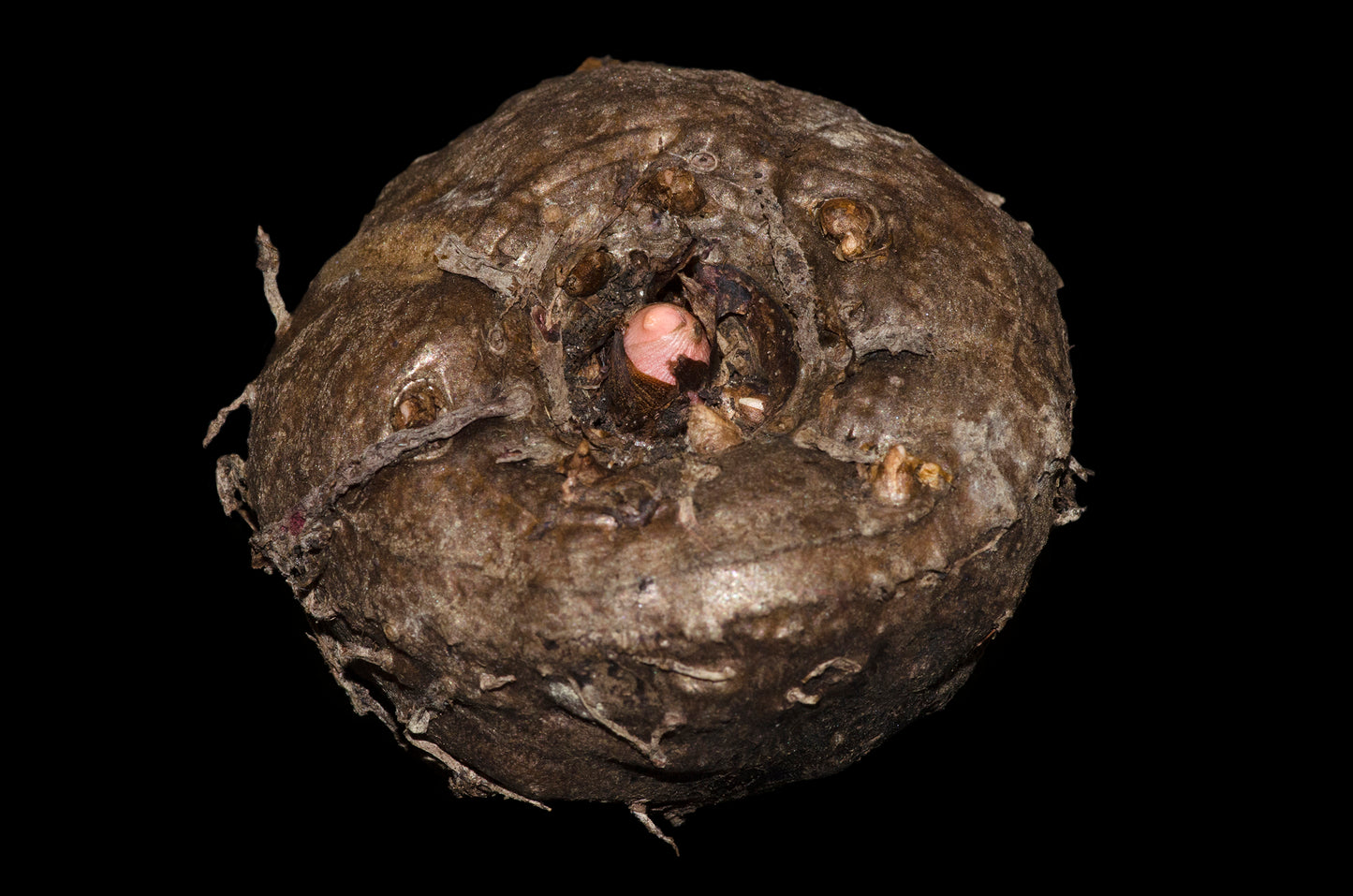
The plant grows from a round, fleshy tuber that sends up one large leaf each year. The leaf is borne on a sturdy, mottled stem, which has given the plant its Danish name, "leopard stem." The leaf itself is broad, divided, and umbrella-shaped, and over time it can give the plant an almost palm-like appearance.
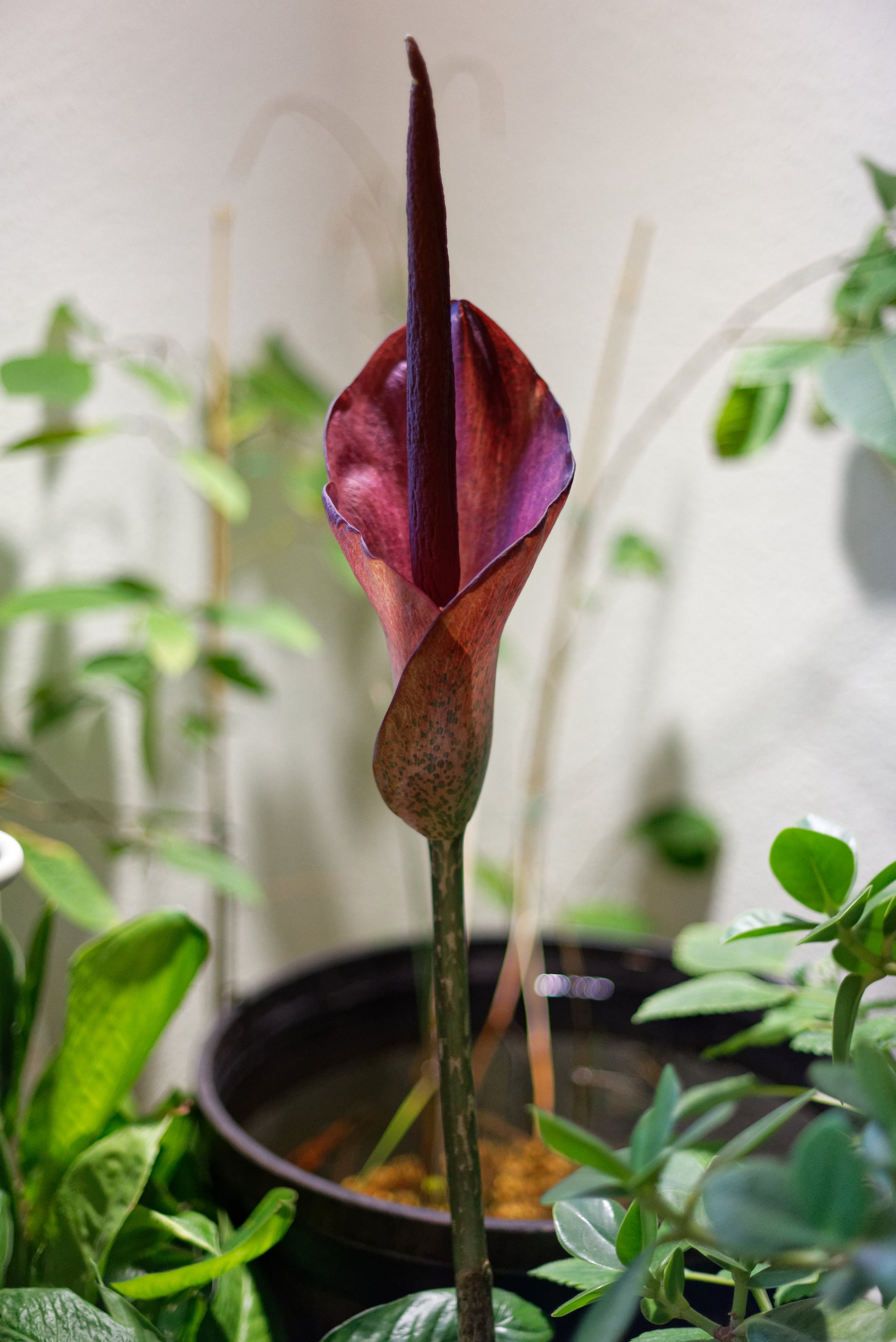
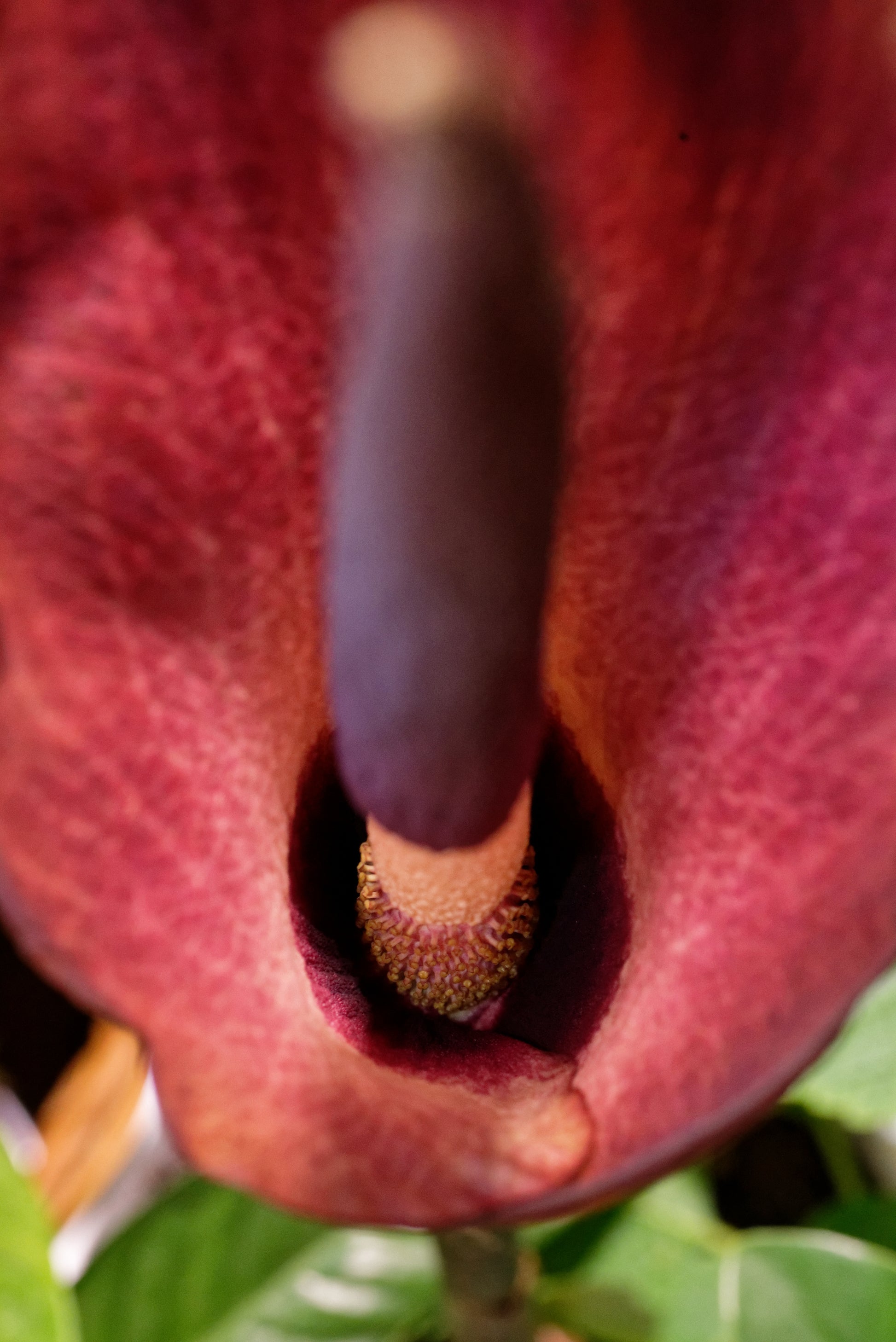
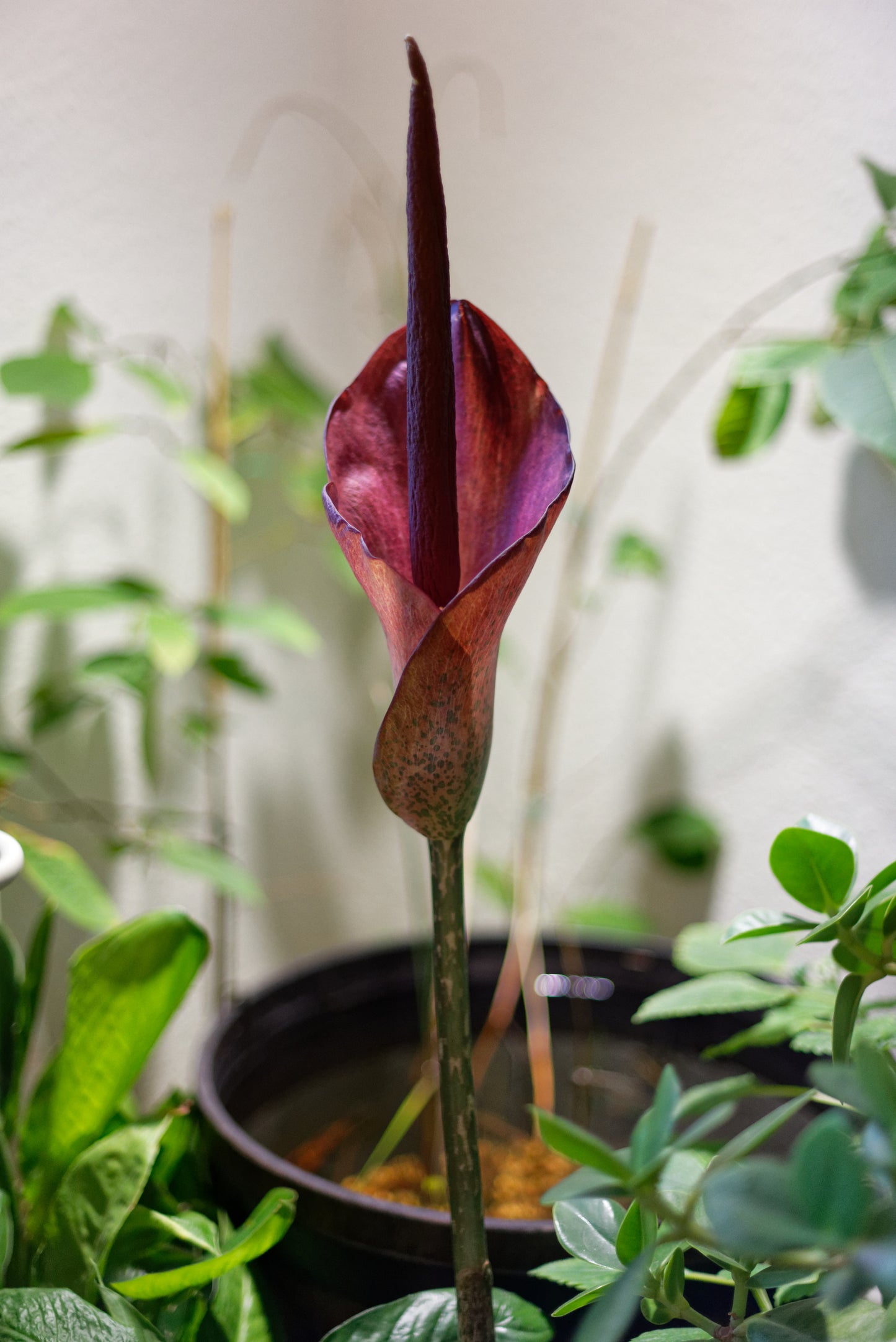
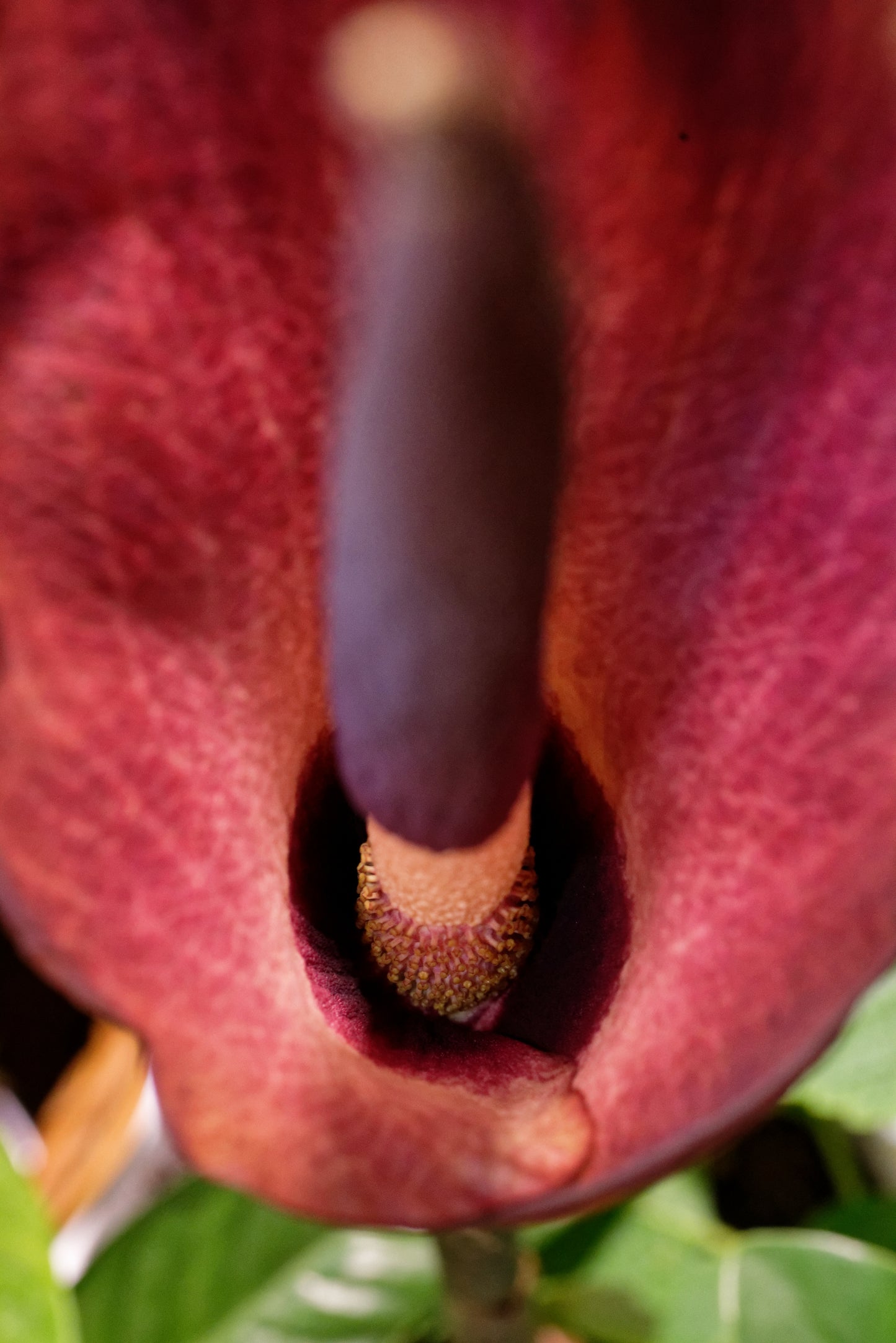
When the tuber becomes large enough, the plant may produce an impressive inflorescence in dark reddish, purple, and brownish shades instead of a leaf. The flower emits a strong odor for a short period to attract pollinating insects. This is part of the plant's natural biology and one of the things that makes the genus so remarkable.
Tuber, plant, and dormancy
Amorphophallus konjac has a clear growth cycle. During the growing season, it forms a leaf and stores energy in the tuber. When the leaf withers, the plant goes into dormancy. This typically happens in the autumn, but the timing can vary depending on temperature, light, and growing conditions.
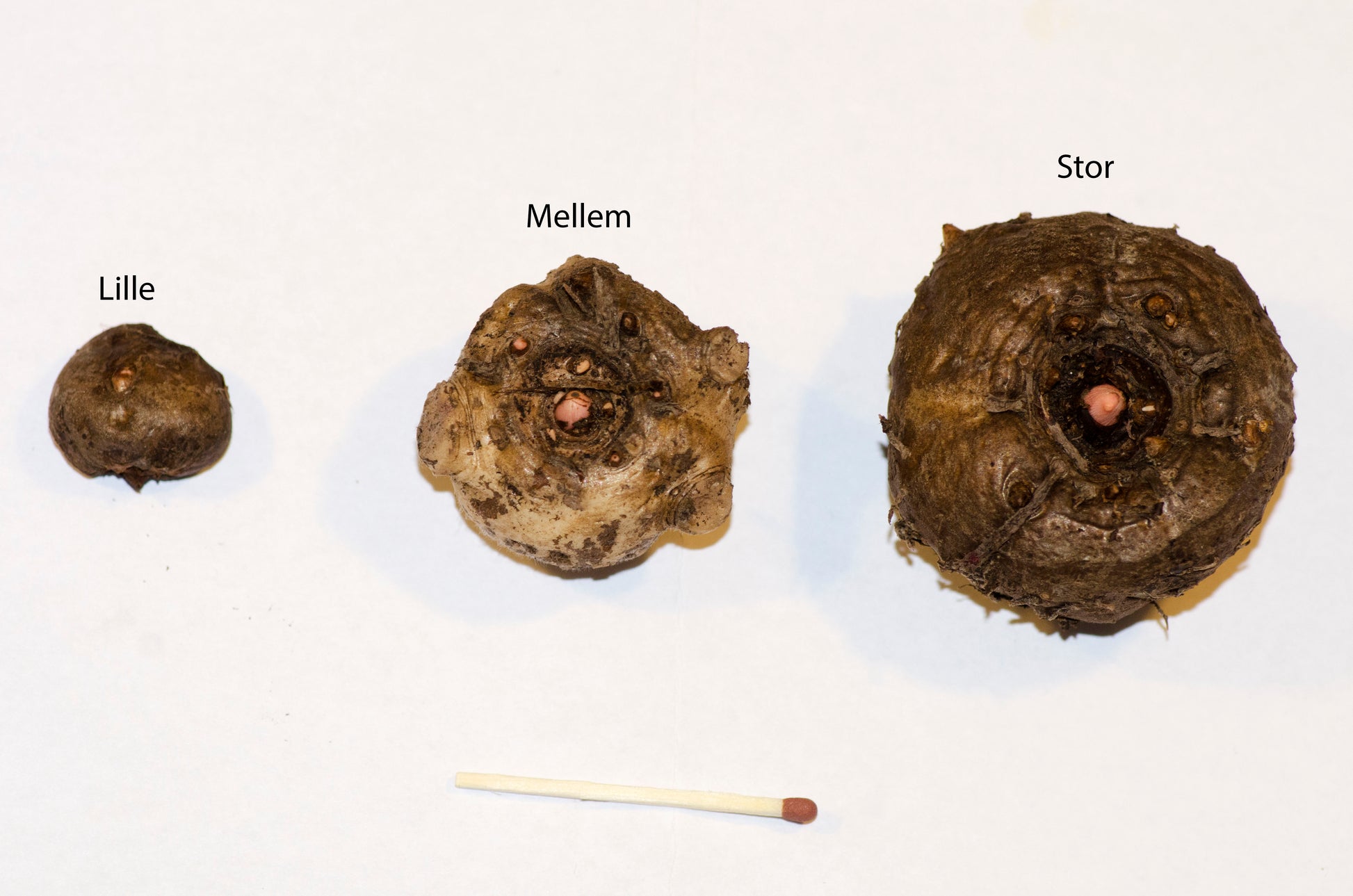
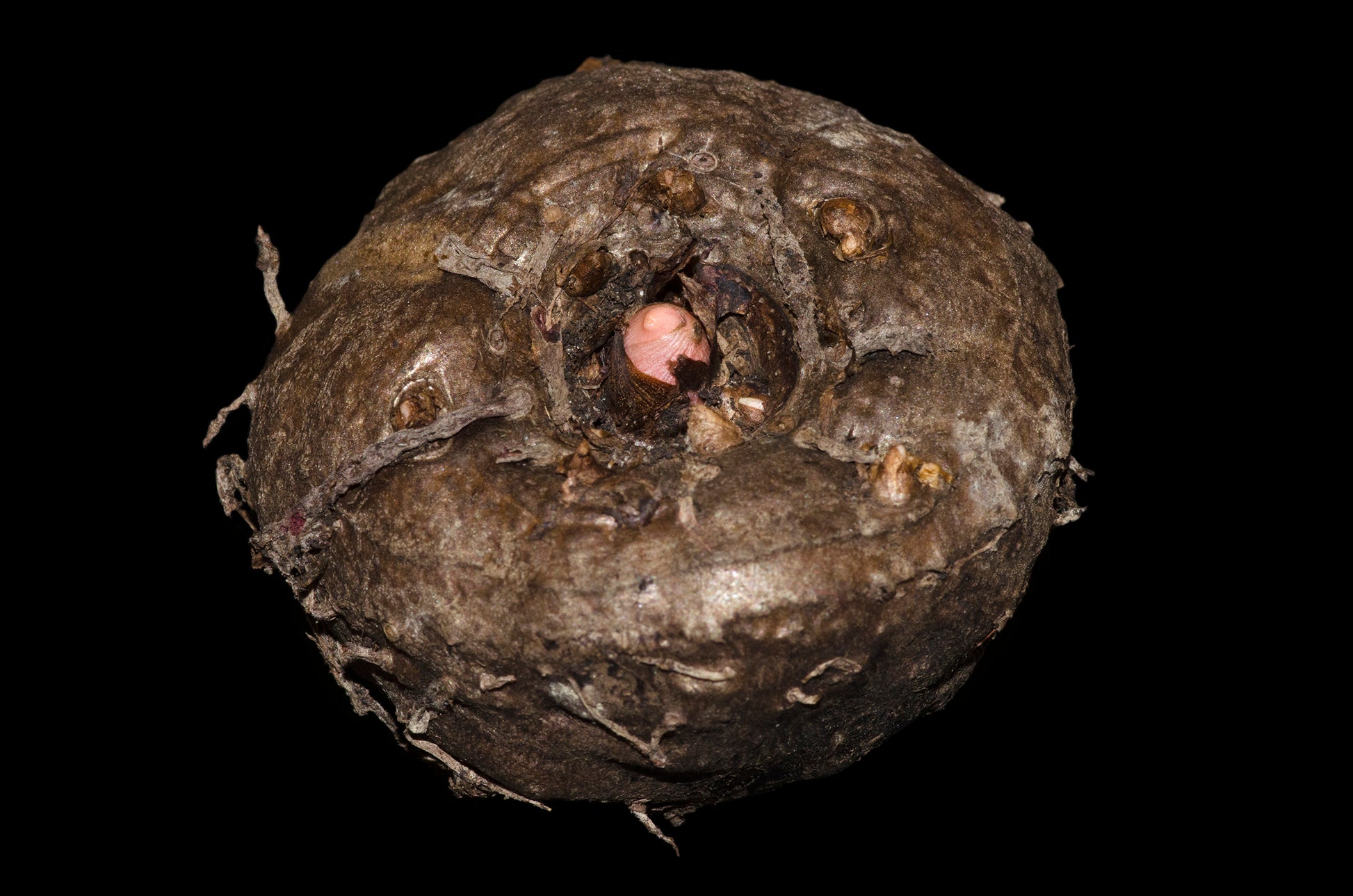
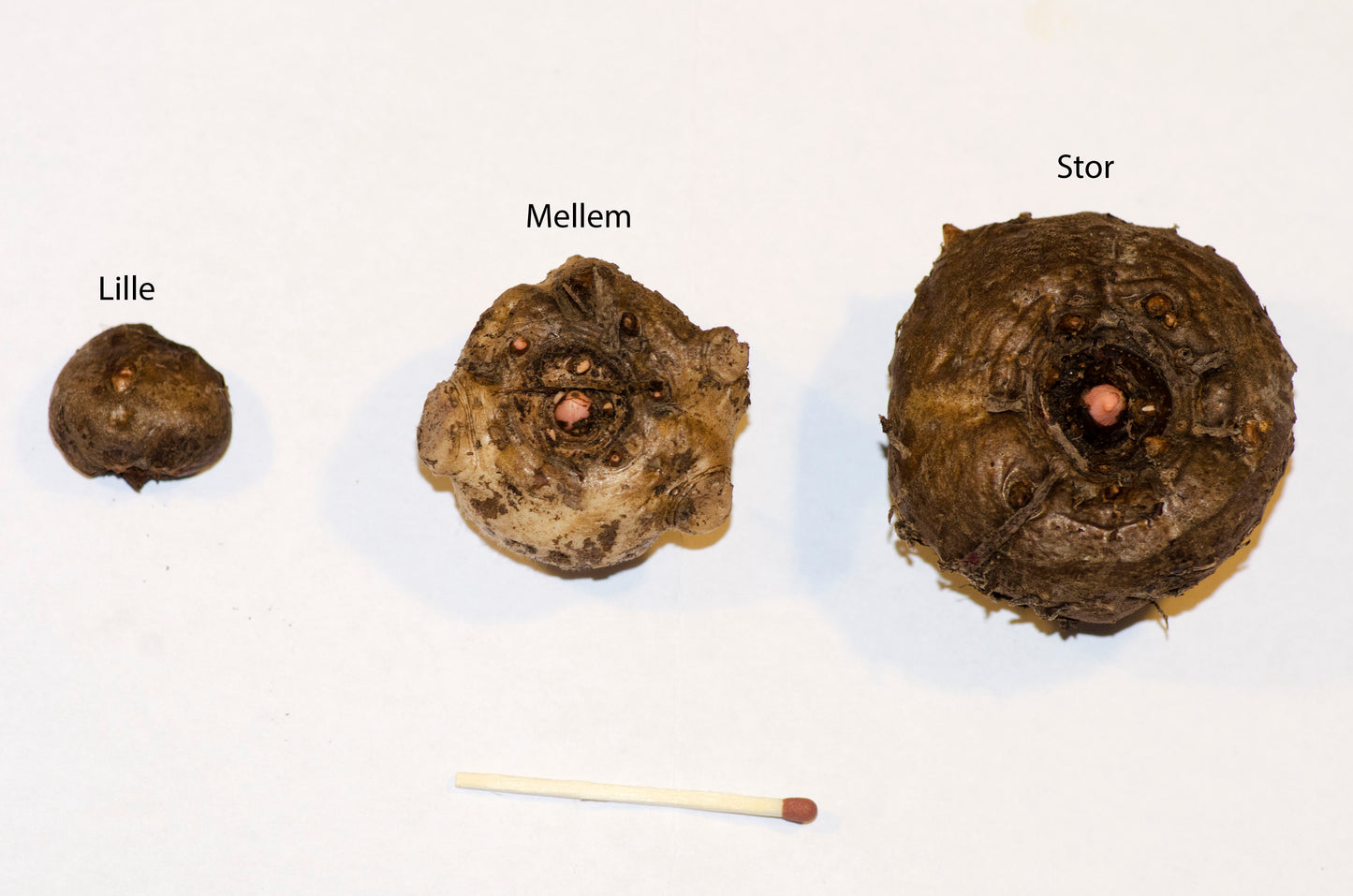
We sell Amorphophallus konjac either as a dormant tuber or as a plant in growth. However, they are easiest to ship as tubers. A dormant tuber may look very nondescript, but it contains all of the plant's future growth. A plant in growth has already formed shoots or a leaf and must be treated as an actively growing plant.
Cultivation and care
The tuber should be planted in a spacious pot with well-drained, nutrient-rich, and humus-rich soil. When the tuber shows signs of growth, it is placed in the soil with the growth point facing up and covered with approximately 5-10 cm of soil, depending on the size of the tuber.
During the growing season, the plant thrives best in a bright spot, but without harsh, direct midday sun. Partial shade, filtered light, or a bright location without drying out works well. The soil should be kept slightly moist, but never wet, as the tuber can rot in standing moisture.
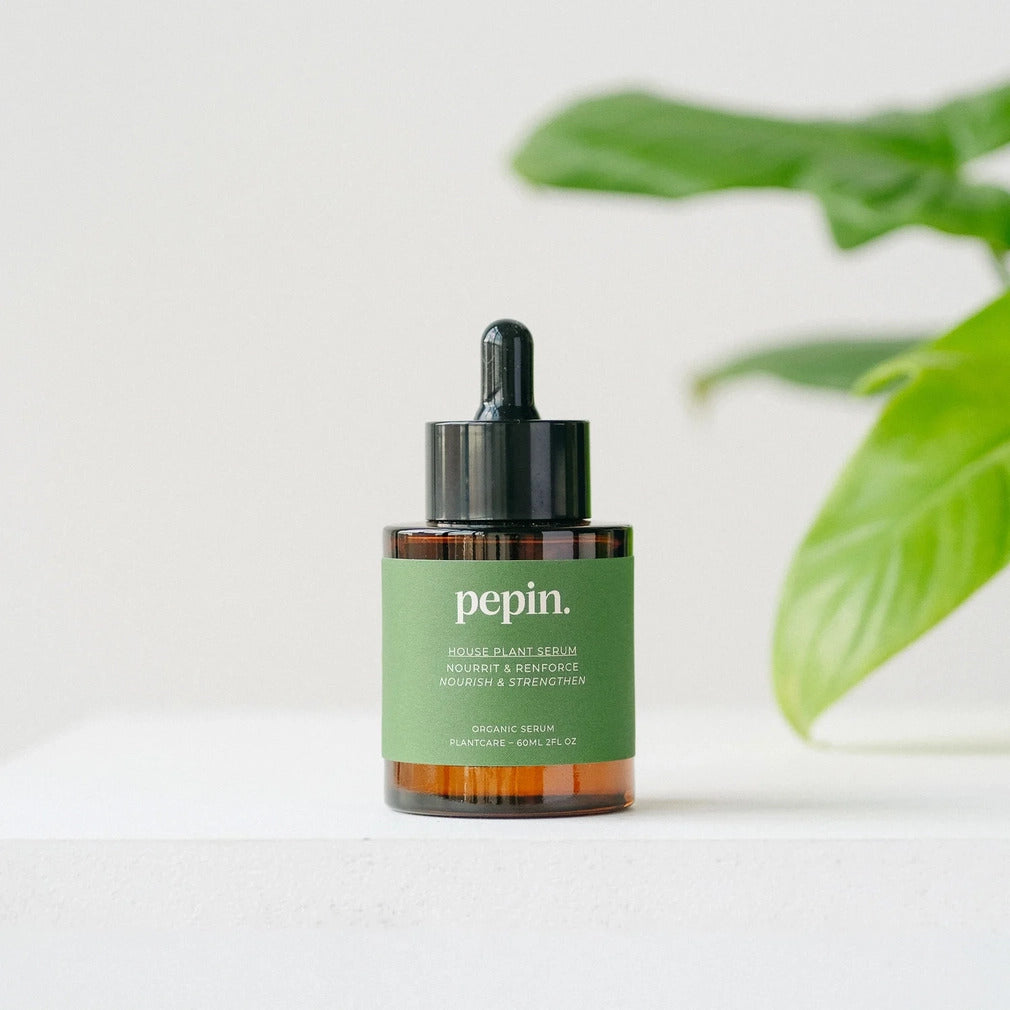
During active growth, the plant appreciates regular fertilization. A good organic fertilizer during the growing season helps the tuber grow larger from year to year.
Overwintering
When the leaf begins to yellow and collapse, reduce watering gradually. Once the leaf has completely withered, the tuber can either remain in dry soil or be dug up and stored in a dark, dry, and cool place. We usually store the tubers in a dark, dry place until new growth appears.
The species is not frost-tolerant and should therefore be grown frost-free in Denmark. A temperature of around 10-15 °C is suitable during the dormant period, while the plant thrives best in warm conditions when in active growth.
Uses
Amorphophallus konjac is also known as an important utility plant. The tuber contains glucomannan, which is used in Asian cooking and in products such as konjac noodles, jelly, and konjac flour. However, the tuber must be processed correctly before being used as food and should not be eaten raw.
Note
Choose the variant based on whether you want a dormant tuber or a plant in growth. Dormant tubers are shipped without leaves and can only begin to shoot when the conditions match the plant's natural growth cycle. Tubers are usually available in autumn and winter, and plants are available in spring and summer.
- Also read our article on Amorphophallus
The images are intended as examples of the species and do not necessarily represent the exact plant or tuber being purchased.
Size
Size
up to 1.5 meters
Childcare
Childcare
Difficulty level
Difficulty level
Beginner
NB
NB
Yes, the flowers smell awful :)
ALSO REMEMBER
Organic fertilizer (houseplants)