


Borregaard
Anthocoris pirate bug (200 pcs.) | against beech aphids
Anthocoris pirate bug (200 pcs.) | against beech aphids
Couldn't load pickup availability
Anthocoris pirate bug – Natural control of beech aphids, pear psyllids, and other pests
- FREE SHIPPING!
⚠️ Note: The beneficial insects are shipped only once a week (Tuesday). Order by Monday at 08:00 – and remember to pick up the package immediately upon arrival.
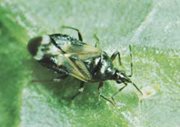
The Anthocoris pirate bug is an effective and versatile beneficial insect used to control beech aphids in beech hedges and pear psyllids in pear trees, but it also consumes a wide range of other small pests such as spider mites, thrips, and aphids on both ornamental plants and fruit trees.
The pirate bug is a small, fast predator that feeds by sucking the juices out of its prey. It actively hunts on the leaves and between branches where aphids gather, and both adult pirate bugs and nymphs participate in pest control. Each pirate bug can consume many aphids per day, and once established, they can keep pests under control throughout the season.
The product is supplied as approx. 200 pirate bugs – enough for a standard residential garden with up to 50 meters of hedge or a few fruit trees.
Benefits of Anthocoris pirate bugs:
- Effective biological control of beech aphids and pear psyllids
- Can also consume spider mites, thrips, and other small pests
- Rapid action and lasting effect once the population is established
- Completely natural and non-toxic solution – does not harm plants, animals, or humans
Application:
- Release the pirate bugs immediately upon receipt as soon as an infestation is detected.
- Distribute the pirate bugs evenly in the hedge or on the infested plants – preferably directly where the aphids are located.
- For beech hedges, release is recommended shortly after leaf emergence when the first aphids are seen.
- In pear trees, release the pirate bugs as soon as pear psyllids are discovered.
Coverage:
- One package (approx. 200 units) covers approx. 50 meters of beech hedge or a row of fruit trees in an average garden.
Follow the control process:
After release, it typically takes 2–3 weeks for the larvae and adult pirate bugs to become established and significantly reduce the number of pests. They can then keep the population down for the rest of the season.
Environmental conditions:
- Pirate bugs thrive best in mild, humid weather and on plants with dense foliage.
- Avoid using pesticides before and after release, as these can harm the pirate bugs.
- Can be used in gardens, orchards, and greenhouses.
Signs of beech aphids in beech hedges
Beech aphids can be a recurring problem in beech hedges and beech trees, especially in spring and early summer, when new, soft leaves provide favorable conditions for aphids. The infestation is often seen shortly after leaf emergence and can develop quickly.
One of the most characteristic signs is a whitish, almost cotton- or wool-like coating on the underside of the beech leaves. Beech aphids secrete white wax threads that can make a large colony appear as if the leaves are covered in small white tufts. If you look closely, you can see the small aphids among the wax threads.
Beech aphids suck plant sap from the leaves while secreting large amounts of honeydew. In cases of heavy infestation, the leaves and vegetation under the hedge can therefore become sticky. The honeydew can subsequently form a breeding ground for dark sooty mold.
Infestations are primarily located on the underside of young leaves and on new growth. Over time, the leaves may become yellowish, curled, or appear weakened. A well-established beech hedge can usually tolerate minor infestations, but heavy infestations – especially on young or weakened plants – can significantly affect growth.
Typical signs of beech aphids are:
- White, woolly, or cotton-like coatings on the underside of leaves
- Small aphids hidden among the white wax threads
- Sticky leaves and branches due to honeydew
- Sticky vegetation or deposits under the hedge
- Dark sooty mold developing on the honeydew
- Yellowish, curled, or weakened leaves in cases of heavy infestation
Please inspect the beech hedge shortly after leaf emergence so that an incipient infestation is detected before the colonies become large. Once an infestation is confirmed, Anthocoris pirate bugs can be released directly into the affected hedge. Both nymphs and adults are predatory and help reduce the aphid population.
Important information regarding the delivery of beneficial insects
- Order deadline: The producer packs and ships only once a week – every Tuesday. Your order must reach us by Monday at 08:00.
- Late orders: Orders received after Monday at 08:00 will not be shipped until the Tuesday of the following week.
- Direct delivery: The beneficial insects are shipped directly from the producer to ensure freshness and optimal quality.
- Delivery method: All orders are always delivered to a Bring parcel shop/locker. The system automatically selects the one closest to your address, even if you select home delivery at checkout.
- Prompt pickup: The beneficial insects should be picked up as soon as possible and used immediately upon receipt to ensure the best possible effect.

Are you in doubt about which beneficial insect to choose?
Many pests can look alike, but are best controlled with different beneficial insects. If you are unsure whether you have thrips, aphids, spider mites, or another pest, you are always welcome to contact us.
You can also read our comprehensive guide to biological pest control, where we review the most common pests, how to recognize them, and which beneficial insects provide the best results.
We are happy to help you find the right solution so that you get the most effective and natural control.