
Borregaard
Aphid gall midges/Parasitic wasps | against aphids
Aphid gall midges/Parasitic wasps | against aphids
Couldn't load pickup availability
Aphid midge and parasitic wasps – Natural control of aphids
- FREE SHIPPING!
⚠️ Note: Beneficial insects are shipped only once a week (Tuesday). Order by Monday at 8:00 AM – and remember to pick up the package immediately upon arrival.
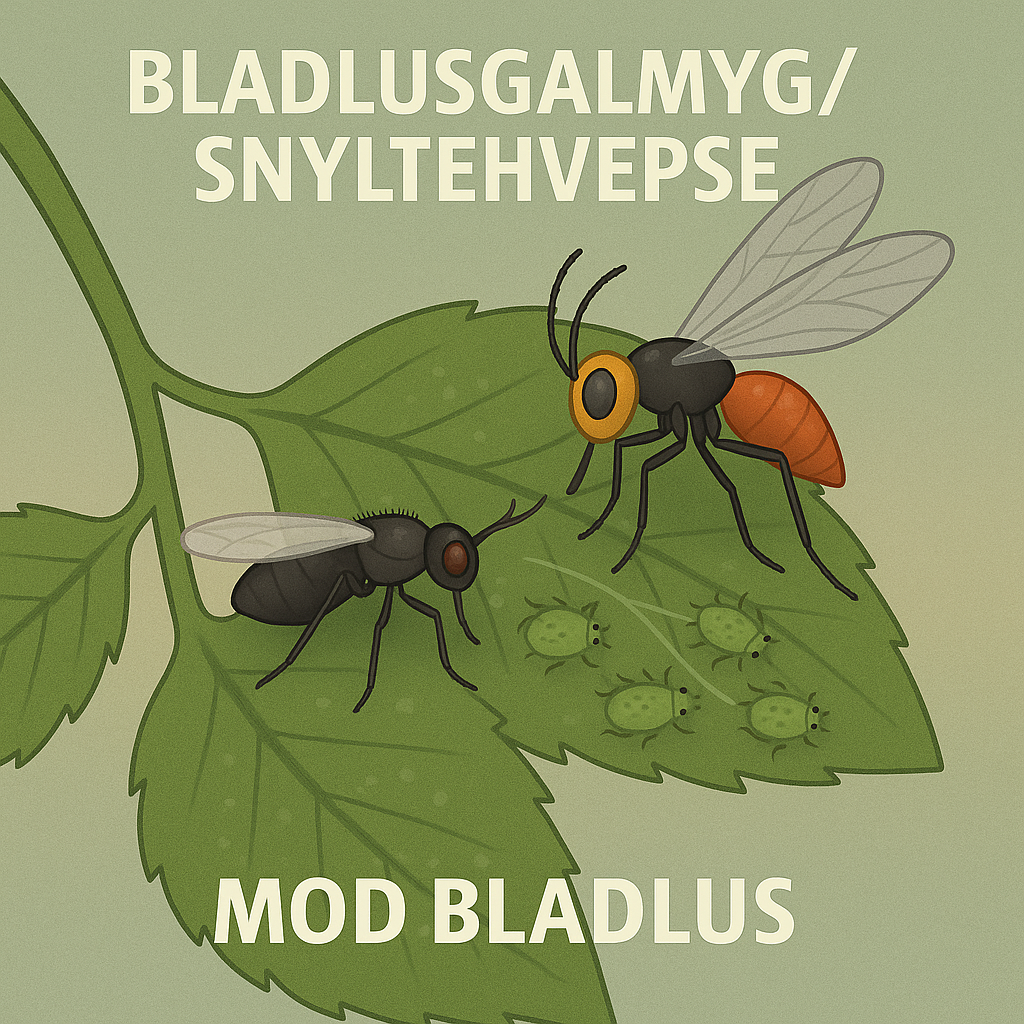
Combat aphids effectively and completely without chemicals using a combination of two natural beneficial insects: aphid midge (Aphidoletes aphidimyza) and parasitic wasps (Aphidius colemani). Together, they attack aphids in two different ways, ensuring rapid and broad control of many species.
The product is supplied as a mixture of approx. 225 midges and 75 parasitic wasps, mixed in granules. This combination provides both a quick “here and now” effect and ongoing control, as the beneficial insects multiply as they find new aphids.
How the beneficial insects work:
🪰 Aphid midge – The adult midges lay eggs in aphid colonies. Once the larvae hatch, they immediately start hunting. Each larva can kill and drain a large number of aphids before pupating in the soil. After approx. 14 days, new midges hatch to continue the control.
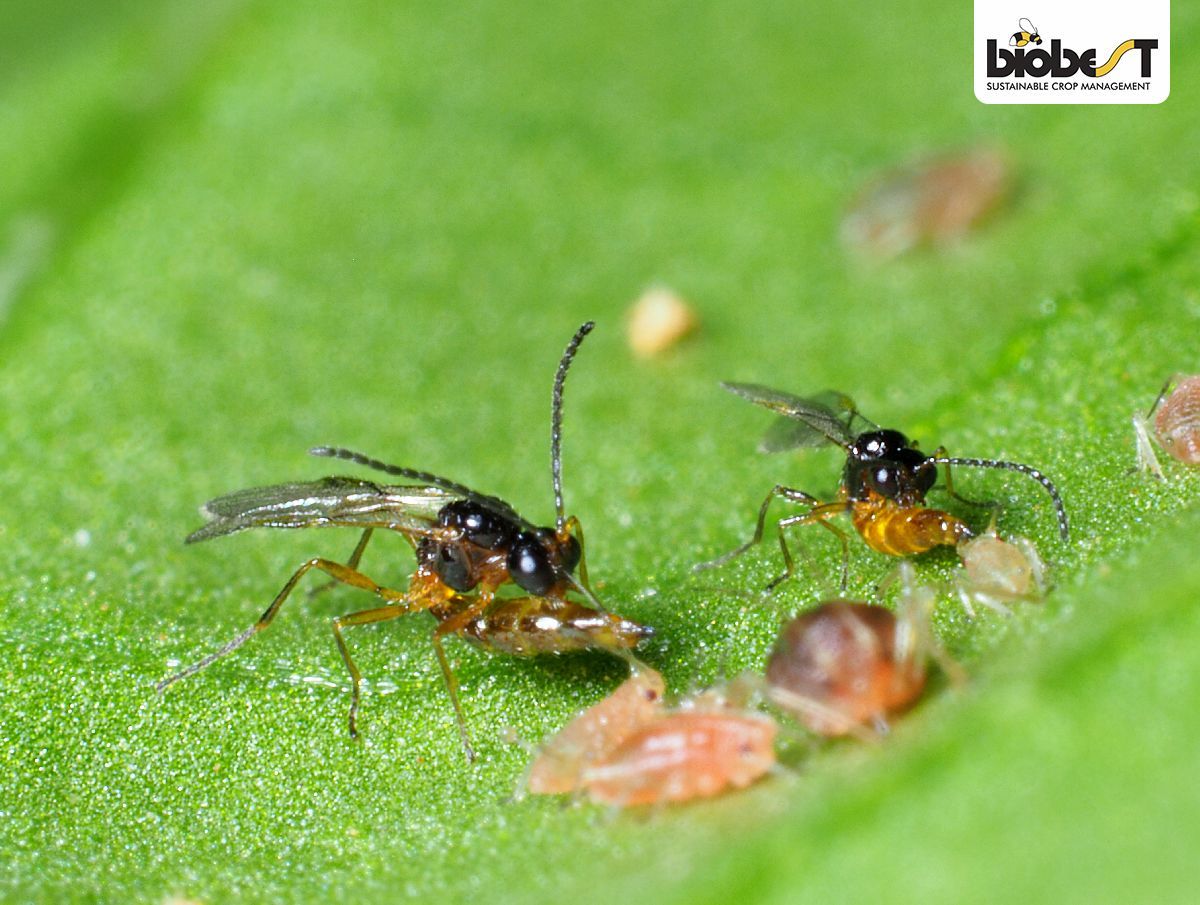
🐝 Parasitic wasps – The parasitic wasps lay eggs inside the aphids. After a few days, the aphid dies and swells into a brown cocoon. After about two weeks, a new parasitic wasp hatches and continues the hunt for aphids.
Benefits of aphid midge and parasitic wasps:
- Effective against many species of aphids
- Combination of rapid and long-lasting effect
- 100% natural and non-toxic solution
- Suitable for greenhouses, houseplants, and garden beds
Application:
- Open the box near the plants where there is an infestation.
- Place the box in the shade under the plants – e.g., on an overturned flowerpot.
- The beneficial insects will fly out on their own and begin control.
- Alternatively, the contents can be distributed in bio-boxes, which are hung in the plants. (Bio-boxes can be purchased separately.)
- For heavy infestations, it can be beneficial to use insecticidal soap or a light water misting before release.
Monitor the control:
- After approx. 1 week, you will be able to see drained, dead aphids (from midge larvae).
- After approx. 14 days, grey-brown cocoons (from the parasitic wasps) will be visible – a sign that the control is working.
Signs of aphids on plants
Aphids are among the most common pests on houseplants, greenhouse plants, and garden plants alike. These small, soft-bodied insects often cluster in colonies on new shoots, young leaves, flower buds, and the undersides of leaves, where they suck plant sap.
One of the first signs of aphids is often curled, rolled, or deformed leaves and new shoots. With larger infestations, the plant's growth may be stunted, and flower buds and new shoots may develop poorly.
Aphids also secrete a sugary liquid called honeydew. Therefore, leaves and stems may feel unusually sticky. Over time, a dark coating of sooty mold may grow on the honeydew. Many ants on a plant can also be a sign of aphids, as ants are attracted to the honeydew and often actively protect aphid colonies from their natural enemies.
Aphids can be green, black, brown, reddish, or almost white depending on the species and developmental stage. Most are only a few millimeters long. If you see small groups of soft-bodied insects gathered closely around the plant's fresh growth, there is good reason to examine the plant more closely.
Typical signs of aphids are:
- Colonies of small aphids on new shoots and the underside of leaves
- Curled, deformed, or rolled leaves
- Weakened or deformed new shoots and flower buds
- Sticky leaves and stems due to honeydew
- Black sooty mold on leaves with significant honeydew
- Many ants moving up and down the plant
The earlier an aphid infestation is detected, the easier it is to control with beneficial insects. For minor and local colonies, lacewing larvae or ladybug larvae can be highly effective, while aphid midge and parasitic wasps are suitable for broader and continuous biological control.
Important information regarding the delivery of beneficial insects
- Order deadline: The producer packs and ships only once a week – every Tuesday. Your order must be received by us no later than Monday at 8:00 AM.
- Late orders: Orders received after Monday at 8:00 AM will be shipped on the Tuesday of the following week.
- Direct delivery: Beneficial insects are shipped directly from the producer to ensure freshness and optimal quality.
- Shipping method: All orders are always delivered to a Bring parcel shop/parcel locker. The system automatically selects the one closest to your address, even if you choose home delivery at checkout.
- Prompt pickup: Beneficial insects should be picked up as soon as possible and used immediately upon receipt to ensure the best possible effect.
Are you in doubt about which beneficial insect to choose?
Many pests can look alike, but are best controlled with different beneficial insects. If you are unsure whether you have thrips, aphids, spider mites, or another pest, you are always welcome to contact us.
You can also read our comprehensive guide to biological pest control, where we review the most common pests, how to recognize them, and which beneficial insects provide the best results.
We are happy to help you find the right solution so that you get the most effective and natural control.