


Borregaard
Californicus predatory mites | against fruit tree spider mites
Californicus predatory mites | against fruit tree spider mites
Couldn't load pickup availability
Californicus predatory mites – Effective control of fruit tree spider mites
- FREE SHIPPING!
⚠️ Note: Beneficial insects are only shipped once a week (Tuesday). Order by Monday at 8:00 AM – and remember to pick up the package immediately upon arrival.
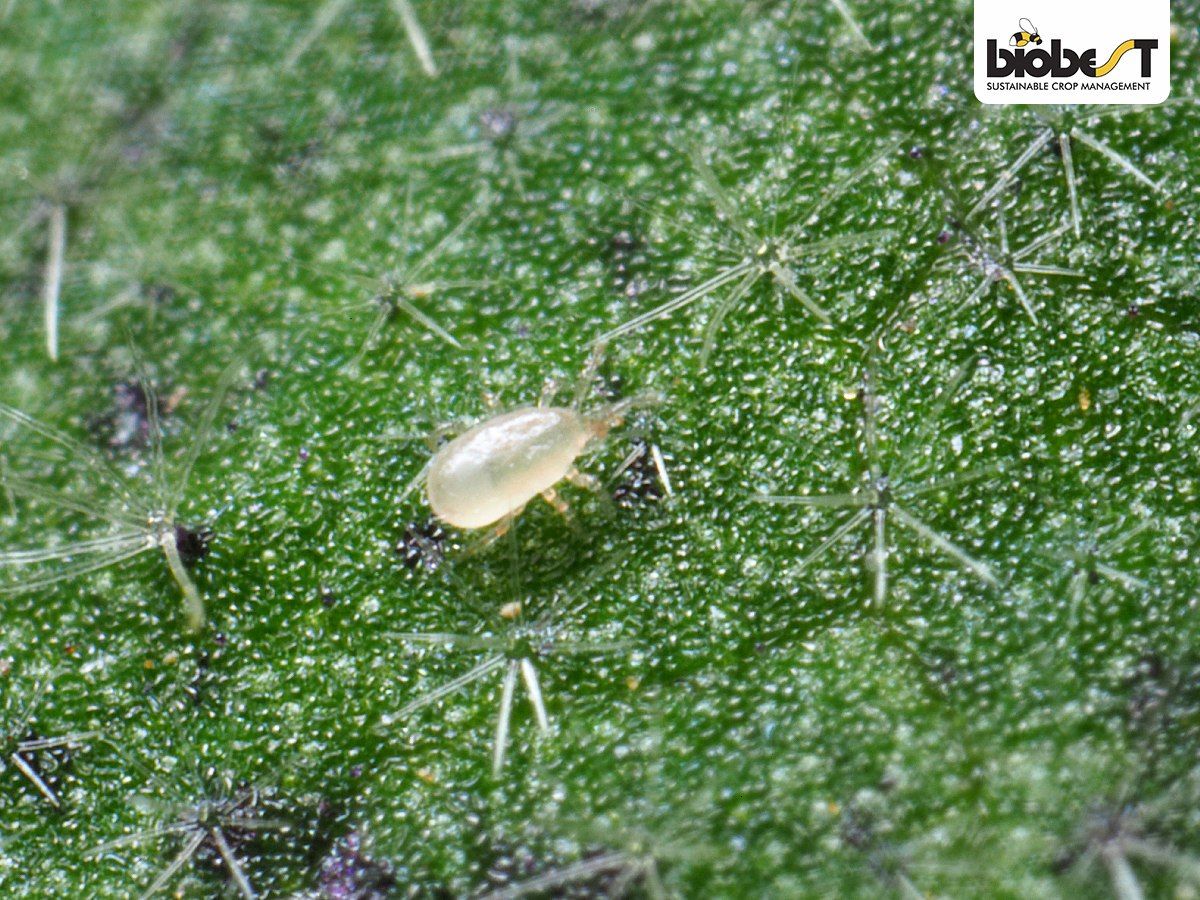
The Californicus predatory mite is the first choice against citrus and fruit tree spider mites (Panonychus sp.), which often attack citrus, ficus, peach, apple trees, and other fruit and ornamental plants. These spider mites differ from the common greenhouse spider mite and cannot be effectively controlled with the classic predatory mite (Phytoseiulus persimilis).
Californicus is therefore the obvious choice when dealing with dark red fruit tree spider mites – in greenhouses, sunrooms, and on fruit trees. The product is delivered in 10 small sachets or a bottle with 5,000 predatory mites, ready for release. The sachets are hung in the infested plants, and the predatory mites will crawl out of the sachets over the coming weeks and begin feeding on the spider mites.
In addition to its effect against Panonychus species, Californicus is also effective against the common greenhouse spider mite (Tetranychus). It is particularly well-suited for preventive control, as it can survive longer without food than the Phytoseiulus predatory mite. However, for heavy and established infestations of greenhouse spider mites, Phytoseiulus persimilis is still recommended.
Benefits of Californicus predatory mites:
- First choice against citrus and fruit tree spider mites
- Can also be used preventively against common spider mites
- More robust than many other predatory mites
- Non-toxic and 100% natural pest control
- Suitable for fruit trees, citrus, ficus, and ornamental plants
Important before ordering:
Use a magnifying glass to identify whether the infestation is caused by citrus/fruit tree spider mites or common greenhouse spider mites. Choosing the correct beneficial insect is essential for effective control.
Temperature and conditions:
- Active in the temperature range 12–38 °C
- Optimal effect at 18–33 °C
- Tolerates cold nights down to 3–4 °C, but is not active at these temperatures
- Suitable for greenhouses, sunrooms, and outdoor use during warm periods
Contents:
- 1 bottle with 5,000 Californicus predatory mites
Signs of fruit tree spider mites
Fruit tree spider mites (Panonychus sp.) are very small mites that suck plant sap from the leaves of, among others, apple, peach, citrus, ficus, and other fruit and ornamental plants. Infestations are therefore often first discovered by the damage the mites leave on the leaves.
One of the first signs is many small, light-colored dots or a fine mottled discoloration on the leaves. As the infestation develops, the leaves can take on a more dull, grayish, or bronze appearance. In cases of severe infestation, the plant's photosynthesis is reduced, the leaves weaken, and they may wither or fall off prematurely.
The fruit tree spider mites themselves are very small and can be difficult to see with the naked eye. Adult mites are typically dark red to reddish-brown and are found especially on the undersides of leaves. A 10× magnifying glass is therefore a very good tool for examining the plant and determining which type of spider mite you have.
On deciduous fruit trees, you can also find the small red winter eggs on the bark around buds, branch angles, and younger shoots. Large quantities of eggs can be a sign that there is a risk of a new infestation when temperatures rise.
Fruit tree spider mites or common spider mites?
It is important to know the difference, because they are not necessarily best controlled with the same beneficial insect.
Fruit tree spider mites of the genus Panonychus are typically dark red and can attack fruit trees and citrus, among others. The Californicus predatory mite is a good choice against these mites.
The common greenhouse spider mite (Tetranychus urticae) is often lighter, yellowish or greenish with darker spots on the body and, in cases of severe infestation, can form the characteristic fine webbing between leaves and stems. For an established infestation of common greenhouse spider mites, the predatory mite (Phytoseiulus persimilis) is usually the best choice.
If you are unsure which spider mite you have, we recommend that you examine both the mites and the undersides of the leaves with a magnifying glass before ordering beneficial insects.
Typical signs of fruit tree spider mites are:
- Fine light dots and mottled discolorations on the leaves
- Dull, grayish, or bronze-colored leaves in more severe infestations
- Small dark red or reddish-brown mites, especially on the underside of leaves
- Red winter eggs on bark and around buds on deciduous fruit trees
- Weakened leaves and premature leaf drop in severe infestations
Important information about delivery of beneficial insects
- Order deadline: The producer packs and ships only once a week – every Tuesday. Your order must be received by us no later than Monday at 8:00 AM.
- Late orders: Orders received after Monday at 8:00 AM will not be shipped until the following Tuesday.
- Direct delivery: The beneficial insects are shipped directly from the producer to ensure freshness and optimal quality.
- Delivery method: All orders are always delivered to a Bring parcel shop/locker. The system automatically selects the one closest to your address, even if you select home delivery at checkout.
- Prompt pickup: The beneficial insects should be picked up as soon as possible and used immediately upon receipt to ensure the best possible effect.


Are you in doubt about which beneficial insect to choose?
Many pests can look alike, but are best controlled with different beneficial insects. If you are unsure whether you have thrips, aphids, spider mites, or another pest, you are always welcome to contact us.
You can also read our comprehensive guide to biological pest control, where we review the most common pests, how to recognize them, and which beneficial insects provide the best results.
We are happy to help you find the right solution so that you get the most effective and natural control.