a Piece of Nature
Zigzag bladderwort (Utricularia subulata) | seeds, 20 pcs.
Zigzag bladderwort (Utricularia subulata) | seeds, 20 pcs.
Couldn't load pickup availability
- Latin name: Utricularia subulata
- Danish names: Finblomstret blærerod
- English names: Zigzag bladderwort, slender bladderwort
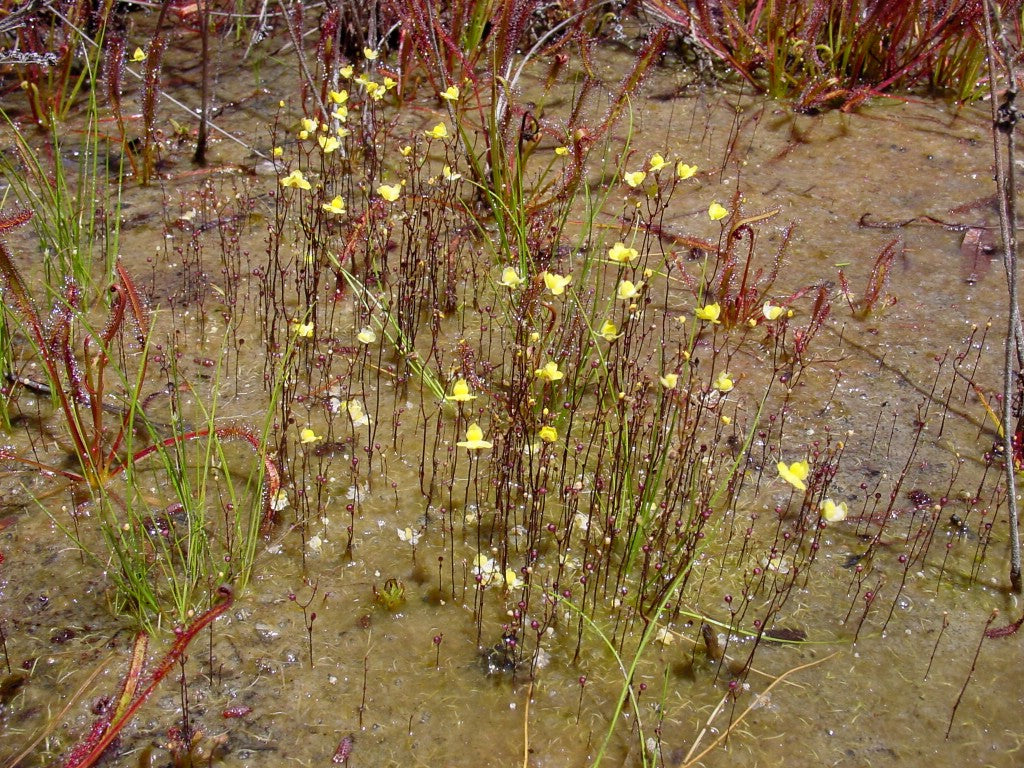
Utricularia subulata is an elegant, small carnivorous plant from the bladderwort family, widespread across large parts of the world, including South and Central America, Africa, Asia, and even parts of North America. It grows in moist, nutrient-poor environments such as swamps, ditches, wet sandy soil, and open bogs—places where there is little nutrition in the soil. To compensate, the plant has developed a brilliant strategy: microscopic underground traps that suck in small animals in a fraction of a second.
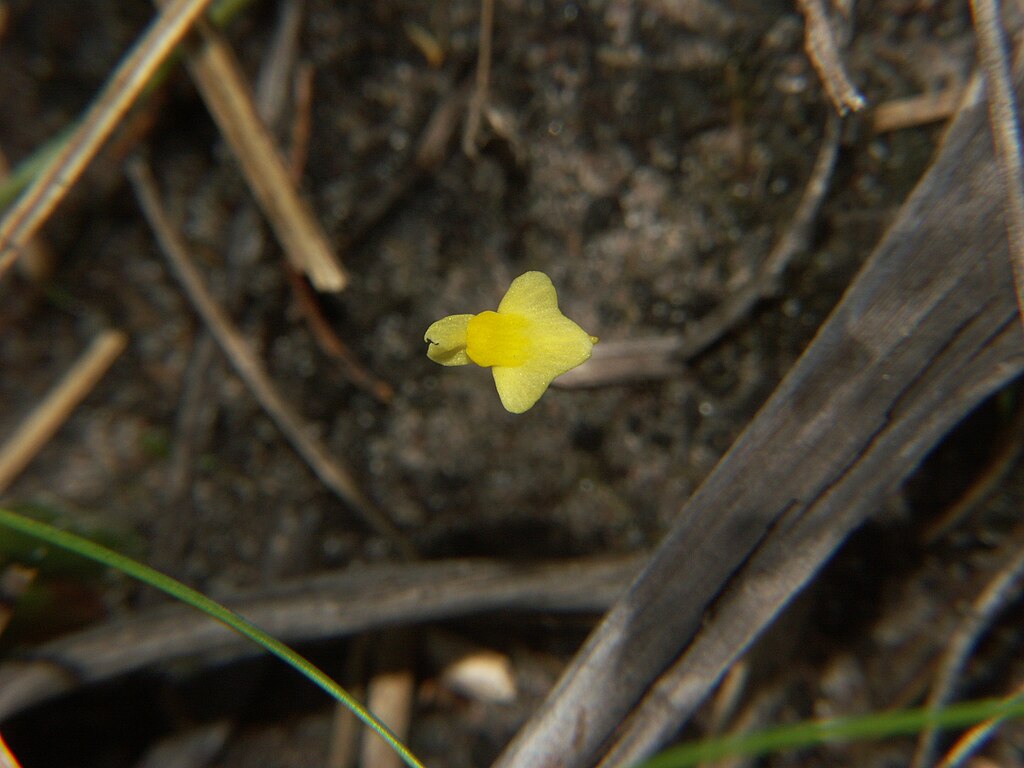
The plant forms fine, thread-like runners and very narrow leaves that can be almost difficult to spot. Above ground, it is especially the small, yellow flowers that make Utricularia subulata so charming. The flowers are delicate, rich yellow, and often shaped with a small, decorative “hood”—and in warm, dark conditions, the species can also form miniature “cleistogamous” flowers that self-pollinate without opening, an unusual adaptation in the plant kingdom.
How it catches its prey – the bladderwort's ingenious traps:
The name bladderwort comes from the plant's microscopic “bladders”—small, underground vacuum traps located along the fine threads below the soil or water surface. Each bladder has a small opening with a kind of “trapdoor,” and when a microscopic animal, such as a water flea or protozoan, touches the trigger hairs around the opening, the trap opens in a few thousandths of a second. The negative pressure inside the bladder sucks the prey in like a tiny vacuum cleaner. Then the trapdoor closes again, and the plant digests the prey to obtain the nutrients it cannot absorb from the nutrient-poor soil.
Cultivation and requirements:
Utricularia subulata is one of the most flexible bladderwort species and can be grown both subtropically and temperately, as long as conditions are moist and nutrient-poor. It thrives well in:
- pure, live or dead sphagnum moss
- a mixture of sphagnum moss and sand
- wet perlite/sphagnum moss
- terrariums, mini-greenhouses, or windowsills with high humidity
The soil must be very moist, almost wet, and only rainwater or demineralized water should be used. It prefers light to partial shade, but not scorching direct sun. It can tolerate temperature variations from 10–30 °C.
Like many other Utricularia species, it spreads quickly when it thrives, forming a fine, low carpet of green threads and small flowers—perfect as a terrarium plant, for plant baskets, or as a botanical curiosity in the collection.
Cultivation from seed:
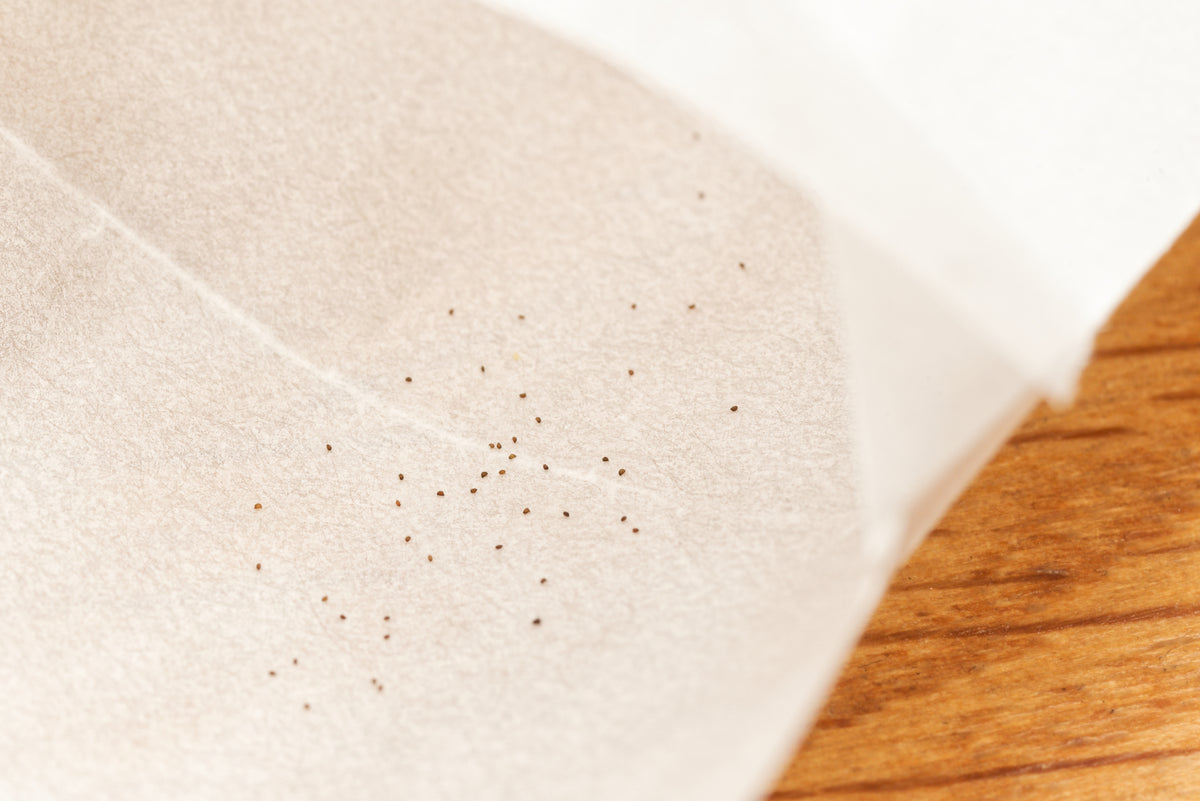
The seeds are sown superficially on very moist sphagnum moss or carnivorous plant soil and must not be covered. Maintain constant moisture and a temperature of 20–28 °C. Germination usually occurs after 2–6 weeks, after which small, thread-like growths appear on the surface.
The young plants are tiny but grow surprisingly fast once established. Utricularia subulata is the perfect plant for those who want to experience carnivorous plants in miniature format—elegant, simple, and at the same time, astonishingly advanced in its method of catching prey.
- The seeds are quite small, but germinate easily.
- REMEMBER the right soil: Carnivorous plant soil.
- Also read about general care for carnivorous plants.
Size
Size
1 cm
Childcare
Childcare
Difficulty level
Difficulty level
Beginner
Suitable for
Suitable for
NB
NB
Small carnivorous plant