a Piece of Nature
White voodoo lily (Amorphophallus albus)
White voodoo lily (Amorphophallus albus)
Couldn't load pickup availability
VERY RARE
- Latin name: Amorphophallus albus
- Danish names: Hvid voodoolilje (rarely used)
- English names: White voodoo lily
Amorphophallus albus is a rare species from southwestern China, where it only grows naturally in the warm and dry valleys along the Jinsha River in the Yunnan and Sichuan provinces. The species is closely related to the better-known Amorphophallus konjac, but differs in its natural habitat, its flowering, and its growth habit. It is also cultivated commercially in China, where the tubers are used for the production of konjac products due to their high glucomannan content.
About the plant
Each year, one large, elegant leaf develops from the tuber on a marbled stalk. The leaf is finely divided, giving the plant an exotic, almost palm-like appearance. Under good conditions, the plant typically reaches 60-100 cm in height, making it slightly more compact than many other species in the genus.
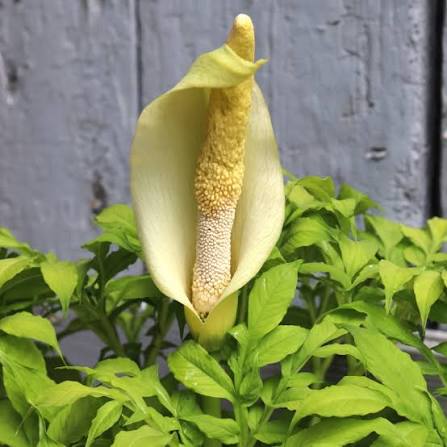
Once the tuber has reached a suitable size, a beautiful inflorescence develops with a light creamy-white to slightly greenish spathe and a light spadix. The light appearance distinguishes the species from the dark purple flowers that many associate with voodoo lilies. Even though the flower is light-colored, it still utilizes the genus's classic strategy and emits a short-lived scent during the flowering period to attract natural pollinators.
A species from dry river valleys
In the wild, Amorphophallus albus grows on rocky mountainsides and in dry river valleys, where winters are dry, while the majority of the year's rainfall occurs during the summer. This natural rhythm is clearly reflected in its cultivation. In the summer, the plant grows rapidly and builds energy in the tuber, while in the autumn, it enters a long dormant period, during which the tuber prefers to remain almost completely dry.
Tuber, plant, and dormancy
The product can be delivered either as a dormant tuber or as a plant in active growth.
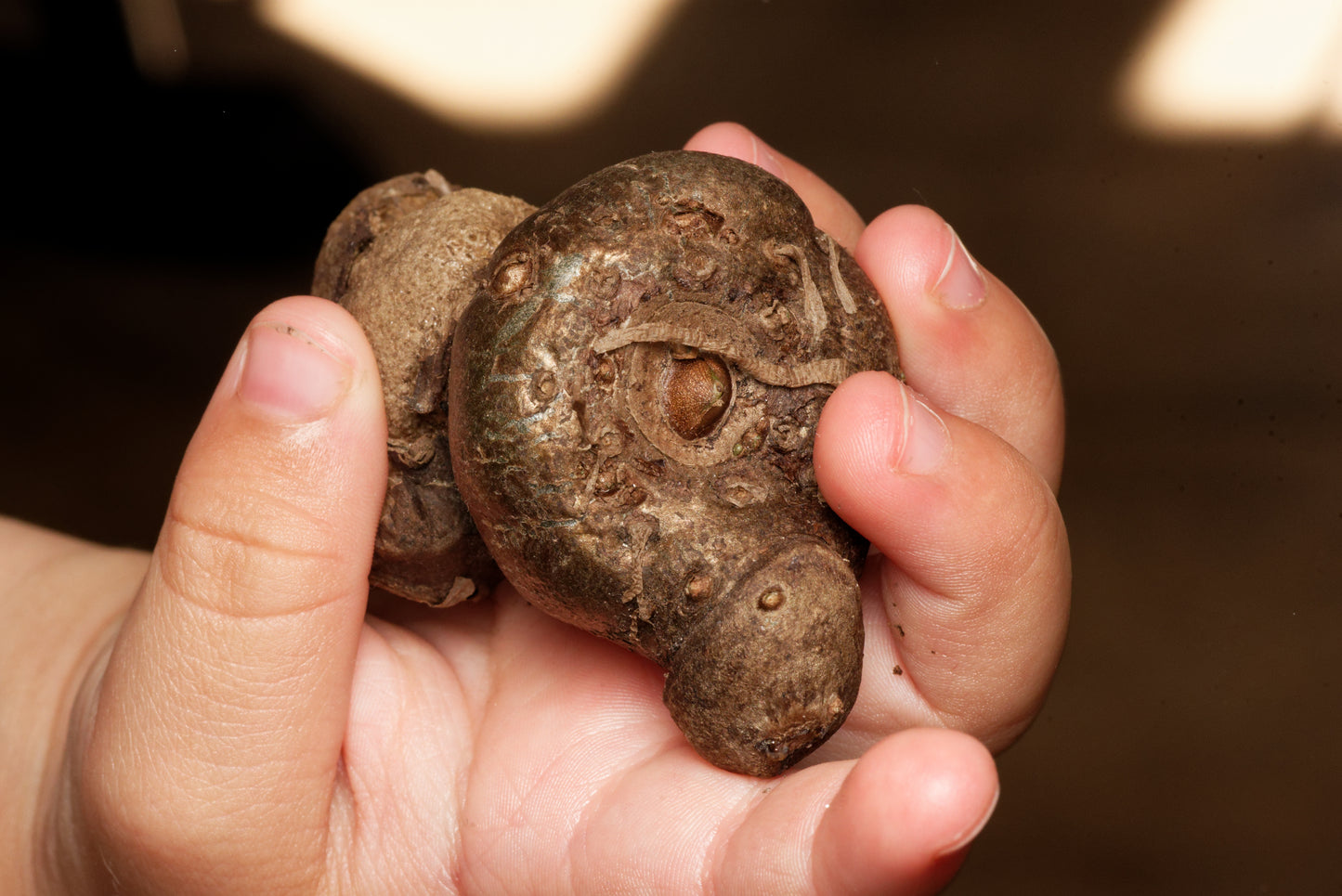
The very young tubers are characteristically elongated and almost cylindrical. It is only after a few years of growth that they develop the more round and robust shape for which mature tubers are known. This is an entirely natural characteristic of the species.
A plant in growth is supplied with a shoot or leaf and should be cultivated as an active plant. Dormant tubers should only be planted once they show clear signs of new growth.
Cultivation and care
Amorphophallus albus thrives best in well-drained, humus-rich soil with a high content of organic matter. The tuber is planted with the growth point facing upward and covered with approximately 5-10 cm of soil, depending on its size.
During the growing season, the plant prefers a bright location without strong midday sun. The soil should be kept evenly moist, but never constantly wet, as the tuber is susceptible to rot. Regular fertilization with a good organic fertilizer throughout the summer results in larger tubers and more vigorous growth the following year.
The species often forms many small offsets around the mother tuber, which gives the mother tuber an octopus-like appearance.
Overwintering
When the leaf begins to yellow and wither, watering should be gradually reduced. After the leaf has completely withered, the tuber can either remain in dry soil or be dug up and stored in a dark, dry, and frost-free place at approximately 10-15 °C until it begins to sprout again.
See more Amorphophallus
Amorphophallus albus is just one of many fascinating species in the voodoo lily genus. See also our selection of Amorphophallus plants and tubers, where you will find both robust beginner species and rare collector's plants from all over the world.
Note
Choose the variant according to whether you want a dormant tuber or a plant in growth. Dormant tubers are shipped without leaves and only begin to sprout when conditions are suitable for the plant's natural growth cycle. Plants are most often for sale in the summer half-year, while tubers are mostly for sale in the winter half-year.
- The images are meant as examples of the species and do not necessarily represent the exact plant or tuber being purchased.
Size
Size
up to 1 meter
Childcare
Childcare
Difficulty level
Difficulty level
Between
NB
NB
Yes, the flowers smell awful :)


ALSO REMEMBER
Organic fertilizer (houseplants)