


Borregaard
Hypoaspis miles (Stratiolaelaps scimitus) soil predator mite | against fungus gnats etc.
Hypoaspis miles (Stratiolaelaps scimitus) soil predator mite | against fungus gnats etc.
Couldn't load pickup availability
Soil Predatory Mites (Hypoaspis miles, syn. Stratiolaelaps scimitus) – Natural control of fungus gnats and soil-dwelling pests
- FREE SHIPPING!
⚠️ Note: The beneficial insects are shipped only once a week (Tuesday). Order by Monday at 8:00 AM – and remember to pick up the package immediately upon arrival.
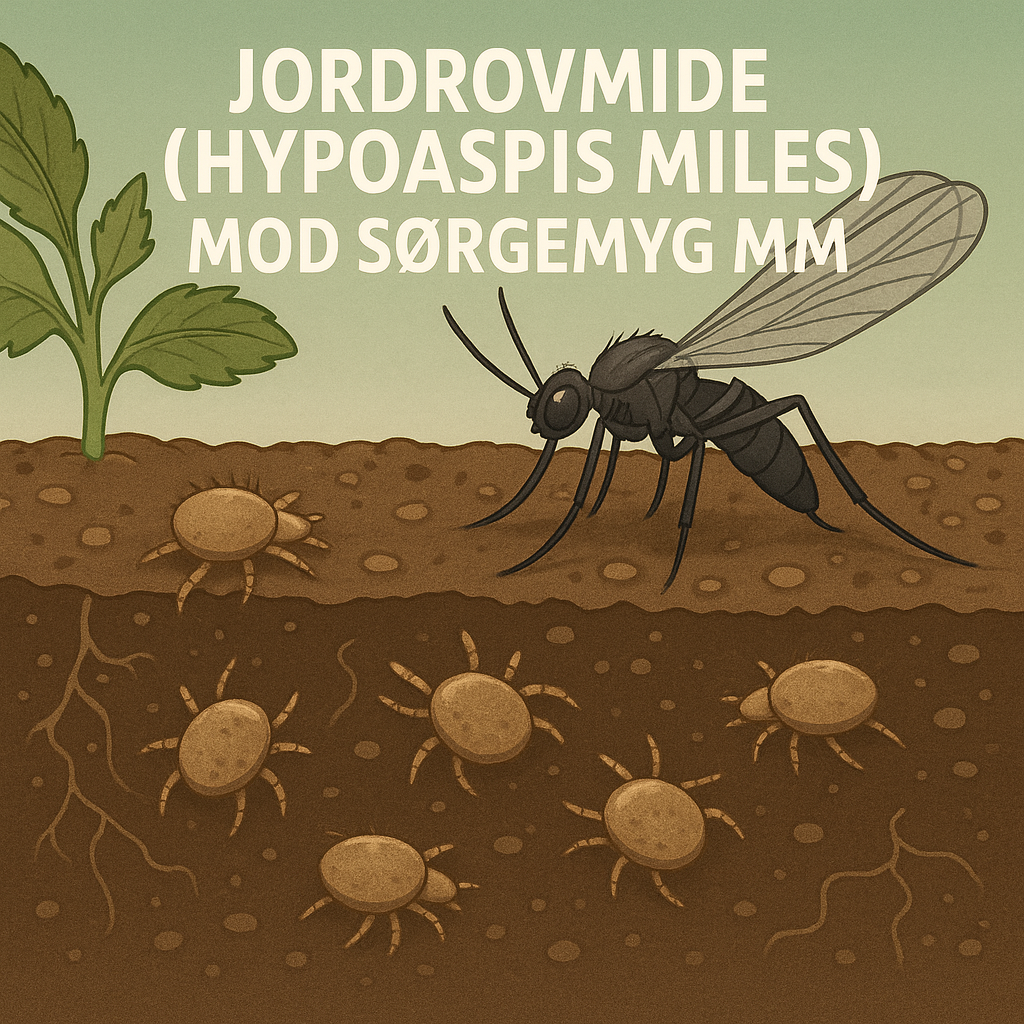
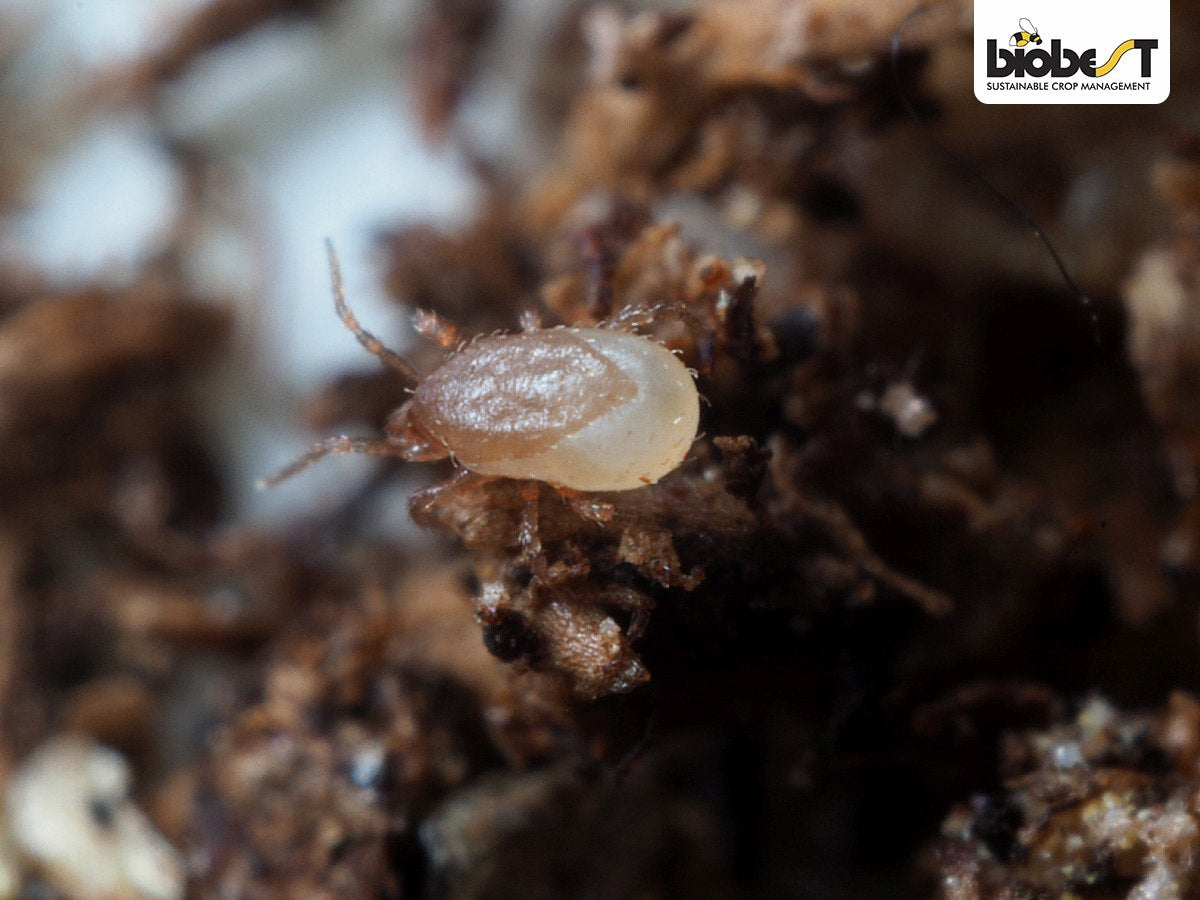
Protect your plants in a natural and effective way with soil predatory mites (Hypoaspis miles, formerly known as Stratiolaelaps scimitus). These small, brown predatory mites live in the top layer of soil, where they actively seek out and eat larvae of fungus gnats, shore flies, springtails, and other soil-dwelling pests. They can also have an effect on thrips, as they eat their pupal stages in the soil.
Soil predatory mites are approx. 1 mm long and work around the clock in the soil. Both the adults and nymphs participate in the control. Once there is no more food, the population will gradually disappear – therefore, they are most effective when there are active problems or a risk of new infestations.
In addition to being popular in potted plants, greenhouses, and beds, Hypoaspis can also be used to control red mites on poultry and reptiles, where they provide a natural alternative to chemical solutions.
Signs of fungus gnats in plants
Fungus gnats are a very common problem in houseplants, potted plants, seed trays, and greenhouses. Adult fungus gnats are small, dark gnats that are often discovered when they fly or run around the pots. Although the adult gnats can be annoying, it is especially the larvae in the soil that are relevant to the plants.
One of the most characteristic signs is small, dark gnats flying up from the potting soil when the plant is watered or the pot is moved. Adult fungus gnats are typically a few millimeters long with long legs and at first glance can resemble very small flies or mosquitoes. They prefer to stay near moist soil, where the females lay their eggs.
The larvae live in the upper parts of the potting soil. They are small, transparent to whitish and have a distinct black head. They feed mainly on fungi, algae, and dead organic material, but in larger populations, they can also gnaw on fine roots and other young plant tissue.
Established plants can usually tolerate a small number of fungus gnats without major problems. Small plants, cuttings, and newly sprouted seedlings are more vulnerable because their fine and still limited root system can be more easily damaged. In cases of heavy infestation, young plants can therefore grow poorly, become weakened, or in the worst case, die.
Fungus gnats thrive especially in persistently moist and organic-rich potting soil, and the problems can therefore be greater if the soil is kept very wet constantly.
Typical signs of fungus gnats are:
- Small black gnats flying around the plants and the soil surface
- Gnats flying up when you water or move the pot
- Adult fungus gnats on windowsills or around plant lighting
- Small whitish or transparent larvae with a black head in the potting soil
- Many adult gnats on yellow sticky traps
- Poor growth in small plants and cuttings during heavy infestations
How to control fungus gnats with beneficial insects
The most effective biological control takes the fungus gnat's life cycle into account. Nematodes for fungus gnats are watered into the potting soil, where they actively seek out and infect the larvae. This attacks the coming generation of fungus gnats before they have time to develop into adult gnats.
This also means that the adult fungus gnats do not disappear immediately after treatment. Existing adult gnats may continue to be seen for a period, even though the nematodes are working in the soil. As the larvae are controlled, the life cycle is broken, and the number of new adult fungus gnats decreases.
The treatment can advantageously be combined with yellow poison-free sticky traps, which catch some of the adult fungus gnats and also make it easy to monitor whether the population is decreasing.
For recurring problems, soil predatory mites can also be relevant. They live in and on the soil and eat, among other things, fungus gnat larvae, which makes them suitable as a more permanent biological effort.
Benefits of soil predatory mites:
- Effective and natural control of fungus gnats, shore flies, and other soil pests
- Can also help against thrips and red mites in poultry and reptiles
- 100% poison-free and harmless to plants, humans, and pets
- Easy application – sprinkle directly on the soil
Instructions for use:
- Sprinkle the predatory mites evenly over the soil where control is desired.
- Avoid letting the soil dry out – the predatory mites thrive best in slightly moist soil.
- The temperature must be above 15 °C for optimal effect.
Follow the control:
The effect can be seen shortly after introduction, but since only larvae and stages in the soil are attacked, it may take a couple of weeks before the problem is completely under control.
Storage:
The predatory mites should preferably be used immediately upon receipt, but can be temporarily stored for a few days at approx. 15 °C.
- Can be advantageously combined with sticky traps for even more effective control.
Important information regarding the delivery of beneficial insects
- Order deadline: The producer packs and ships only once a week – every Tuesday. Your order must be received by us no later than Monday at 08:00 AM.
- Late orders: Orders received after Monday at 08:00 AM will not be shipped until the Tuesday of the following week.
- Direct delivery: The beneficial insects are shipped directly from the producer to ensure freshness and optimal quality.
- Delivery method: All orders are always delivered to a Bring parcel shop/parcel locker. The system automatically selects the one closest to your address, even if you select home delivery at checkout.
- Quick pickup: The beneficial insects should be picked up as soon as possible and used immediately upon receipt to ensure the best possible effect.
Are you in doubt about which beneficial insect to choose?
Many pests can look alike, but are best controlled with different beneficial insects. If you are unsure whether you have thrips, aphids, spider mites, or another pest, you are always welcome to contact us.
You can also read our comprehensive guide to biological pest control, where we review the most common pests, how to recognize them, and which beneficial insects provide the best results.
We are happy to help you find the right solution so that you get the most effective and natural control.