


Borregaard
Larvex | against caterpillars of butterflies and box tree moths
Larvex | against caterpillars of butterflies and box tree moths
Couldn't load pickup availability
LARVEX – biological control of butterfly caterpillars and box tree moths
- FREE SHIPPING!
⚠️ Note: Beneficial insects and control products are shipped only once a week (Tuesday). Order by Monday at 08:00 AM at the latest – and remember to pick up the package as soon as it arrives.
LARVEX is a biological control agent based on the bacterium Bacillus thuringiensis, which acts specifically against caterpillars of butterflies and moths. It can be used against cabbage whites, box tree moths, ermine moths, tortrix moths, and geometer moth caterpillars, among others, making it suitable for both the vegetable garden and a wide range of ornamental plants.
The product is dissolved in water and sprayed directly onto the affected plants. When the butterfly caterpillars eat the treated plant parts, they ingest the Bacillus thuringiensis. The caterpillars then stop eating and typically die within 2–4 days.
LARVEX acts selectively against butterfly caterpillars and is rapidly biodegradable. It does not have the same effect on other groups of insects and does not affect the plants. The product can therefore be used as a highly targeted solution when you prefer biological control over a broad-spectrum insecticide.
What can LARVEX be used against?
LARVEX can be used against a wide range of butterfly and moth caterpillars, including caterpillars of:
- Box tree moths
- Cabbage whites
- Ermine moths
- Tortrix moths
- Geometer moth caterpillars
- Other butterflies and moths whose caterpillars feed on the treated plant parts
The agent only works when the caterpillars eat the plant. It therefore does not work against eggs, pupae, or adult butterflies and moths. The best results are achieved by treating early, while the caterpillars are still small and actively feeding.
Signs of a butterfly caterpillar infestation
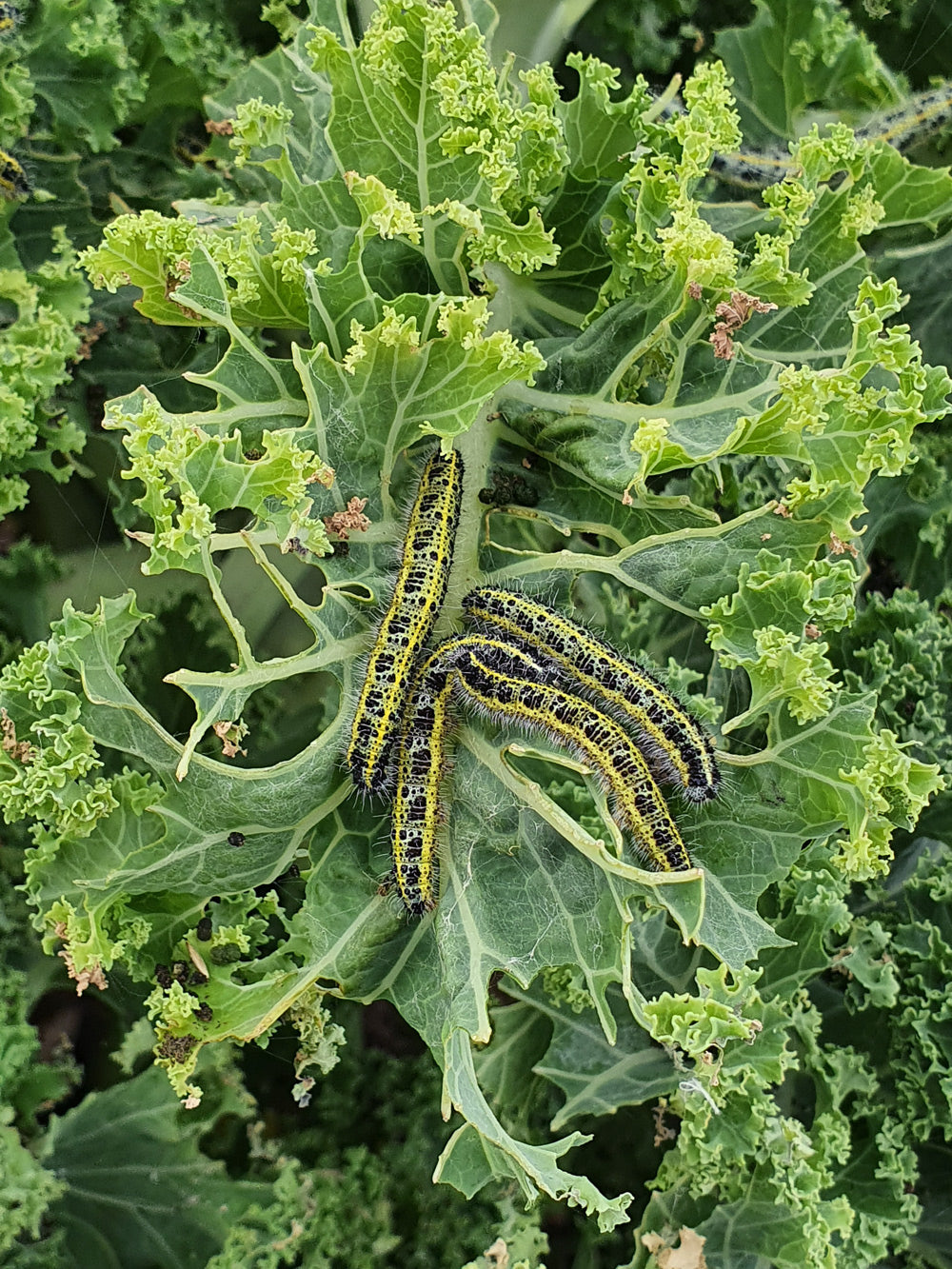
Butterfly and moth caterpillars can cause very different types of damage depending on the species, but the most common sign is gnawed leaves. This may begin as small holes or chewed leaf edges, and in cases of heavy infestation, it can progress to almost completely defoliated plants.
Look closely at both the top and underside of the leaves as well as inside dense branches and new shoots. Small caterpillars can be well-camouflaged and are often only discovered by their droppings or the first signs of gnawing.
Some species also form webs around leaves and shoots, where the caterpillars sit protected while feeding. This applies to box tree moths and various ermine moths, among others.
Typical signs are therefore gnawing and holes in the leaves, skeletonized or completely eaten leaves, caterpillars or caterpillar droppings on the plant, and silk webbing between leaves and branches.
The sooner the caterpillars are discovered, the easier they are to control.
How to use LARVEX
LARVEX is dissolved in water according to the enclosed instructions and applied to the plants with a spray bottle or other suitable sprayer.
It is important to ensure good coverage of the plant, as the caterpillars must consume the treated plant parts. Therefore, spray both the top and underside of the leaves and be particularly thorough on dense plants where caterpillars can hide.
Treat as soon as the first caterpillars are observed.
LARVEX works best at temperatures above approx. 15 °C, where the caterpillars are active and have a higher food intake.
Treat preferably in the evening
Bacillus thuringiensis is gradually broken down by the sun's UV radiation. The effect on the leaves therefore decreases over approximately 3–5 days.
The best time to treat is therefore in the late afternoon or evening, preferably during a period of slightly cloudy weather. At the same time, avoid treating if rain is expected within the first 24 hours, as the product can be washed off the leaves.
If caterpillars persist, the treatment can be repeated at 7–10 day intervals until the infestation is under control and the flight of the adult butterflies or moths has ceased.
Always follow the detailed instructions provided with the product.
LARVEX against box tree moths
Box tree moths can cause very extensive damage to boxwood. The caterpillars eat the leaves and, in severe infestations, can almost completely defoliate the entire plant.
Box tree moths overwinter as caterpillars on the boxwood, where the small caterpillars sit protected in fine silk webbing between the leaves. When temperatures rise in the spring, the caterpillars become active again and start feeding.
It is therefore a good idea to examine boxwood thoroughly in April and May, especially if there have been box tree moths the year before. Do not just look at the outer leaves of the plant – separate the branches and also examine the interior of the plant, where small caterpillars can easily hide.
If you find active caterpillars, you can treat with LARVEX when the temperature is above approx. 15 °C. Make sure to cover both the top and underside of the leaves as well as the inner parts of the plant. In case of continued activity, the treatment can be repeated after about a week.
Keep an eye on boxwood all summer
Box tree moths can have multiple and overlapping generations, and a successful intervention in the spring does not necessarily mean that the plant is protected for the rest of the year.
Feel free to examine boxwood about once a month during the summer season. New small caterpillars are much easier to control than an infestation that is only discovered when the plant is already heavily defoliated.
A treatment in August or early September can be relevant against the generation of caterpillars that would otherwise overwinter on the plant and continue the infestation the following spring.
Content and coverage
The package contains 30 g of LARVEX, which is sufficient for treating approx. 150–300 m², depending on the crop, plant density, and the required amount of spray liquid.
Biological agents based on Bacillus thuringiensis are also used professionally in horticulture and agriculture, where the same principle is known from products such as Dipel and Turex.
In short
LARVEX is particularly suitable when you can see active butterfly or moth caterpillars that are eating the plant. It is not a preventative agent against adult butterflies and does not work against other types of pests such as aphids, thrips, or spider mites.
If you are unsure which pest is attacking your plants, we therefore always recommend identifying the pest first. This provides both a more effective treatment and ensures that you choose the most targeted biological solution.
See also our other products of beneficial insects.
Important information regarding the delivery of beneficial insects
- Order deadline: The manufacturer packs and ships only once a week – every Tuesday. Your order must be received by us no later than Monday at 08:00 AM.
- Late orders: Orders received after Monday at 08:00 AM will not be shipped until the following Tuesday.
- Direct delivery: Beneficial insects are shipped directly from the manufacturer to ensure freshness and optimal quality.
- Delivery method: All orders are always delivered to a Bring parcel shop/parcel locker. The system automatically selects the one closest to your address, even if you select home delivery at checkout.
- Prompt pickup: Beneficial insects should be picked up as soon as possible and used immediately upon receipt to ensure the best possible effect.


Are you in doubt about which beneficial insect to choose?
Many pests can look alike, but are best controlled with different beneficial insects. If you are unsure whether you have thrips, aphids, spider mites, or another pest, you are always welcome to contact us.
You can also read our comprehensive guide to biological pest control, where we review the most common pests, how to recognize them, and which beneficial insects provide the best results.
We are happy to help you find the right solution so that you get the most effective and natural control.