
Borregaard
Nematodes | against vine weevils
Nematodes | against vine weevils
Couldn't load pickup availability
Nematodes against vine weevils (Heterorhabditis sp.) – Effective protection for rhododendrons and ornamental plants
- FREE SHIPPING!
⚠️ Note: The beneficial organisms are shipped only once a week (Tuesday). Order by Monday at 8:00 AM at the latest – and remember to collect the package immediately upon arrival.
Important – correct treatment timing
If the nematodes are to be used outdoors in the garden, they should only be ordered and applied during the periods May 1–June 10 and August 10–September 30. During these times, both the soil temperature and the vine weevil's life cycle are most suitable for treatment, as the susceptible larval stages are present in the soil.
In greenhouses, sunrooms, and other protected environments, vine weevils can have multiple or overlapping generations, and the treatment timing may therefore differ.
The nematodes are most effective at a soil temperature of 12–25 °C.
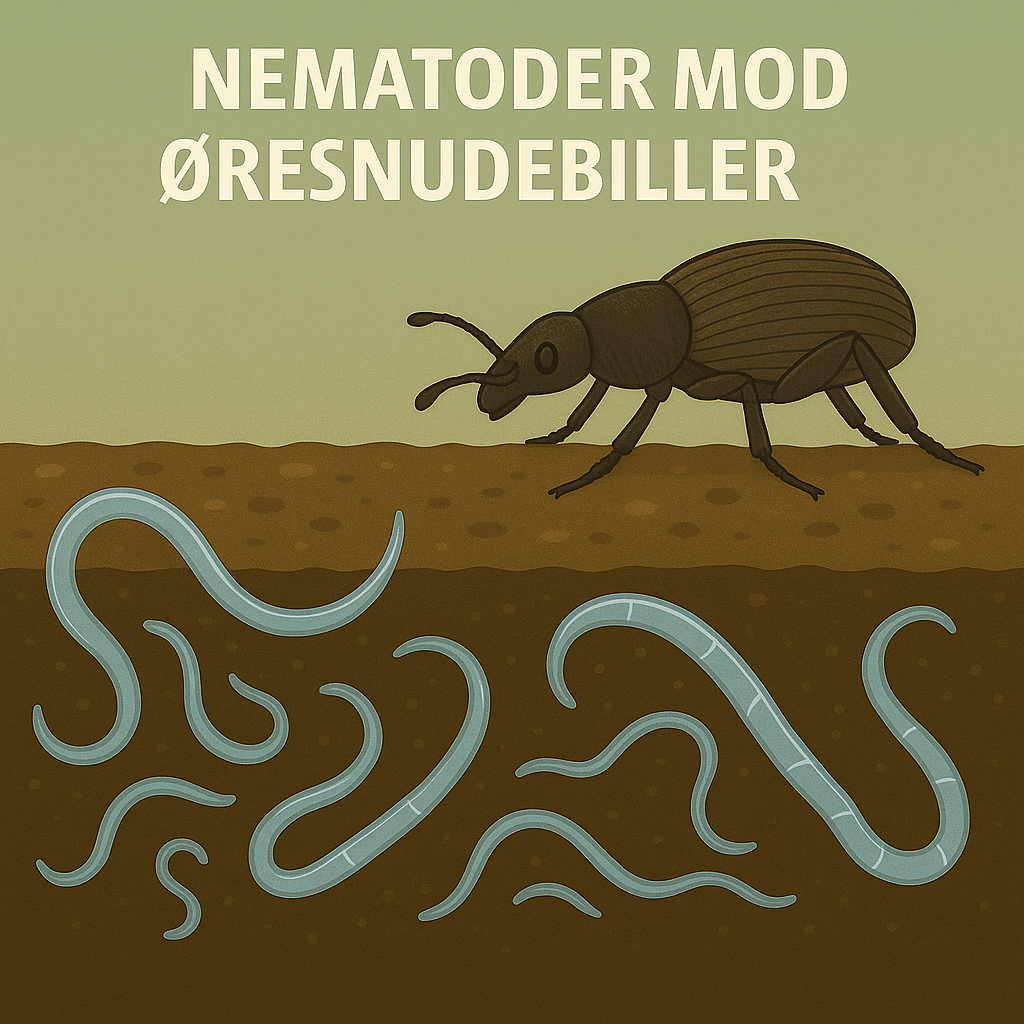
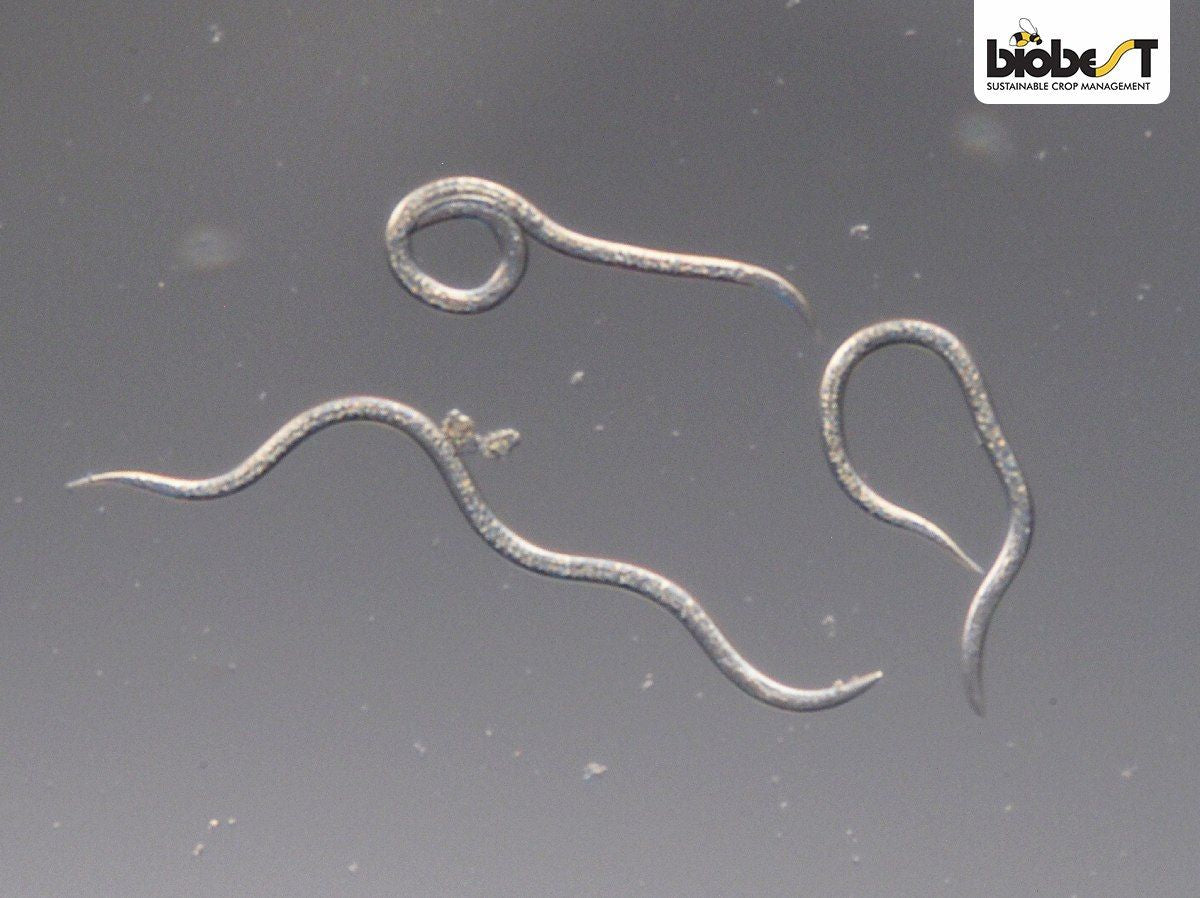
Protect your rhododendrons and other ornamental plants against the damaging larvae of vine weevils with nematodes – a natural and environmentally friendly control method also used by professional gardeners. The nematodes (Heterorhabditis sp.) are microscopic roundworms that seek out the larvae in the soil, infect them, and cause them to die. The infected larvae turn a characteristic brick-red color, where the nematodes then reproduce, allowing the control to continue.
The product is supplied in powder or gel form and is available in packs for 10–20 m² (10 million nematodes) or 50–100 m² (50 million nematodes). They do not harm plants, pets, or humans – only insect larvae.
Signs of vine weevils
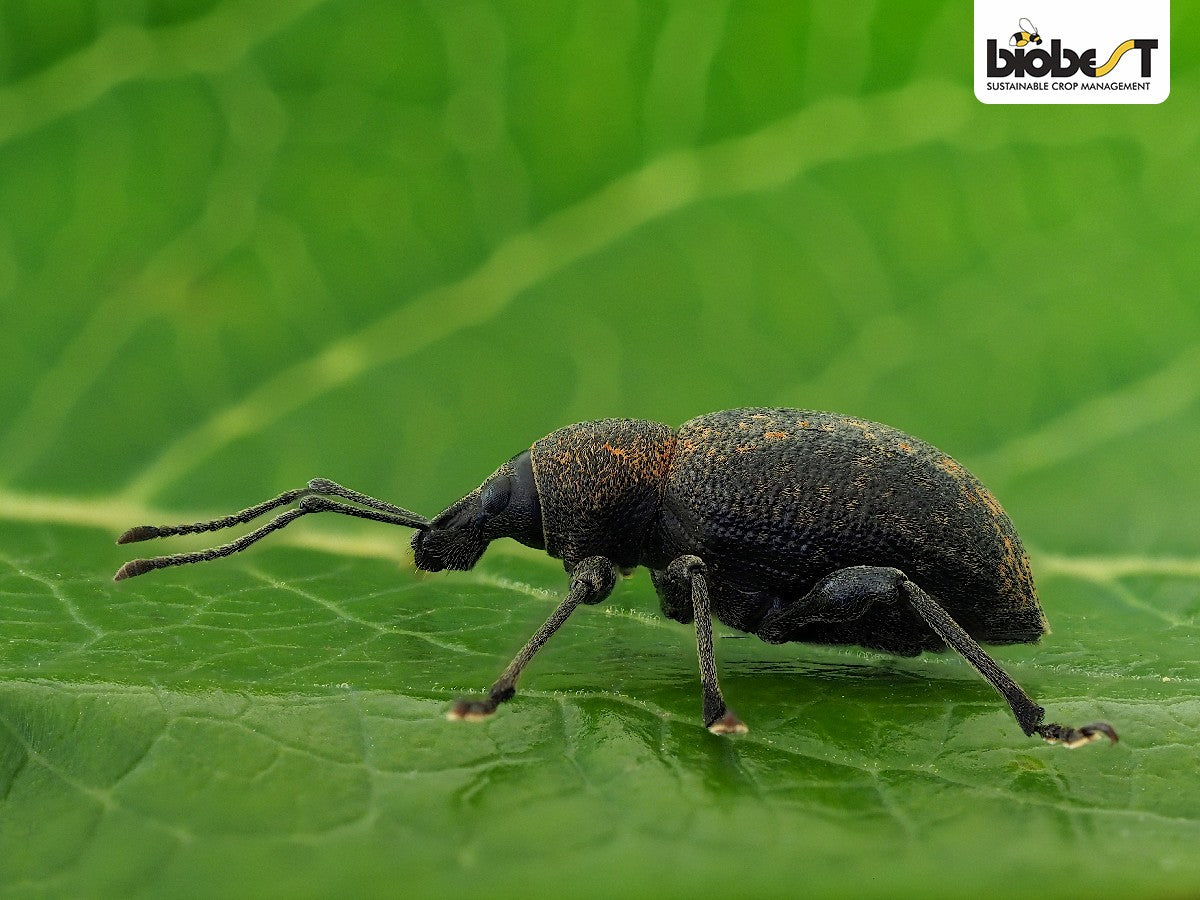
Vine weevils can be difficult to detect because the adult beetles are mainly active at night, while the larvae live hidden in the soil. Therefore, it is often the damage to the plant that is noticed first.
The most characteristic sign of adult vine weevils is round or crescent-shaped notches along the edges of the leaves. The leaves can almost look as if someone has systematically cut small arcs along the edge. These notches are seen on rhododendrons, among others, but vine weevils can attack many different ornamental plants, perennials, and plants grown in pots.
Leaf damage is rarely the most serious part of an infestation. The greatest damage occurs underground, where the vine weevil's whitish, brown-headed larvae feed on the plants' roots. They can also gnaw at the root collar and on larger roots. In the case of severe attacks, the plant may therefore begin to struggle, wilt, or wither, even though it appears to be receiving sufficient water.
Plants in pots and containers can be particularly vulnerable. If a plant suddenly becomes loose in the soil or can be easily pulled up, it may be because the larvae have destroyed a large part of the root system.
Typical signs of vine weevils are:
- Characteristic crescent-shaped notches along the leaf margins
- Adult dark beetles, which can mainly be found on the plants at night
- White or cream-colored, curled larvae with brown heads in the soil around the roots
- Damaged or eaten roots
- Plants that wilt or struggle without an immediate explanation
- Poor growth or plants that suddenly wither during severe larval attacks
If you want to check for adult vine weevils, you can go out after dark with a flashlight and examine the plants. If you suspect larvae in the soil, you can carefully examine the soil around the roots.
It is important to distinguish between the damage from the adult beetles and the larvae. Nematodes against vine weevils (Heterorhabditis sp.) control the larvae in the soil – not the adult beetles. Treatment must therefore be carried out when the susceptible larval stages are present. Outdoors, this will typically be May 1–June 10 and August 10–September 30. In greenhouses and sunrooms, the life cycle may be different and generations may overlap.
Benefits of nematodes against vine weevils:
- Effective and natural control of vine weevil larvae
- Protects rhododendrons and other plants against root damage
- 100% toxin-free and environmentally friendly
- Can be used in gardens, greenhouses, and sunrooms
Treatment timing:
Since the nematodes only attack the larvae, treatment must be carried out when these are active in the soil:
- Outdoors: May 1 – June 10 and August 10 – September 30
- Greenhouse/sunroom: Can be used year-round if the soil temperature is 12–25 °C
Instructions for use:
- Dissolve the contents of the bag in 1–3 L of cold water.
- Add 1 L of the stock solution to a watering can and fill up with 9 L of water.
- Water evenly around the affected plants – 10 L covers 10–20 m².
- Ensure the soil is moist before treatment and keep it slightly moist for the following week.
- The best effect is obtained at soil temperatures of 12–25 °C.
Follow the control:
The effect is typically seen after 2–3 weeks, when dead, reddish-brown larvae can be found near the plant roots. Since adult vine weevils can live for up to a year, it is recommended to supplement the treatment by collecting adult beetles at night with a flashlight. Repeat the treatment next season for full control if necessary.
Important information regarding the delivery of beneficial organisms
- Order deadline: The manufacturer packs and ships only once a week – every Tuesday. Your order must reach us no later than Monday at 8:00 AM.
- Late orders: Orders received after Monday at 8:00 AM will not be shipped until the Tuesday of the following week.
- Direct delivery: The beneficial organisms are shipped directly from the manufacturer to ensure freshness and optimal quality.
- Delivery method: All orders are always delivered to a Bring parcel shop/parcel locker. The system automatically selects the one closest to your address, even if you select home delivery at checkout.
- Prompt collection: The beneficial organisms should be collected as soon as possible and used immediately upon receipt to ensure the best possible effect.
Are you in doubt about which beneficial insect to choose?
Many pests can look alike, but are best controlled with different beneficial insects. If you are unsure whether you have thrips, aphids, spider mites, or another pest, you are always welcome to contact us.
You can also read our comprehensive guide to biological pest control, where we review the most common pests, how to recognize them, and which beneficial insects provide the best results.
We are happy to help you find the right solution so that you get the most effective and natural control.