


Borregaard
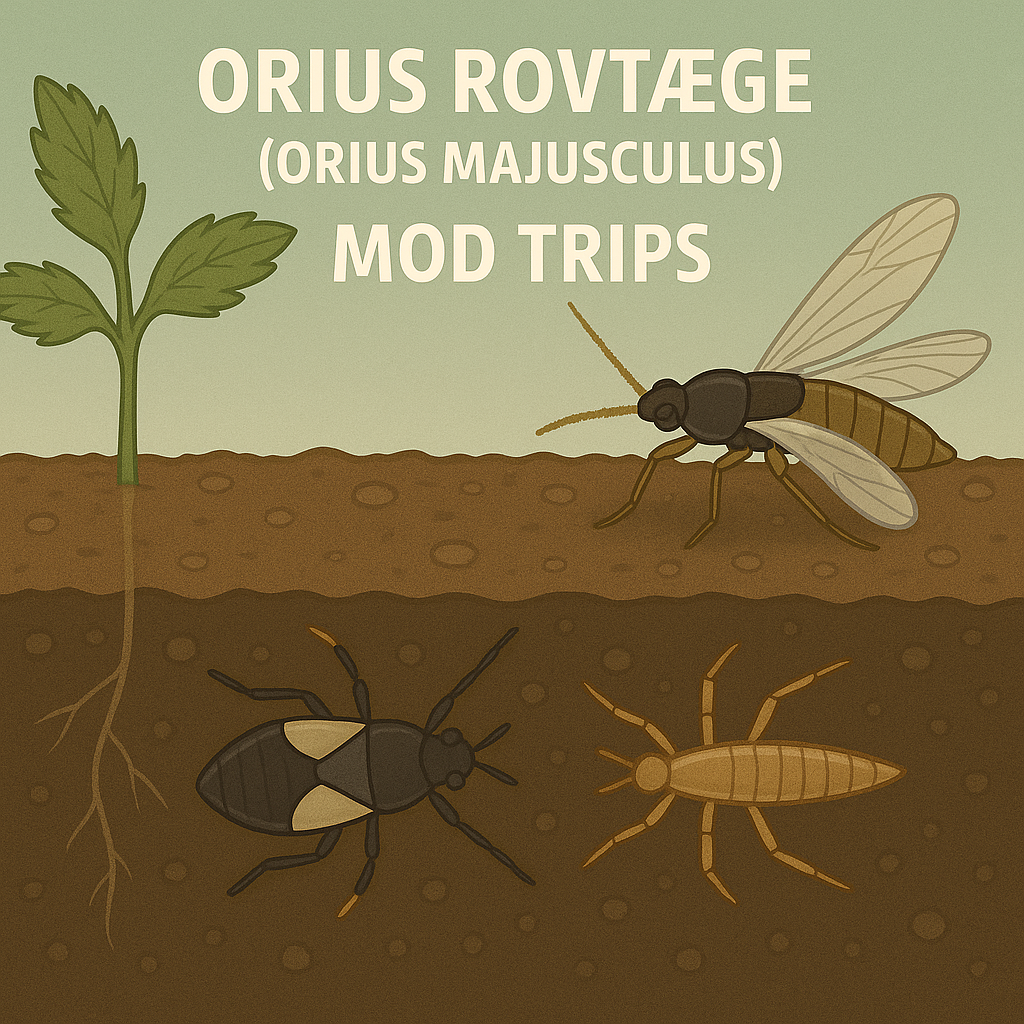
Orius predatory bug (Orius majusculus) | against thrips
Orius predatory bug (Orius majusculus) | against thrips
Couldn't load pickup availability
Orius pirate bug (Orius majusculus) – Effective “here and now” thrips control
- FREE SHIPPING!
⚠️ Please note: The beneficial insects are shipped only once a week (Tuesday). Order by Monday at 8:00 AM – and remember to pick up the package immediately upon arrival.
Get fast and effective control of thrips with Orius pirate bugs – one of the most effective beneficial insects for biological control. Unlike predatory mites, which only target the earliest larval stages, Orius attacks all stages of thrips – from larvae to adults – and can therefore be used for a real “here and now” control of a thrips infestation.
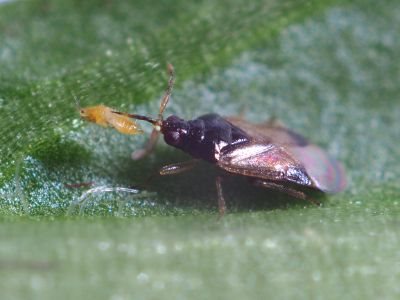
An adult Orius can consume up to 20 thrips daily and will also hunt other small pests such as spider mites, cyclamen mites, aphids, whiteflies, and butterfly eggs. In greenhouses and outdoors, they spread quickly because the adult bugs can fly.
Signs of thrips in plants
Thrips are small, slender insects that can be difficult to detect before the plants start showing clear signs of damage. They attack houseplants, greenhouse plants, vegetables, and ornamental plants, and thrive particularly well in warm conditions.
Thrips live by rasping open plant cells and sucking out the contents. One of the most characteristic signs is therefore silvery, light, or bronze-colored areas on the leaves. The damage can start as small spots or streaks and eventually develop into larger, irregular areas.
Another very typical sign is small black dots on the leaves. These are the thrips' excrement, which is often found in or around the silvery areas. The combination of silvery suction damage and small black dots is therefore a strong indicator of a potential thrips infestation.
Thrips often reside on the underside of leaves, along the leaf veins, in new shoots, and inside flowers, where they can be well hidden. Adult thrips are typically only 1–2 mm long, slender, and dark or brownish, while larvae are often smaller and lighter in color. A 10× magnifying glass makes it significantly easier to find both larvae and adult thrips.
On new leaves, an infestation can cause stunted growth, curled leaves, and deformed shoots because the damage occurs while the leaf is still developing. On flowering plants, thrips can also cause discolored, spotted, or damaged flowers.
Typical signs of thrips include:
- Silvery, light, or bronze-colored areas on the leaves
- Small black dots of excrement around the damaged areas
- Small, elongated insects on leaves and in flowers
- Light-colored thrips larvae, especially on the underside of leaves
- Deformed or curled new leaves
- Stunted or malformed new growth
- Spots and damage on flowers
- Damage that continues to appear on new growth
It is an advantage to discover thrips early, as a minor infestation is considerably easier to get under control. Sticky traps can be used to monitor the adult, flying thrips, while a magnifying glass makes it easier to examine the leaves for larvae and adult individuals.
Which beneficial insect should I choose for thrips?
The choice depends, among other things, on the size of the infestation and which thrips species is present. Thrips predatory mites (Amblyseius cucumeris) mainly attack the thrips' first larval stage and are therefore very well suited for prevention and early-stage infestations.
For an established infestation, Orius pirate bugs can be a good choice because they take both thrips larvae and adults.
On tropical and exotic ornamental plants, more difficult or invasive thrips species may occur. In these cases, Franklino predatory thrips (Franklinothrips vespiformis) may be the better choice, as they actively hunt a range of leaf-dwelling thrips species, including Echinothrips, orchid thrips, and Thrips parvispinus.
For larger infestations, a combination of different beneficial insects can be an advantage, as they attack different stages of the thrips' life cycle.
Benefits of Orius pirate bugs:
- Fast and effective control of thrips at all stages
- Can also consume other pests like aphids, spider mites, and whiteflies
- Suitable for both greenhouses and indoors
- Natural, non-toxic, and safe for plants, people, and pets
Application:
- Release Orius at the first sign of a thrips infestation.
- Dosage: approx. 5–10 Orius per m² depending on the extent of the infestation.
- Distribute the contents of the box evenly throughout the crop – preferably near flowers or areas with thrips.
- For narrow leaves, bio-boxes can be used to place the Orius.
- Control can be supplemented with thrips predatory mites and yellow sticky traps.
Biology and conditions:
- A female can lay up to 75 eggs, which develop into adults in about 25 days at 20 °C.
- Orius requires long daylight hours (>14 hours) and temperatures of 16–35 °C.
- Thrives best in greenhouses from April onwards, but can also be used indoors.
- They do not seek out cupboards or bedding, but since they can fly, it is an individual decision whether to use them indoors.
- Orius is not effective against the black or black-and-white striped thrips found on tropical green plants.
Storage:
Use immediately after receipt. Can be temporarily stored for a few days at 8–10 °C.
- Can be advantageously combined with sticky traps for even more effective control.
Important information regarding the delivery of beneficial insects
- Order deadline: The producer packs and ships only once a week – every Tuesday. Your order must reach us no later than Monday at 8:00 AM.
- Late orders: Orders received after Monday at 8:00 AM will not be shipped until the Tuesday of the following week.
- Direct delivery: The beneficial insects are shipped directly from the producer to ensure freshness and optimal quality.
- Delivery method: All orders are always delivered to a Bring parcel shop/parcel locker. The system automatically selects the one closest to your address, even if you select home delivery at checkout.
- Prompt pickup: Beneficial insects should be picked up as soon as possible and used immediately upon receipt to ensure the best possible effect.
Are you in doubt about which beneficial insect to choose?
Many pests can look alike, but are best controlled with different beneficial insects. If you are unsure whether you have thrips, aphids, spider mites, or another pest, you are always welcome to contact us.
You can also read our comprehensive guide to biological pest control, where we review the most common pests, how to recognize them, and which beneficial insects provide the best results.
We are happy to help you find the right solution so that you get the most effective and natural control.