


Borregaard
Mealybug ladybirds (Cryptolaemus sp.) | against mealybugs
Mealybug ladybirds (Cryptolaemus sp.) | against mealybugs
Couldn't load pickup availability
Mealybug Ladybirds (Cryptolaemus montrouzieri) – Effective biological control of mealybugs
- FREE SHIPPING!
⚠️ Note: The beneficial insects are shipped only once a week (Tuesday). Please order by Monday at 8:00 AM – and remember to pick up the package immediately upon arrival.
Mealybug ladybirds are among the most effective beneficial insects for controlling mealybugs on citrus trees, houseplants, and ornamental plants. These small, black-and-red ladybirds and their larvae are voracious predators that eat all species of mealybugs – both adults and larvae.
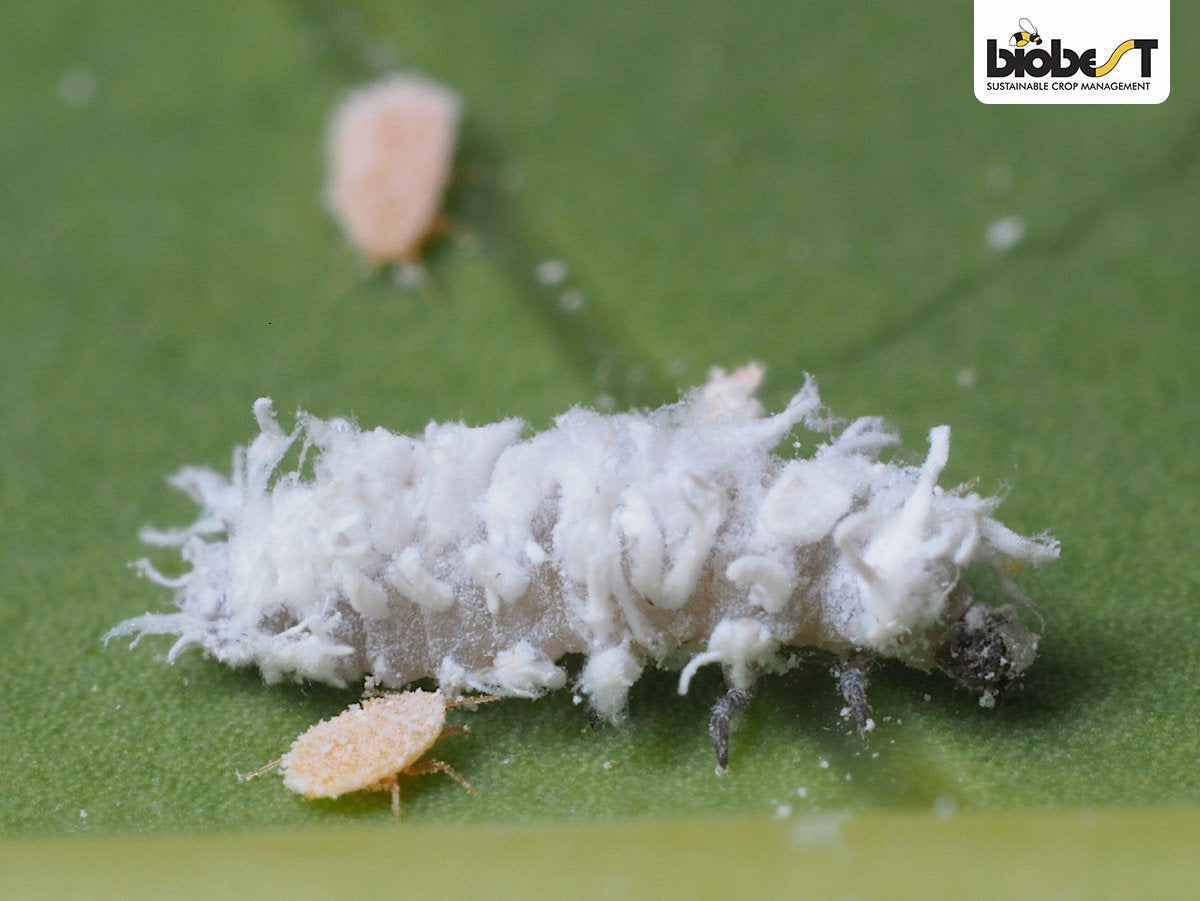
Both adult ladybirds and their larvae take part in the control process. The female lays eggs among the mealybugs, which hatch after approximately 8 days. The larvae, which can easily be mistaken for large mealybugs, devour large quantities of the pests until they pupate and become new ladybirds. Under favorable conditions, the population can therefore grow rapidly and keep mealybugs completely in check.
Signs of mealybugs on plants
Mealybugs are relatively easy to recognize once you know what to look for. The most characteristic sign is small white, cotton- or wool-like clumps on the plant. The mealybugs are covered in a whitish waxy layer and, at first glance, may look more like small tufts of cotton than live insects.
They prefer to hide in protected areas and are often found in leaf axils, along leaf veins, around new shoots and buds, and at the junction between leaf and stem. On plants with dense leaf rosettes or many small branches, they can be well hidden, so it is a good idea to examine the entire plant thoroughly.
Mealybugs suck plant sap and can significantly weaken the plant during larger infestations. New leaves and shoots may develop poorly, growth can stall, and leaves may gradually yellow and fall off.
Like aphids, mealybugs secrete honeydew, and sticky leaves are therefore a common sign of infestation. A dark coating of sooty mold can subsequently develop on the honeydew. If you see ants on the plant, it may also be worth looking for mealybugs, as ants are attracted to the sugar-rich honeydew.
Typical signs of mealybugs include:
- White, cottony, or woolly coatings on the plant
- Small oval insects covered in white wax
- Mealybugs hidden in leaf axils, along leaf veins, and around new shoots
- White wax and egg masses in protected areas
- Sticky leaves due to honeydew
- Black sooty mold on leaves and stems
- Yellowing leaves, stunted growth, or leaf drop during heavy infestations
Mealybugs are often seen on citrus, orchids, succulents, and other houseplants and ornamental plants. If the infestation is discovered early, it is significantly easier to get under control.
At temperatures of 20 °C and above, the mealybug ladybird (Cryptolaemus montrouzieri) is a specialized beneficial insect against mealybugs. Both the adult ladybirds and their larvae eat mealybugs.
Please be aware that the mealybug ladybird larvae themselves can resemble large mealybugs. However, they have longer and more irregular waxy filaments and move actively around the plant. If you see them after releasing mealybug ladybirds, it is not necessarily a sign that the infestation has worsened – on the contrary, it may be the next generation of your beneficial insects.
Advantages of mealybug ladybirds:
- Effective biological control of all types of mealybugs
- Ideal for citrus and ornamental plants
- Natural, non-toxic, and safe solution
- Can establish themselves and continue control under good conditions
Living conditions and application:
- Thrives best at temperatures above 20 °C and humidity around 60 %
- At lower temperatures (below 20 °C), green lacewing larvae can be used as an alternative
- Does not tolerate chemical treatment – avoid pesticides before and after release
Instructions for use:
- Open the package and place it directly in the infested plant – or gently distribute the ladybirds with a brush.
- Preferably release in darkness or dimmed light to reduce flight activity.
- If you want to ensure that the ladybirds stay on the plant, you can cover the plant with a fine net (e.g., acrylic).
- Both adults and larvae will search the plants themselves and seek out the mealybugs.
Important to know:
- The larvae look like mealybugs but are larger and have more irregular waxy filaments – a sign that the control is underway.
- Under good conditions, the ladybirds can lay eggs and continue the cycle naturally.
Storage:
Use the ladybirds the same day as received. If this is not possible, they can be stored in darkness at 15–20 °C for up to 2 days.
Important information about the delivery of beneficial insects
- Order deadline: The manufacturer packs and ships only once a week – every Tuesday. Your order must reach us no later than Monday at 8:00 AM.
- Late orders: Orders received after Monday at 8:00 AM will not be shipped until the Tuesday of the following week.
- Direct delivery: The beneficial insects are shipped directly from the manufacturer to ensure freshness and optimal quality.
- Delivery method: All orders are always delivered to a Bring parcel shop/parcel locker. The system automatically selects the one closest to your address, even if you select home delivery at checkout.
- Prompt pickup: The beneficial insects should be picked up as soon as possible and used immediately upon receipt to ensure the best possible effect.


Are you in doubt about which beneficial insect to choose?
Many pests can look alike, but are best controlled with different beneficial insects. If you are unsure whether you have thrips, aphids, spider mites, or another pest, you are always welcome to contact us.
You can also read our comprehensive guide to biological pest control, where we review the most common pests, how to recognize them, and which beneficial insects provide the best results.
We are happy to help you find the right solution so that you get the most effective and natural control.