Buy 4 packs of seeds (or more) and get a 10% discount
a Piece of Nature
Spindle palm (Hyophorbe verschaffeltii) | seeds, 10 pcs.
Spindle palm (Hyophorbe verschaffeltii) | seeds, 10 pcs.
Couldn't load pickup availability
- Latin name: Hyophorbe verschaffeltii
- Danish names: Tenpalme, spindelpalme
- English names: Spindle palm
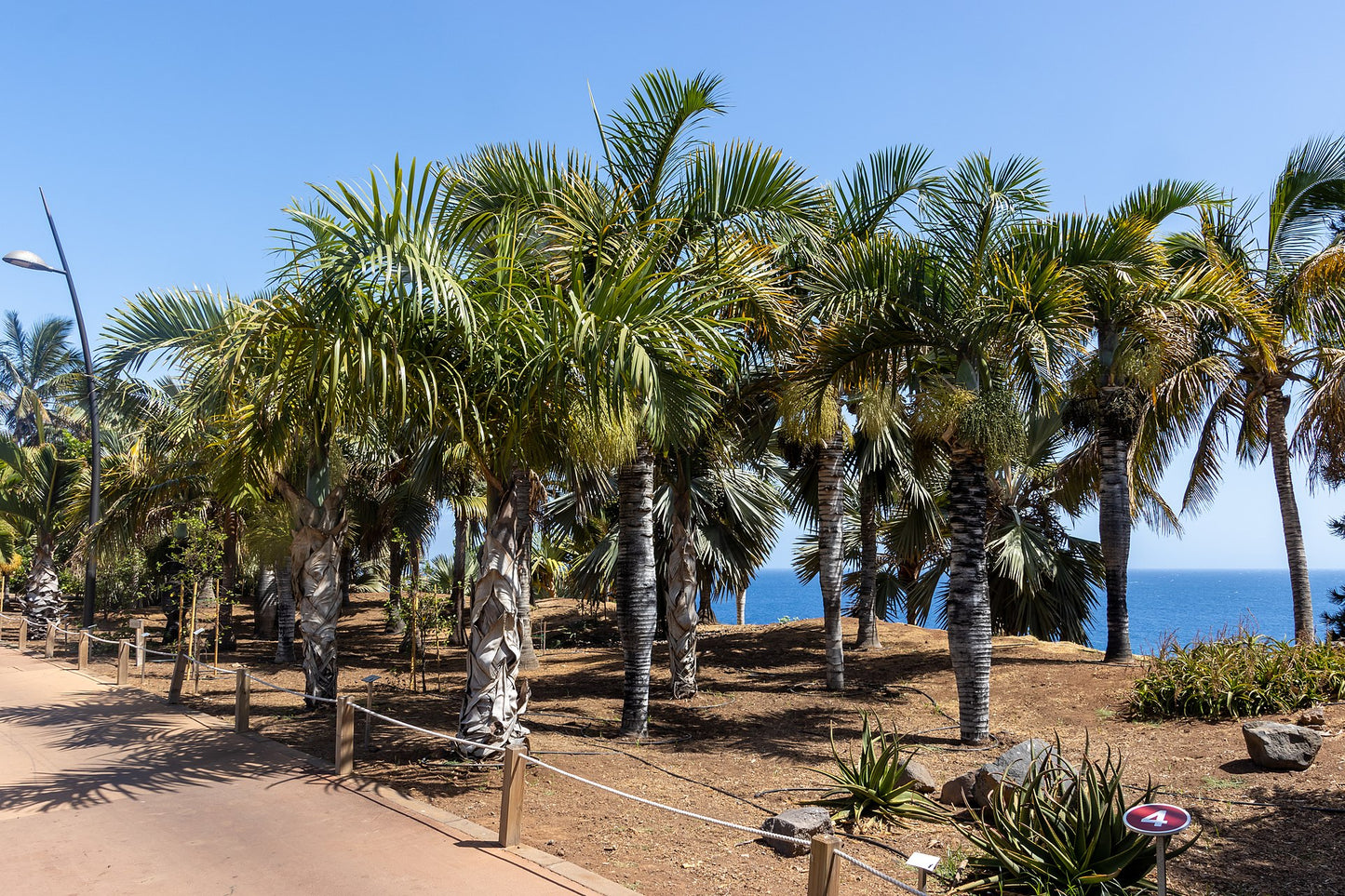
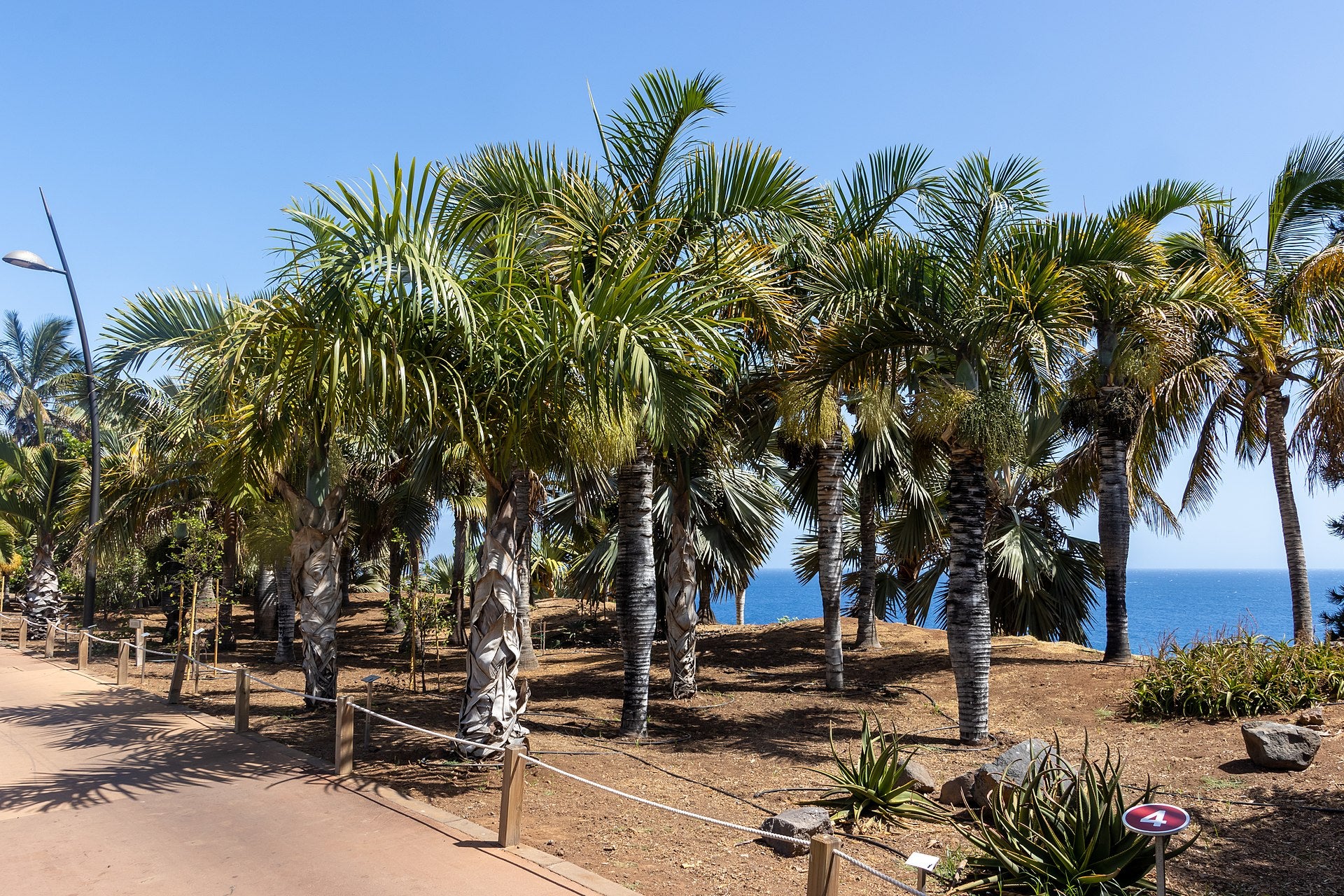
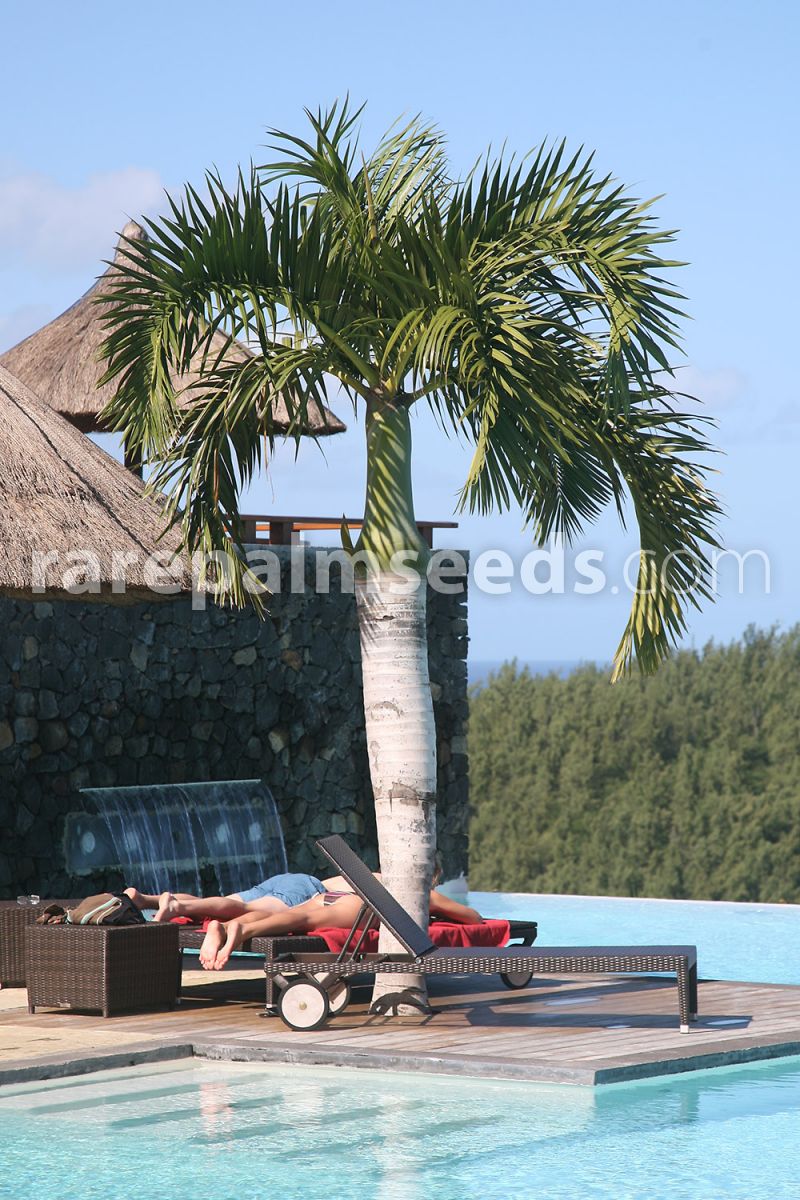
Hyophorbe verschaffeltii is an unusual and elegant palm, known especially for its characteristic, spindle-shaped trunk. As the trunk matures, it becomes swollen around the middle and narrower both at the base and towards the crown, giving the palm an almost sculptural appearance. Together with the green crownshaft and the long, arching, feathery leaves, this makes the species one of the more distinctive palms from the islands of the Indian Ocean.
The species originates exclusively from Rodrigues, a small island about 560 km east of Mauritius, which is part of the Mascarene Islands. The very limited natural distribution makes Hyophorbe verschaffeltii botanically interesting. For centuries, Rodrigues has been characterized by extensive changes to its original vegetation, and many of the island's endemic plant species today have severely reduced natural populations.
The spindle palm develops a single, smooth trunk and can reach about 6-8 meters in height under good tropical conditions. At the top of the trunk sits a distinct green crownshaft, from which the long leaves form an elegant crown. Young plants do not yet have the characteristic spindle shape, which becomes more prominent as the trunk develops.
The species is closely related to the more well-known bottle palm (Hyophorbe lagenicaulis), and the two species are particularly interesting to grow side by side. The bottle palm typically develops a shorter and thicker trunk with a marked, almost bottle-shaped swelling towards the base. Hyophorbe verschaffeltii, on the other hand, develops a more elongated and spindle-shaped thickening around the middle of the trunk and generally develops a slimmer and taller appearance. The difference becomes increasingly apparent as the plants age.
Both species originate from the Mascarene Islands but each has its own very limited natural distribution. Hyophorbe verschaffeltii is native to Rodrigues, while Hyophorbe lagenicaulis is originally native to Round Island near Mauritius. The two species are therefore an exciting pair for collectors with an interest in island flora, palms, and unusual growth forms.
If you are fascinated by palms, you can explore our entire selection of palm seeds, where you will find seeds from many different palm species – from classic fan and date palms to rarer tropical collector species.
Cultivation and requirements
Hyophorbe verschaffeltii is a tropical palm that thrives best in warm and bright conditions. It prefers:
- A very bright location, preferably with direct sunlight
- An airy and well-drained soil
- Regular watering during the growing season, but without constantly wet soil
- Warm temperatures, preferably around 20-30 °C during the growing season
- Bright and frost-free overwintering
The spindle palm tolerates some drying out once it is established, but young plants should be kept more evenly moist. In Danish conditions, it is best grown in a pot so that it can be placed in a warm and sunny spot outside in the summer and moved indoors before temperatures become too low. The species is not frost tolerant.
Cultivation from seeds
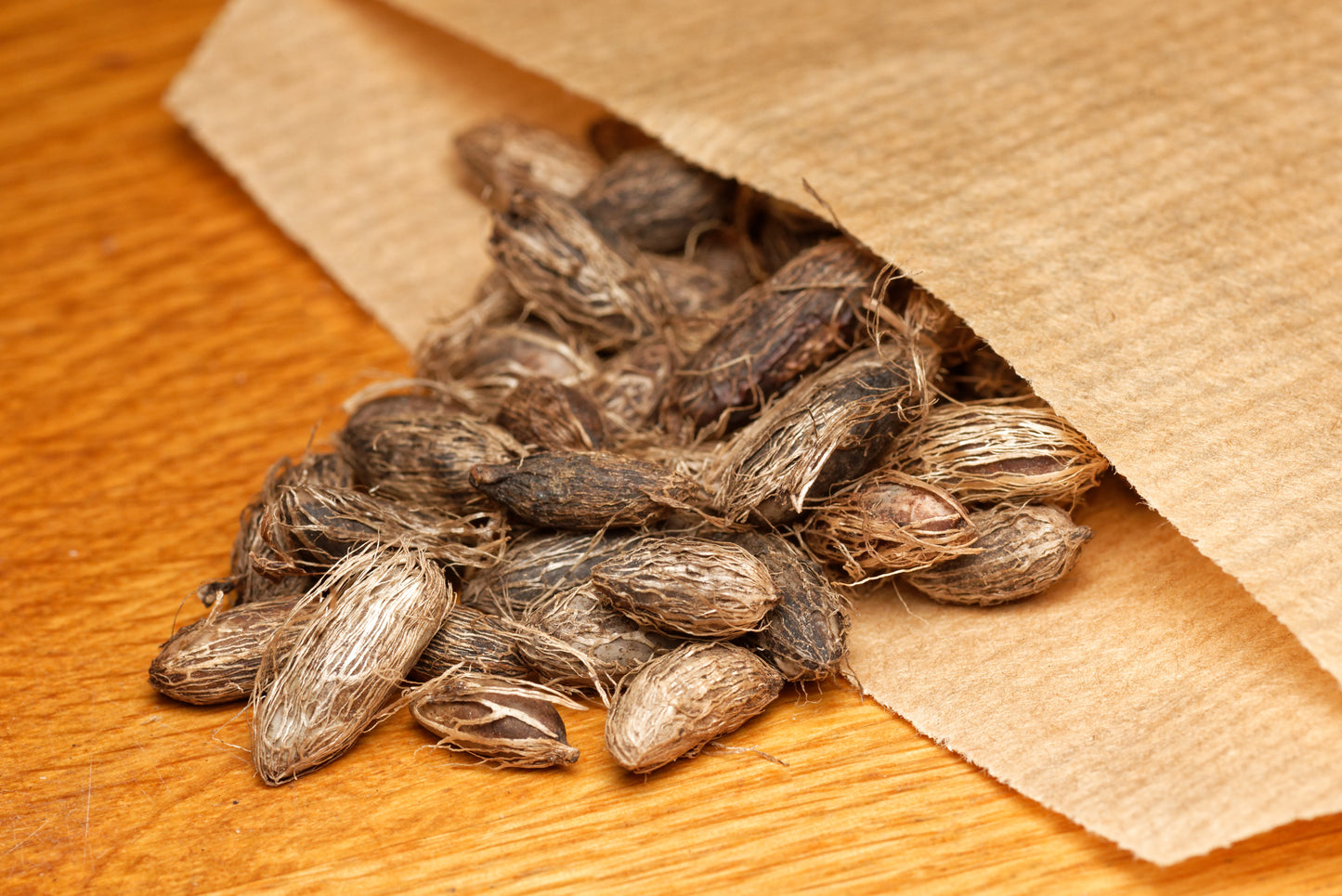
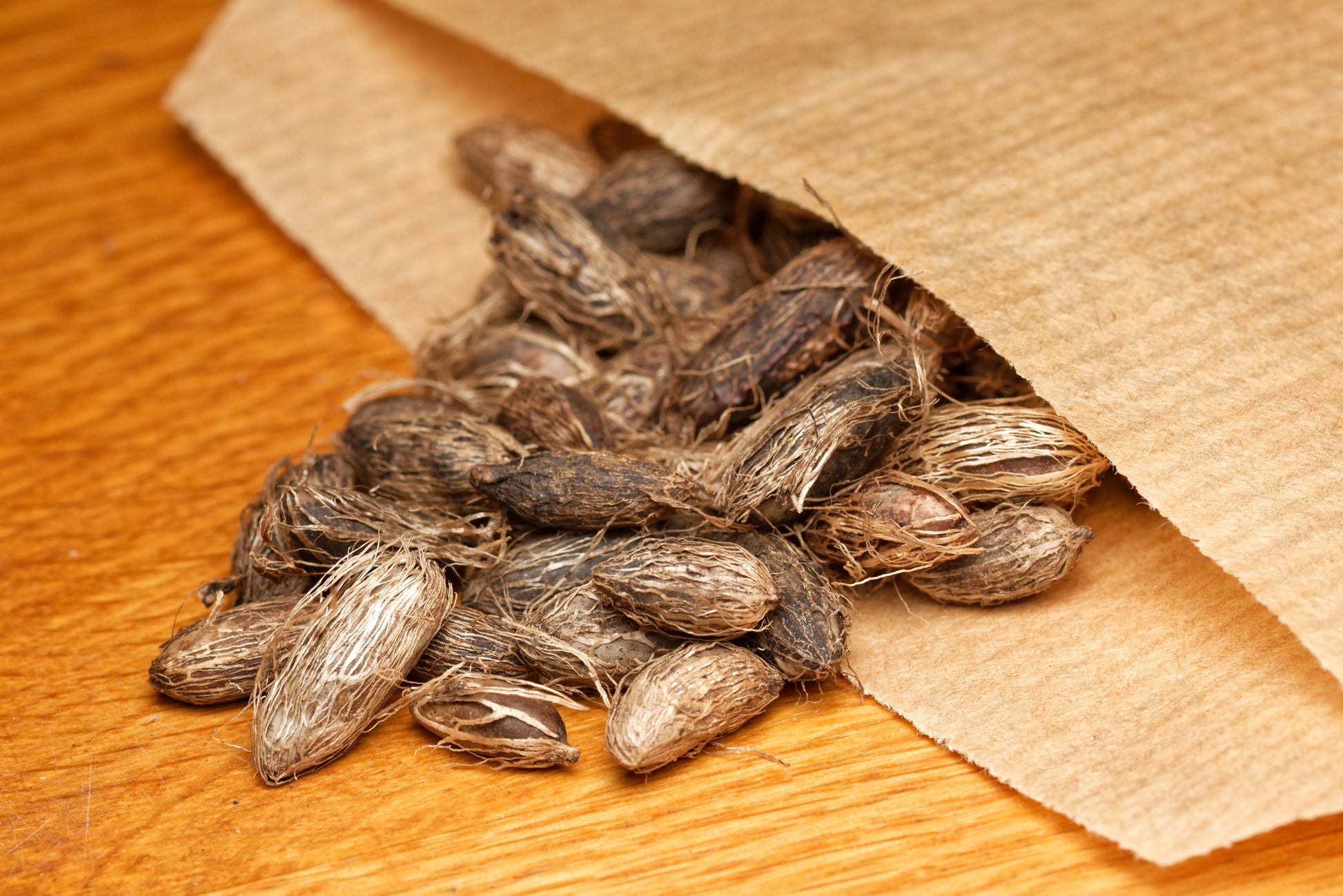
Seeds of Hyophorbe verschaffeltii can advantageously be soaked in lukewarm water for 24-48 hours before sowing. Heat and even moisture are the most important factors for germination.
- Sow in an airy and well-drained sowing medium (alternatively, the baggy-method can be used)
- Cover the seeds lightly with the sowing medium
- Maintain a temperature of around 25-30 °C
- Keep the medium slightly moist, but not wet
- The seeds do not require cold stratification
Germination can be irregular and take from a few weeks to several months, so seeds that do not germinate at the same time as the first ones should not be discarded too early.
Please also see our article on germinating palm seeds.
Utility and collector value
Hyophorbe verschaffeltii is primarily grown as an ornamental and collector palm. The combination of the distinctive spindle-shaped trunk, the elegant leaf crown, and the species' very limited natural distribution makes it particularly interesting for palm enthusiasts and collectors of exotic plants.
At the same time, it is a good example of the distinctive flora that has evolved on the isolated islands of the Mascarenes. Rodrigues is home to a number of endemic plants that are not found naturally anywhere else in the world, and Hyophorbe verschaffeltii is a characteristic representative of this flora.
Compared to the more compact and heavily swollen bottle palm, the spindle palm gains a more slender and elegant expression with age. This makes it particularly interesting for those who already grow Hyophorbe lagenicaulis and wish to experience the differences between two closely related palms right from the seed stage.
Hyophorbe verschaffeltii is therefore an exciting choice for anyone who wants to grow a tropical palm from seed, where both the origin, the characteristic growth form, and the plant's development over the years are a significant part of the experience.
Seed germination
Seed germination
Childcare
Childcare
Size
Size
Up to 6 meters
Difficulty level
Difficulty level
Between
NB
NB
Not frost-hardy