Buy 4 packs of seeds (or more) and get a 10% discount
a Piece of Nature
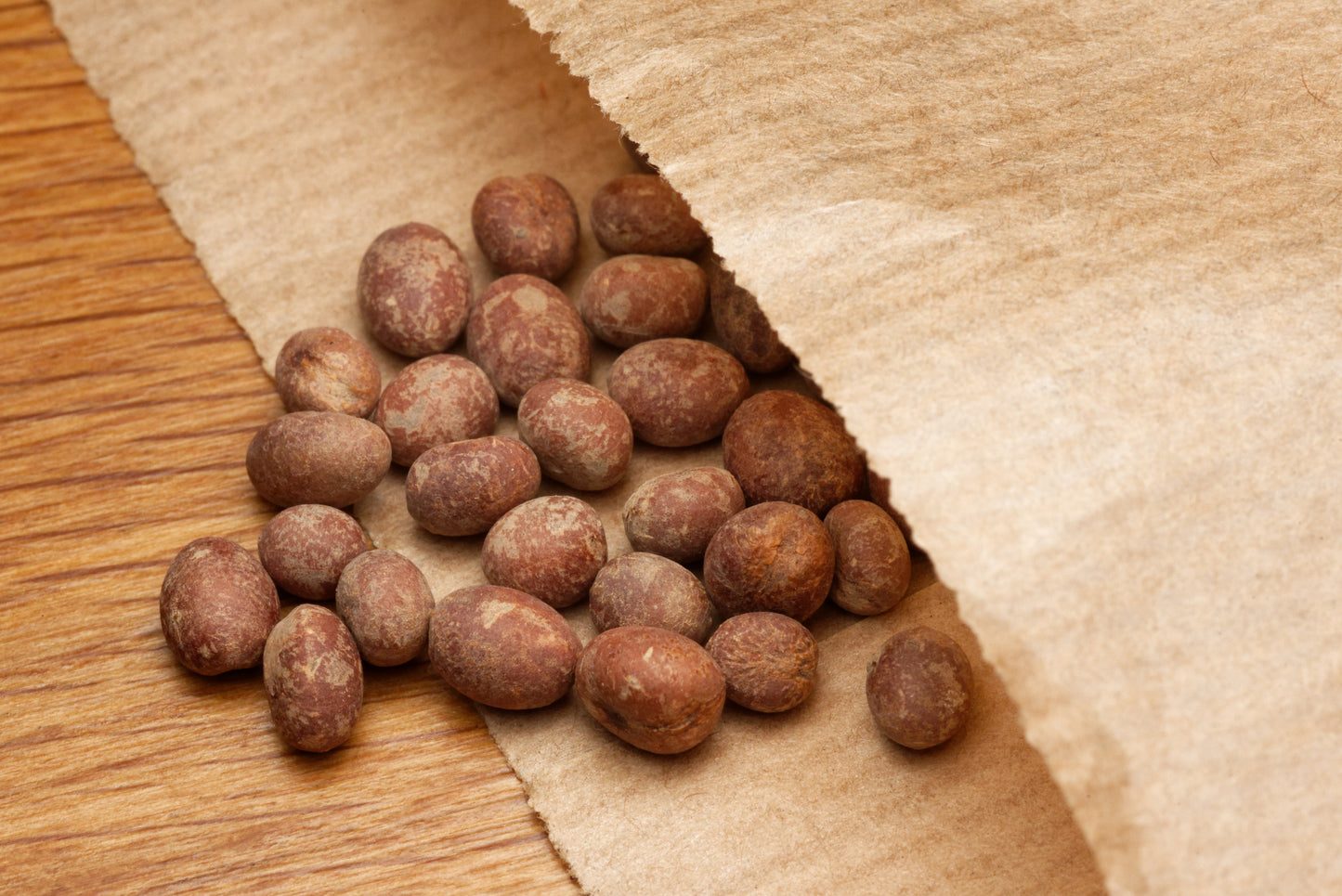
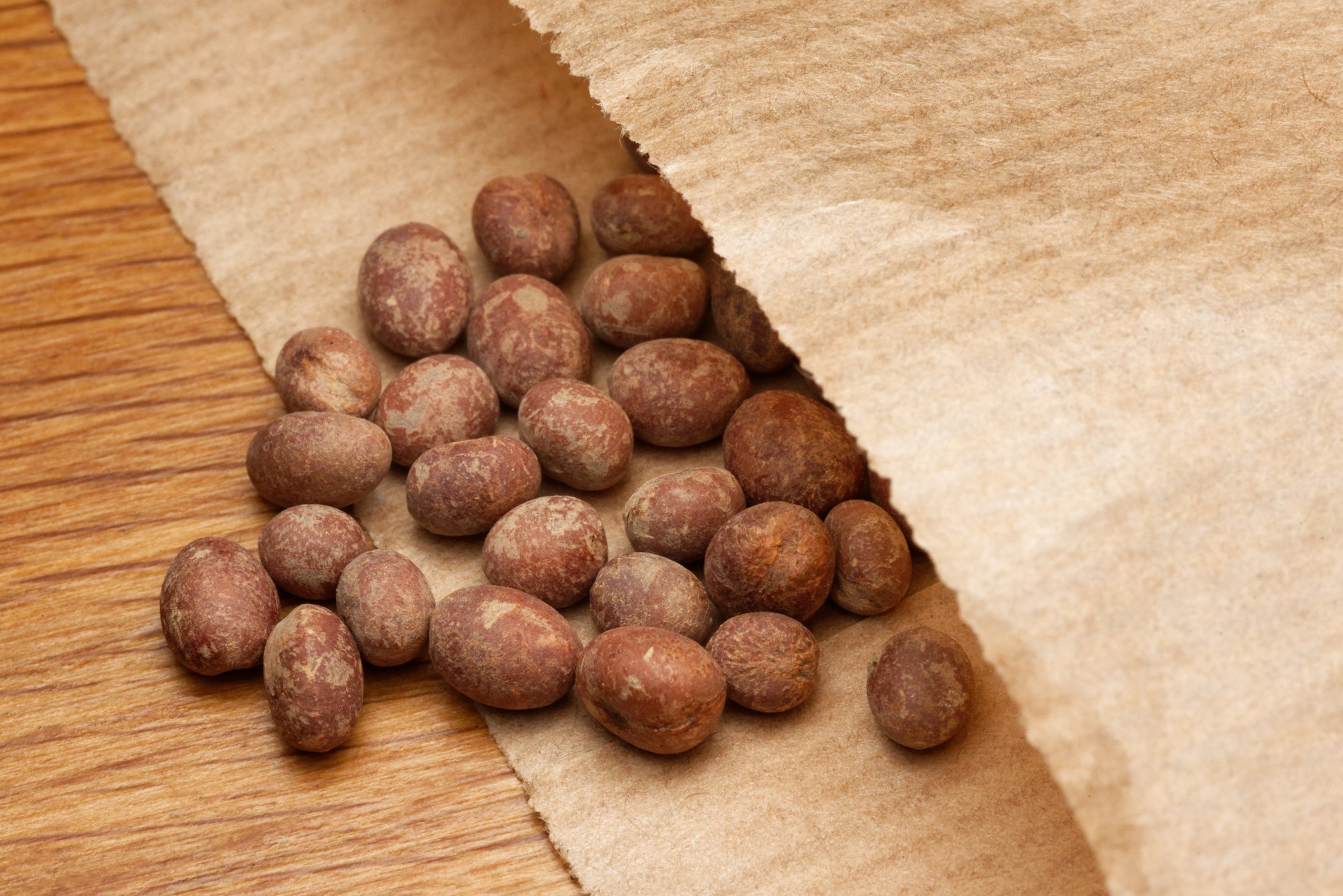
California fan palm (Washingtonia filifera) | seeds, 10 pcs.
California fan palm (Washingtonia filifera) | seeds, 10 pcs.
Couldn't load pickup availability
- Latin name: Washingtonia filifera
- Danish names: Californisk viftepalme, ørkenviftepalme, trådpalme
- English names: California fan palm, Desert fan palm, California Washingtonia
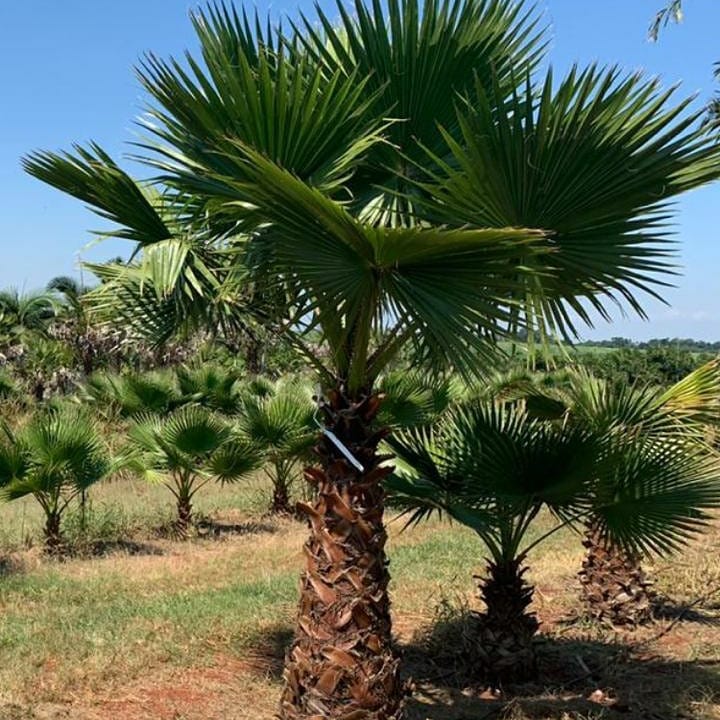
Washingtonia filifera is an impressive North American fan palm with a sturdy trunk and a dense crown of large, grey-green to green fan-shaped leaves. The species is particularly known for the numerous light, thread-like fibers that peel off along the leaf segments – a characteristic that has given the plant the species name filifera, which roughly translates to "thread-bearing".
The palm is native to desert regions in the southwestern USA and northwestern Mexico, where it grows naturally around springs, in oases, and along watercourses. It is a characteristic sight in California's desert oases, among other places. Even though the surroundings can be extremely dry and hot, the palms grow precisely in places where their roots have stable access to water.
Under good conditions, Washingtonia filifera can reach about 15-20 meters in height and develops a very thick trunk with age, which is clearly thicker than that of the closely related Mexican fan palm. Old leaves can hang down along the trunk like a dense "skirt" if they are not removed, giving older, naturally growing palms a very characteristic appearance.
Washingtonia filifera is closely related to the Mexican fan palm (Washingtonia robusta). The Mexican fan palm typically grows taller and develops a significantly slimmer trunk, while W. filifera has a more massive growth habit and generally more of the characteristic white fibers on the leaves. At the same time, W. filifera is the most cold-tolerant of the two and is therefore of particular interest to palm enthusiasts in cooler climates.
The two forms can cross-breed with each other, and the hybrid is often referred to as Washingtonia × filibusta. It combines features from both parents to varying degrees, and hybrids in cultivation can therefore make it more difficult to distinguish between the two classic Washingtonia types based on appearance alone.
If you are fascinated by fan palms and other exciting palm species, you can explore our entire selection of palm seeds.
Cultivation and requirements
Washingtonia filifera is naturally adapted to very sunny and hot growing sites, but it also needs access to water to develop optimally. It prefers:
- Full sun and as much light as possible
- A well-drained, preferably mineral or sandy soil
- Regular watering during the growing season with light drying between waterings
- A warm and sheltered growing site
- Less water during the cool part of the year
The species is considered one of the more cold-tolerant fan palms. Established plants can withstand short-term frost down to about -8 to -10 °C under good, dry conditions, but hardiness depends heavily on the plant's age, the duration of the frost, and especially winter humidity. Young plants are considerably more sensitive. See also our entire selection of hardy plants.
In Danish conditions, cultivation in a pot with cool and sheltered overwintering is the safest solution. Attempts at planting out should be done in a very sunny, well-drained, and sheltered location with the possibility of winter protection.
Cultivation from seeds
Seeds of Washingtonia filifera are relatively easy to germinate and can advantageously be soaked in lukewarm water for 24-48 hours before sowing.
- Sow in an airy and well-drained seed compost (the bag germination method can alternatively be used)
- Cover the seeds with approximately 0.5-1 cm of seed compost
- Keep the temperature around 25-30 °C
- Keep the soil slightly moist, but not wet
- The seeds do not require cold stratification
Under good conditions, the first seeds can germinate after a few weeks, but germination can be irregular. Sowing should therefore be kept, even if all seeds do not germinate at the same time.
Young plants develop relatively long roots early on. Our tall palm pots are therefore suitable when the small palms need more space for their further root development.
- You may also see our article on germination of palm seeds.
Utility and collector value
Washingtonia filifera is particularly interesting as a true desert oasis palm. Its natural habitats show in a fascinating way that a plant can be adapted to extreme heat and dry air without necessarily being drought-tolerant at the roots. Natural populations are closely tied to permanent or relatively stable water sources in the middle of otherwise very dry landscapes.
The large fan leaves, sturdy trunks, and hanging layers of old leaves also have great ecological significance. In old palms, the dead leaves create sheltered cavities and hiding places that can be utilized by various animals in the North American desert oases.
For the palm collector, Washingtonia filifera is especially interesting because of the combination of a classic exotic palm look and relatively good tolerance to cool temperatures. Compared to Washingtonia robusta, it grows more vigorously in width and attains a robust, almost monumental appearance.
Washingtonia filifera is therefore an exciting choice for anyone who wants to grow a large and characterful fan palm from seed – and not least for palm enthusiasts who are interested in more cold-tolerant species.
Seed germination
Seed germination
Childcare
Childcare
Size
Size
Up to 20 meters
Difficulty level
Difficulty level
Beginner
NB
NB